Key Takeaways
- 1Lion's mane stimulates NGF and BDNF production, supporting neuron growth and long-term brain health
- 2Take 500-1000mg of fruiting body extract daily - morning dosing works best for most people
- 3Choose products made from fruiting body (not mycelium-on-grain) with 30%+ beta-glucan content and a third-party COA
- 4Expect noticeable cognitive improvements around weeks 3-4, with benefits compounding over months
- 5Stacks well with cordyceps for energy and reishi for sleep - no negative interactions between functional mushrooms
Quick Answer
Lion's mane mushroom gummies support cognitive function by stimulating your brain's production of Nerve Growth Factor (NGF) and Brain-Derived Neurotrophic Factor (BDNF) - proteins essential for neuron growth, repair, and maintenance. Clinical research shows measurable improvements in memory and cognitive scores after consistent daily use of 500-1000mg of fruiting body extract. Effects build gradually over 2-6 weeks, making daily consistency more important than any single dose.
Lion's Mane Mushroom Gummies: Why They're the Top Nootropic Choice
Lion's mane mushroom gummies have become the most popular nootropic mushroom supplement - and for good reason. While most nootropics are stimulants in disguise (caffeine derivatives, synthetic focus pills, vaguely defined "brain boosters"), lion's mane works through a fundamentally different mechanism.
Instead of stimulating your brain into a temporary state of alertness, lion's mane (Hericium erinaceus) supports the growth and maintenance of neurons themselves. It does this by triggering your brain's own production of Nerve Growth Factor (NGF) and Brain-Derived Neurotrophic Factor (BDNF) - the proteins neurons need to grow, repair, and form new connections.
This distinction matters. Stimulants borrow energy from tomorrow. Lion's mane builds infrastructure that compounds over time. The effects aren't immediate - you won't feel a buzz after your first gummy. But after a few weeks of consistent use, the cognitive improvements are measurable and, according to the research, real.
If you're evaluating whether mushroom gummies actually work, lion's mane is the species with the strongest clinical evidence for cognitive benefits.
The Science: NGF, BDNF, and Why They Matter
Nerve Growth Factor (NGF)
NGF is a protein responsible for the survival, development, and function of neurons. It's particularly active in the hippocampus (memory formation) and the prefrontal cortex (executive function, decision-making, sustained attention). When NGF levels are adequate, neurons maintain healthy connections, form new ones efficiently, and resist age-related decline. When NGF drops, cognitive function follows.
Lion's mane contains two groups of compounds - hericenones from the fruiting body and erinacines from the mycelium - that cross the blood-brain barrier and stimulate your brain's own NGF production. This isn't lion's mane "adding" NGF to your system. It's prompting your brain to produce more of it naturally.
A University of Queensland study identified specific lion's mane compounds that promote neurite outgrowth in hippocampal neurons - the physical extension of nerve cell branches that form new connections. More neurite outgrowth means more neural pathways, which translates to better memory encoding and retrieval.
Brain-Derived Neurotrophic Factor (BDNF)
BDNF works alongside NGF but has a broader scope. While NGF focuses on neuron survival and growth, BDNF supports synaptic plasticity - your brain's ability to strengthen or weaken connections based on use. High BDNF levels are associated with better learning, faster adaptation, and improved mental resilience. Low BDNF is linked to cognitive decline, mood disorders, and brain fog.
Lion's mane has been shown to upregulate BDNF production, giving your brain more of the raw material it needs for ongoing adaptation and learning.
What the Clinical Research Shows
The most cited study is a 16-week randomized, double-blind, placebo-controlled trial published in the Journal of Medicinal Food. Adults taking lion's mane extract showed significantly improved cognitive function scores compared to placebo. When supplementation stopped, scores declined - confirming the effect was from lion's mane, not placebo.
Additional research has found reduced anxiety and depression scores in participants over 8 weeks of supplementation, with measurable changes in inflammatory biomarkers. Animal studies consistently demonstrate that lion's mane compounds stimulate NGF production and promote neurogenesis in the hippocampus.
The evidence isn't perfect - more large-scale human trials are needed. But among functional mushrooms, lion's mane has the most robust and consistent research supporting cognitive benefits. For a broader look at the evidence behind different species, see our mushroom gummies science overview.
How Lion's Mane Supports Focus and Memory
The connection between NGF stimulation and day-to-day cognitive performance breaks down into four practical areas:
Working Memory
Working memory is your ability to hold and manipulate information in real time - following a complex argument, keeping multiple project details in mind, or doing mental math. It's the foundation of productive thinking. Lion's mane supports working memory by maintaining the health of prefrontal cortex neurons and strengthening the synaptic connections between them.
Sustained Attention
The ability to stay locked in on a task for extended periods without drifting requires well-maintained neural circuits. When neurons in your attention networks are well-supplied with NGF, those circuits fire more reliably and resist fatigue longer. This is why many lion's mane users report being able to hold focus through long work sessions without the fade they previously experienced. For a deeper dive into how mushrooms support concentration, read our mushroom gummies for focus guide.
Memory Consolidation
The hippocampus encodes new memories and converts short-term information into long-term storage. NGF is critical for hippocampal neuron health. With consistent lion's mane use, many people notice that information sticks more easily - names, conversations, things they read - because the neurons responsible for encoding are better maintained.
Mental Clarity and Reduced Brain Fog
Brain fog is often a symptom of neuroinflammation or inadequate neurotrophic support. Lion's mane has demonstrated anti-inflammatory effects in the central nervous system alongside its NGF-stimulating properties. Addressing both factors - inflammation and growth factor deficiency - is why many users describe the feeling as "the fog lifting" rather than stimulation kicking in.
Dosing Recommendations
How Much to Take
The research-supported dose is 500-1000mg of fruiting body extract per day. This is the range where clinical studies have demonstrated measurable effects.
- Start with 500mg daily for the first 7-10 days to assess your response
- Increase to 1000mg daily if well tolerated and you want stronger effects
- Some people find benefit up to 1500mg, but returns diminish beyond 1000mg for most individuals
For a more detailed breakdown of dosing approaches and how to adjust based on your goals, see our lion's mane dosage guide.
When to Take It
Morning or early afternoon is ideal. Lion's mane is mildly stimulating for some people - not in a caffeine-jitter way, but in a "my brain feels more awake" way. Taking it after 3 PM may interfere with sleep for sensitive individuals.
Take it with food. The fat content in a meal improves absorption of lion's mane's fat-soluble compounds (hericenones in particular).
Consistency Over Everything
This is the most important point about lion's mane dosing: daily consistency matters more than dose size. NGF stimulation is cumulative. Your brain needs sustained, elevated NGF levels to actually grow and maintain new neural connections. Taking 1000mg once a week does far less than taking 500mg every single day.
Treat it like exercise for your brain. A short daily session beats an occasional marathon.
What to Look For in Lion's Mane Products
Not all lion's mane gummies are equal. The difference between a product that works and one that doesn't usually comes down to four factors. This applies broadly to choosing any functional mushroom supplement.
Fruiting Body Extract
Non-negotiable. The fruiting body of lion's mane contains the highest concentration of hericenones - the primary NGF-stimulating compounds. Many cheaper products use "mycelium-on-grain," which is mycelium grown on rice or oat substrate. The final product is mostly grain starch with minimal active mushroom compounds.
Check the label. If it says "mycelium biomass," "full spectrum" without specifying fruiting body, or doesn't clarify its source at all - find a different product.
Beta-Glucan Content (30%+)
Beta-glucans are the primary bioactive polysaccharides in medicinal mushrooms. They serve as a reliable indicator of product potency. Products standardized to at least 30% beta-glucan content provide a therapeutically meaningful dose. If a brand doesn't disclose beta-glucan percentages, that's a signal the numbers aren't worth advertising.
Extract Ratio
A concentrated extract (8:1 or 10:1) means the active compounds from 8-10 grams of raw mushroom are concentrated into 1 gram of extract. This matters because raw mushroom powder (1:1) requires much larger doses to deliver the same amount of hericenones and erinacines. Most clinical research uses concentrated extracts, not raw powder.
Third-Party Certificate of Analysis (COA)
A COA from an independent lab verifies active compound levels, heavy metal content (arsenic, lead, cadmium, mercury), pesticide residues, and microbial contamination. Any serious brand produces these on request or publishes them on their website. If a brand can't provide a COA, the product is a gamble.
For more on evaluating mushroom supplement quality, our guide on whether mushroom gummies are safe covers what to watch for in detail.
Stacking Lion's Mane with Other Functional Mushrooms
One of the practical advantages of functional mushrooms is that they work through different biological pathways, which means they combine without competing or interfering with each other. Lion's mane handles neurotrophin production. Other species address different aspects of performance and well-being.
Lion's Mane + Cordyceps (Focus + Energy)
Cordyceps increases cellular ATP production - the energy molecule every cell in your body runs on. Your brain consumes roughly 20% of your body's total ATP despite being only 2% of your body weight. When lion's mane is driving enhanced neural growth and maintenance, those neurons need energy to function optimally.
The pairing: Lion's mane provides the growth factors for neuron health. Cordyceps provides the cellular energy those neurons need to perform. Many people stack 500-1000mg of lion's mane with 500-1000mg of cordyceps in the morning for a combination of mental clarity and sustained energy without caffeine jitters.
This is an especially strong combination for knowledge workers, students, and anyone whose day demands sustained cognitive output. See our mushroom gummies for focus guide for more on this pairing.
Lion's Mane + Reishi (Cognition + Recovery)
Reishi works on the HPA (stress) axis, reducing cortisol and supporting deep sleep through triterpene compounds. This matters for lion's mane users because chronically elevated cortisol suppresses BDNF production and interferes with neuroplasticity - the exact processes lion's mane is trying to support.
The pairing: Lion's mane in the morning for cognitive work. Reishi (1000-1500mg) in the evening, 1-2 hours before bed. Lion's mane builds neural connections during the day. Reishi ensures the deep sleep your brain needs to consolidate those gains overnight. For anyone dealing with stress-related brain fog, this combination addresses both the growth factor deficit (lion's mane) and the cortisol interference (reishi). Our mushroom gummies for sleep guide has more detail on optimizing the evening side.
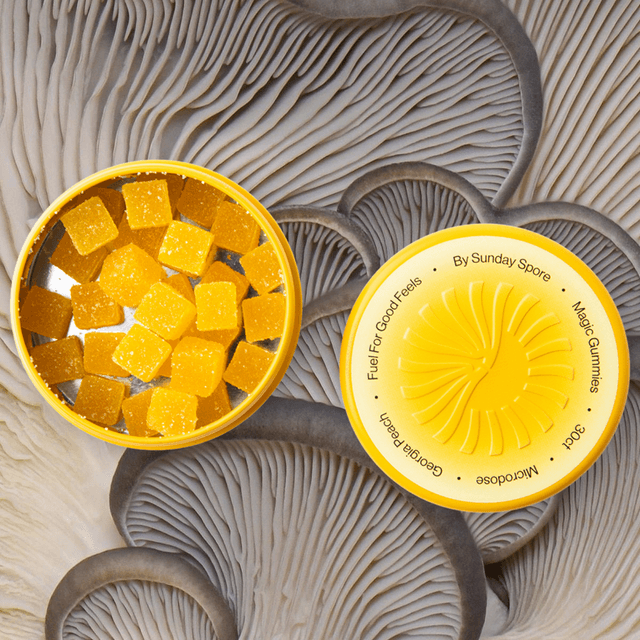
Precision Dosed
Every Sunday Spore gummy is lab-verified for precise, consistent dosing — no guessing, no scales, no batch variation. Just take one and go about your day.
If you're ready to start microdosing...
Sunday Spore Microdose — precision-dosed mushroom gummies. Lab-tested, exact dosing, ships discreetly.
Lion's Mane + Chaga (Brain Health + Antioxidant Protection)
Chaga is the highest antioxidant mushroom, rich in melanin and superoxide dismutase (SOD). Oxidative stress damages neurons and accelerates cognitive decline. While lion's mane is building and maintaining neural infrastructure, chaga protects that infrastructure from oxidative damage.
The pairing: Both can be taken in the morning. Lion's mane for growth, chaga for protection. Particularly relevant for people concerned about long-term brain health and neuroprotection.
The Full Functional Mushroom Stack
For comprehensive daily support, some people run a multi-mushroom protocol:
- Morning: Lion's mane (500-1000mg) + cordyceps (500-1000mg)
- Afternoon: Chaga (500-1000mg) + turkey tail (500-1000mg)
- Evening: Reishi (1000-1500mg)
Each species handles a different system - cognition, energy, antioxidant defense, immune support, and stress/sleep recovery. There are no known negative interactions between these functional mushrooms at standard doses.
Timeline: What to Expect
Lion's mane is not a stimulant. It won't produce a noticeable effect within hours of your first dose. Setting accurate expectations is important so you don't quit at week one assuming it isn't working.
Days 1-7: You're building the foundation. NGF stimulation has begun, but levels haven't accumulated enough to produce noticeable changes. Some people report subtle improvements in mental clarity or mood, but this may be placebo at this stage. Just take it consistently and don't evaluate yet.
Weeks 2-3: The first real signals. Many people notice that tasks requiring sustained focus feel slightly easier. Brain fog episodes become less frequent. You might find yourself recalling names or details with less effort. The changes are subtle - you won't feel "enhanced," but you may realize your baseline has shifted upward.
Weeks 4-6: This is where the clinical research shows measurable results. Working memory capacity improves. Complex tasks require less mental effort. Reading retention increases. The feeling is less like being "on something" and more like your brain is operating the way it should have been all along. If you're going to notice lion's mane working, it happens in this window.
Months 2-3: Compounding benefits. The cognitive improvements from weeks 4-6 continue building. Long-term users report that lion's mane makes them feel cognitively younger - sharper recall, easier learning, more mental stamina for demanding work. The effects start feeling like your new normal rather than something supplement-driven.
If you stop: The 16-week clinical trial showed that cognitive scores declined after participants stopped taking lion's mane. This confirms the benefits require ongoing NGF stimulation. If you stop and notice a gradual decline in the improvements you experienced, that's expected - and a signal that lion's mane was actually doing something.
Safety and Side Effects
Lion's mane has one of the strongest safety profiles among functional mushroom supplements. It has been consumed as both food and medicine in East Asian cultures for centuries, and modern clinical trials have reported no significant adverse effects at standard doses.
Common (Mild) Side Effects
- Digestive discomfort in the first few days - mild bloating or nausea, typically resolving as your system adjusts. Taking lion's mane with food usually prevents this.
- Vivid dreams - some users report more vivid or memorable dreams, likely related to enhanced neurotrophin activity during sleep.
- Mild restlessness if taken too late in the day - stick to morning or early afternoon dosing.
Interactions to Be Aware Of
- Blood thinners: Lion's mane may have mild antiplatelet effects. If you take warfarin, aspirin, or other anticoagulants, talk to your doctor before starting.
- Diabetes medication: Some research suggests lion's mane may lower blood sugar. If you're on insulin or metformin, monitor your levels and consult your healthcare provider.
- Mushroom allergies: If you're allergic to other mushroom species, exercise caution and start with a small dose to test for reactions.
Who Should Avoid Lion's Mane
- People with confirmed mushroom allergies
- Anyone scheduled for surgery within 2 weeks (due to potential blood-thinning effects)
- Pregnant or breastfeeding women (insufficient safety data in these populations)
For a comprehensive look at mushroom supplement safety across all species, see our guide on whether mushroom gummies are safe.
Frequently Overlooked Factors
Gut-Brain Axis
Lion's mane has demonstrated prebiotic properties, supporting beneficial gut bacteria. Given the bidirectional communication between gut microbiota and brain function (the gut-brain axis), this is a secondary mechanism through which lion's mane may support cognition and mood. Reduced gut inflammation can translate to reduced neuroinflammation, which supports clearer thinking. For more on how mushrooms support anxiety and stress through gut health, our mushroom gummies for anxiety guide covers this pathway.
Sleep Quality Matters
The neural maintenance processes that lion's mane supports - neurite outgrowth, synaptic strengthening, memory consolidation - happen predominantly during deep sleep. If your sleep quality is poor, you're limiting lion's mane's ability to deliver results. Stacking with reishi for sleep support or simply prioritizing 7-8 hours of quality sleep will amplify the benefits.
Diet and Lifestyle Amplifiers
Lion's mane works better in a brain-friendly context. Omega-3 fatty acids (from fish oil or algae) support the same neural membrane health that lion's mane promotes. Regular exercise increases BDNF production independently, compounding with lion's mane's effects. Chronic stress and sleep deprivation suppress BDNF and NGF - addressing these factors makes lion's mane more effective, not less necessary.
The Bottom Line
Lion's mane is the most evidence-backed nootropic mushroom available. It works through a mechanism that no synthetic nootropic replicates - stimulating your brain's own production of the growth factors neurons need to thrive. The effects are gradual, cumulative, and real.
Start with 500mg of fruiting body extract daily. Take it in the morning with food. Give it 4-6 weeks before evaluating. Choose a product with fruiting body sourcing, 30%+ beta-glucan content, and a third-party COA. Stack with cordyceps for energy if you need it and reishi for sleep if stress is a factor.
The full picture of which mushroom supplements are worth your time is covered in our best mushroom gummies guide. Lion's mane belongs at the top of that list for anyone whose priority is cognitive performance.
Disclaimer
This content is for educational and informational purposes only. It is not medical advice and should not substitute professional medical guidance. Always consult a qualified healthcare provider before starting any supplement. These statements have not been evaluated by the FDA. Individual results vary.
“Three weeks into a Monday/Wednesday/Friday protocol and the difference in my foc...” — Sarah
“Bought the Big Guys for a camping trip with friends. The dosing is spot-on — eve...” — Marcus
Ready to start microdosing?
Try the Sunday Spore Microdose
Precision-dosed mushroom gummies designed for your microdosing protocol. Lab-tested. Exact dosing. Everything you need to start.

FAQ
Frequently Asked Questions
What do lion's mane mushroom gummies do?
How long does it take for lion's mane gummies to work?
How much lion's mane should I take per day?
Are lion's mane mushroom gummies safe?
Written by
Sunday Spore Editorial Team
Rigorously researched content from the Sunday Spore editorial team — covering mushroom science, functional wellness, and evidence-based supplementation.