Key Takeaways
- 1Reishi targets cortisol-driven anxiety through HPA axis modulation and GABA support
- 2Lion's mane supports anxiety relief by promoting neuroplasticity and reducing inflammation
- 3Start with reishi daily for 2-4 weeks before judging results - it works gradually
- 4Expect 2-4 weeks for meaningful anxiety reduction from consistent use
Quick Answer
Mushroom gummies can help with anxiety through adaptogenic pathways. Reishi modulates cortisol and supports GABAergic activity for calm without sedation. Lion's mane promotes neuroplasticity through NGF stimulation, helping break rigid anxious thought patterns. Both work gradually over 2-4 weeks of consistent use.
Mushroom Gummies for Anxiety: How They Target Different Mechanisms
Mushroom gummies for anxiety work because anxiety isn't a single problem - it's an umbrella term covering distinct neurobiological patterns. Different mushroom species target different anxiety mechanisms, which is why the right species choice matters more than just "taking mushrooms."
Cortisol-driven anxiety (constant low-grade stress, inability to relax, physical tension) responds best to adaptogenic mushrooms that modulate the HPA axis - particularly reishi.
Rumination-driven anxiety (thought loops, catastrophizing, inability to stop worrying) responds to compounds that promote cognitive flexibility and neuroplasticity - particularly lion's mane.
Inflammation-driven anxiety (the growing research linking chronic inflammation to anxiety disorders) responds to mushrooms with anti-inflammatory properties - reishi, chaga, and lion's mane all contribute here.
Most people experience a combination. That's why mushroom protocols for anxiety often stack multiple species.
The Research: Mushrooms and Anxiety
Reishi for Chronic Anxiety
Reishi's triterpene compounds act on the GABAergic system - the same neurotransmitter pathway that benzodiazepines target, but without the sedation, tolerance, or dependence risk.
Clinical evidence:
- Ganoderic acids reduce HPA axis hyperactivity, lowering cortisol output
- Polysaccharides reduce neuroinflammation associated with chronic anxiety
- Multiple studies show reduced fatigue and improved quality of life scores
- Traditional use for thousands of years as "the mushroom of spiritual potency" for calming the mind - validated by modern pharmacology
The mechanism is gentle and cumulative. Unlike anti-anxiety medications that work by suppressing symptoms immediately, reishi rebalances the underlying stress response system over time.
Lion's Mane for Anxiety-Related Cognition
A 2019 study in Evidence-Based Complementary and Alternative Medicine found that lion's mane supplementation significantly reduced anxiety and depression scores after 4 weeks. The mechanism: enhanced NGF production supports healthier neural circuits and may help reverse anxiety-related hippocampal atrophy.
Additional evidence:
- NGF and BDNF stimulation support neuroplasticity - the brain's ability to form new patterns instead of getting stuck in anxious loops
- Anti-inflammatory properties reduce neuroinflammation linked to anxiety disorders
- No sedation or cognitive impairment - actually enhances cognitive function while reducing anxiety
Cordyceps for Anxiety-Related Fatigue
Chronic anxiety is exhausting. Cordyceps addresses the fatigue component by supporting cellular energy production through increased ATP availability. This doesn't directly treat anxiety, but it addresses one of anxiety's most debilitating consequences - the constant tiredness that makes everything harder.
Building an Anxiety Protocol
Tier 1: Foundation (Start Here)
Reishi gummies - daily
- Dose: 1000-1500mg fruiting body extract
- Timing: Evening (overlaps with sleep support)
- Expected onset: Subtle calming within 5-7 days; significant reduction at 3-4 weeks
- What to notice: Physical tension decreases first, then mental rumination reduces
Tier 2: Add Neuroplasticity Support
Lion's mane gummies - daily
- Dose: 500-1000mg
- Timing: Morning
- Expected onset: 2-4 weeks for anxiety-specific effects
- What to notice: Less "stuck" in thought patterns; easier to redirect attention from worry
Tier 3: Add Energy Support (If Fatigue Is a Factor)
Cordyceps gummies - daily
- Dose: 300-500mg
- Timing: Morning (avoid afternoon to protect sleep)
- Expected onset: 1-2 weeks for energy improvements
- What to notice: Less drained by end of day; more capacity to engage rather than withdraw
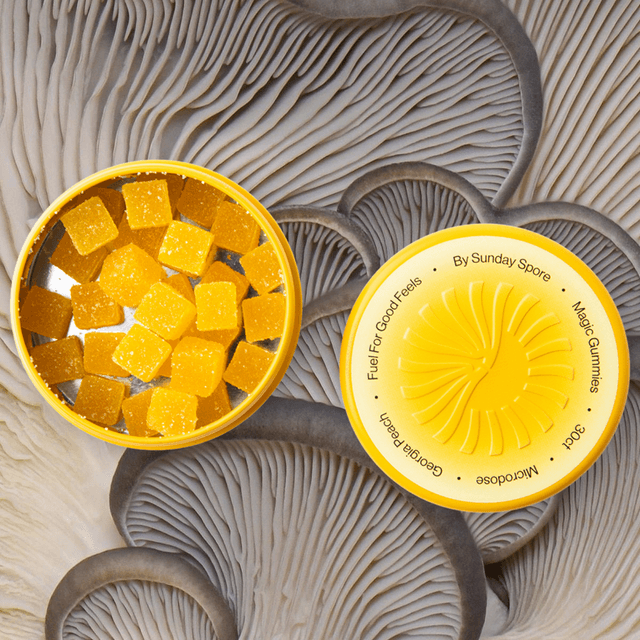
Precision Dosed
Every Sunday Spore gummy is lab-verified for precise, consistent dosing — no guessing, no scales, no batch variation. Just take one and go about your day.
If you're ready to start microdosing...
Sunday Spore Microdose — precision-dosed mushroom gummies. Lab-tested, exact dosing, ships discreetly.
What to Expect: Realistic Timeline
Week 1: Reishi begins to take the edge off physical anxiety symptoms. Sleep improves slightly. You may notice you're less tense in the shoulders and jaw.
Weeks 2-3: Cumulative calming from reishi becomes noticeable to others ("you seem more relaxed"). Lion's mane begins supporting cognitive flexibility - less tendency to spiral.
Weeks 4-6: New baseline established. The background hum of anxiety is significantly reduced. Worry still arises but feels less sticky - easier to acknowledge and release.
Months 2-3: Many users report they can maintain benefits while optimizing their dose. The neuroplasticity support from lion's mane has helped establish new default patterns of responding to stress.
Mushroom Gummies vs. Common Anxiety Treatments
| Factor | Mushroom Protocol | SSRIs | Benzodiazepines |
|---|---|---|---|
| Onset | 2-4 weeks | 4-8 weeks | Immediate |
| Dependency risk | None | Discontinuation syndrome | High |
| Side effects | Minimal (mild digestive) | Sexual dysfunction, weight gain, emotional blunting | Sedation, cognitive impairment, tolerance |
| Addresses root cause | Yes (stress modulation + neuroplasticity) | Partially (serotonin reuptake) | No (symptom masking) |
| Long-term safety | Excellent | Moderate (long-term effects debated) | Poor |
| Can combine with SSRIs | Yes (no interaction) | N/A | Doctor supervision needed |
Who Should Consider Mushroom Gummies for Anxiety
- People with mild-to-moderate generalized anxiety looking for natural support
- Those who want to complement existing treatment with low-risk additions
- People sensitive to pharmaceutical side effects who want gentler options
- Anyone looking to address stress response patterns rather than just mask symptoms
Who Should NOT Rely on Mushroom Gummies Alone
- People with severe anxiety or panic disorder (seek professional treatment first)
- People with active psychotic symptoms or personal/family history of schizophrenia
- People who have not been evaluated for underlying medical causes of anxiety (thyroid disorders, cardiac conditions)
- People in acute crisis - mushroom gummies work gradually, not immediately
Choosing the Right Product
For anxiety specifically:
- Reishi: Look for triterpene-standardized extracts (not just polysaccharide content)
- Lion's mane: Fruiting body extract with verified NGF-stimulating compounds (hericenones/erinacines)
- All products: Third-party tested with COA available
- Adequate dosing: At least 500mg per gummy of fruiting body extract
Disclaimer
This content is for educational and informational purposes only. It is not medical advice and should not substitute professional medical guidance. Always consult a qualified healthcare provider before starting any supplement. These statements have not been evaluated by the FDA. Individual results vary.
“Three weeks into a Monday/Wednesday/Friday protocol and the difference in my foc...” — Sarah
“Bought the Big Guys for a camping trip with friends. The dosing is spot-on — eve...” — Marcus
Ready to start microdosing?
Try the Sunday Spore Microdose
Precision-dosed mushroom gummies designed for your microdosing protocol. Lab-tested. Exact dosing. Everything you need to start.

FAQ
Frequently Asked Questions
Which mushroom is best for anxiety?
How long do mushroom gummies take to help anxiety?
Are mushroom gummies safe for people with anxiety?
Can I replace my anxiety medication with mushroom gummies?
Written by
Sunday Spore Editorial Team
Rigorously researched content from the Sunday Spore editorial team — covering mushroom science, functional wellness, and evidence-based supplementation.