Key Takeaways
- 1Observational studies show microdosers report improved mood, creativity, and focus
- 2Controlled trials suggest placebo effects may account for some reported benefits
- 3Magic mushroom microdosing remains federally illegal despite growing decriminalization
- 4Functional mushrooms (lion's mane, reishi) offer legal alternatives for mood and cognition support
- 5Anyone considering microdosing should understand both the potential benefits and legal risks
Quick Answer
Research on magic mushroom microdosing shows promising but mixed results. Observational studies report improved mood, creativity, and focus among microdosers, while controlled trials have struggled to separate real effects from placebo. The most consistent finding is mood enhancement and reduced anxiety. For legal cognitive and mood support, functional mushroom species like lion's mane and reishi offer research-backed benefits through different mechanisms without legal risk.
Magic Mushroom Microdosing: What the Research Actually Shows
Magic mushroom microdosing has moved from fringe experimentation to mainstream conversation. Tech workers in Silicon Valley, creative professionals, and wellness seekers all report benefits from taking sub-perceptual doses of magic mushrooms - but what does the actual science say? The research landscape is more nuanced than either enthusiasts or skeptics suggest.
This guide examines the current evidence on microdosing magic mushrooms: what observational data tells us, what controlled trials reveal, where the placebo effect fits in, and how the outcomes compare to legal functional mushroom alternatives that target similar cognitive and mood benefits through entirely different mechanisms.
Important note: Sunday Spore does not sell, endorse, or encourage the use of illegal substances. We sell functional mushroom gummies containing legal species like lion's mane, reishi, and cordyceps. This article exists to provide honest, research-based information about a topic our readers ask about frequently.
What Is Microdosing?
Microdosing refers to consuming approximately 1/10th to 1/20th of a full dose of magic mushrooms - typically 0.1g to 0.3g of dried material. At these amounts, there should be no perceptual distortion, no "trip," and no impairment. The goal is sub-perceptual: effects subtle enough that you could go about a normal workday without anyone noticing.
The practice gained mainstream visibility around 2015 after James Fadiman published research on self-reported microdosing experiences. Since then, interest has grown exponentially - Google Trends data shows search volume for microdosing-related terms increasing roughly 400% between 2018 and 2025.
What a Microdose Is Not
A microdose is not a recreational dose. It is not meant to produce visual effects, altered consciousness, or euphoria. If someone is "feeling it" in any obvious way, they have exceeded the sub-perceptual threshold.
This distinction matters for interpreting research. Many early studies relied on self-selected participants who may have been taking variable - and sometimes higher than sub-perceptual - doses.
The Research Landscape
Research on microdosing mushrooms falls into two broad categories, and they tell different stories.
Observational Studies
Large-scale surveys of self-selected microdosers consistently report positive outcomes:
- Mood improvement: The most commonly reported benefit across all surveys. A 2019 study of over 1,000 microdosers found 85% reported improved mood as a primary benefit.
- Creativity enhancement: Divergent thinking improvements are the second most cited benefit, particularly among creative professionals.
- Focus and productivity: Many respondents report improved ability to sustain attention on demanding tasks.
- Reduced anxiety: Decreased rumination and social anxiety are frequently mentioned.
- Emotional regulation: Better ability to process and respond to difficult emotions.
The largest observational study to date - the Microdose.me project involving over 8,000 participants - found that microdosers scored higher on measures of psychological well-being compared to non-microdosing controls.
The Problem With Observational Data
These studies share fundamental limitations:
- Self-selection bias: People who choose to microdose are already motivated to find benefits. They may be more health-conscious, more open to experience, or more likely to attribute positive changes to the practice.
- No blinding: Participants know they are microdosing, making expectation effects (placebo) impossible to separate from pharmacological effects.
- Recall bias: Retrospective reports of "how I felt this week" are unreliable measures of actual cognitive performance.
- Variable dosing: Without standardized doses, comparing between participants becomes difficult.
Controlled Trials
When researchers have attempted double-blind, placebo-controlled studies, the picture becomes more complicated.
The most notable is the 2021 self-blinding study published in eLife by Szigeti et al. In this innovative design, participants prepared their own microdoses and placebos in identical capsules, shuffled them, and followed a QR-code tracking system - allowing for blinding without researchers needing to handle controlled substances.
Key findings:
- Both groups improved on psychological well-being measures
- The microdose group did not significantly outperform placebo on most outcomes
- Benefits that participants attributed to microdosing were largely predicted by whether they believed they had taken a microdose - regardless of whether they actually had
A 2022 controlled trial from the University of Chicago found no significant differences between microdose and placebo groups on measures of creativity, cognition, or emotional processing at acute timepoints.
However, not all controlled data is negative. A small 2023 trial found measurable improvements in emotional face recognition and neural connectivity patterns in the microdose group compared to placebo - suggesting that some real effects may exist but require more sensitive instruments to detect.
Reported Benefits in Detail
Mood Enhancement
The most consistent finding across both observational and some controlled research is mood improvement. Microdosers report:
- Reduced depressive symptoms
- Greater emotional resilience
- Increased sense of well-being and life satisfaction
- Less emotional reactivity to stressors
If you are specifically interested in mood support from mushrooms, our guide on mushroom gummies for anxiety covers legal alternatives that target similar outcomes.
Creativity and Divergent Thinking
Creativity enhancement is the benefit most associated with Silicon Valley microdosing culture. The proposed mechanism involves increased neural connectivity - allowing the brain to form novel associations between concepts that would not normally connect.
A 2018 open-label study from the Netherlands found that microdosers performed better on convergent and divergent thinking tasks immediately after dosing. However, this was not placebo-controlled, leaving the door open to expectation effects.
Focus and Cognitive Performance
Many microdosers report improved focus, particularly on complex or creative tasks. This is somewhat paradoxical - higher doses of magic mushrooms typically impair focus and executive function.
The hypothesis is that sub-perceptual doses may enhance cognitive flexibility without disrupting executive control. However, controlled trials have generally failed to demonstrate measurable improvements on standard cognitive tasks (working memory, sustained attention, processing speed).
For those seeking evidence-backed focus support from mushrooms, lion's mane mushroom gummies have stronger controlled trial evidence for cognitive function through NGF stimulation. Our focus-specific guide explores the research in depth.
Anxiety Reduction
Reduced anxiety is among the top three reported benefits. The mechanism may relate to serotonin receptor modulation - the same receptor system that mediates the effects of higher doses, but engaged at a much subtler level.
A 2020 survey of over 4,000 microdosers found that 44% reported using the practice specifically to manage anxiety, with 79% of those reporting improvement.
For more on the relationship between microdosing and depression, we have a dedicated guide.
The Placebo Question
The elephant in the room for microdosing research is the strength of placebo effects. The self-blinding study deserves particular attention because it directly measured this problem.
When participants believed they had taken a microdose - regardless of what they actually consumed - they reported:
- Improved mood
- Greater creativity
- Enhanced well-being
- Better focus
The correlation between belief about condition and reported outcomes was stronger than the correlation between actual condition and reported outcomes.
What This Means (and Doesn't Mean)
This does not necessarily mean microdosing "doesn't work." It means:
- Expectation is a powerful force: Believing you have taken something that will enhance your creativity may itself enhance creativity through increased confidence, openness, and motivation.
- Measuring subtle effects is hard: If the real pharmacological effect of a microdose is genuinely subtle, it may be drowned out by the much larger signal of expectation effects in standard trial designs.
- Individual variation is high: Some evidence suggests that a subset of responders may experience real pharmacological benefits, while others get the same results from placebo. Averaging across groups masks this.
- Longer-term effects may differ: Most controlled trials measure acute effects (same day). The cumulative effects of repeated microdosing over weeks may differ from acute responses - but longer trials are expensive and difficult to keep blinded.
Common Microdosing Protocols
Two protocols dominate the microdosing community. We present these for informational purposes - not as a recommendation or endorsement.
The Fadiman Protocol
Developed by Dr. James Fadiman, this is the most widely followed schedule:
- Day 1: Microdose day
- Day 2: Transition day (no dose - observe residual effects)
- Day 3: Normal day (no dose - baseline comparison)
- Repeat
The logic: spacing prevents tolerance buildup while allowing observation of both "on" and "off" states for personal comparison.
The Stamets Protocol
Proposed by mycologist Paul Stamets, this protocol involves:
- Days 1-4: Microdose daily (often stacked with lion's mane and niacin)
- Days 5-7: Off days
Stamets hypothesizes that the lion's mane and niacin "stack" enhances neuroplasticity synergistically. This specific claim has not been tested in controlled trials.
For a deeper exploration of scheduling approaches, see our guide on mushroom microdosing schedules.
How to Approach Microdosing Safely
If you are interested in the general concept of microdosing mushrooms, our guide on how to microdose mushrooms provides comprehensive information on approaches, safety considerations, and what to track.
Legal Status: Where Things Stand in 2026
Magic mushroom microdosing remains federally illegal in the United States. The active compounds in magic mushrooms are Schedule I controlled substances under the Controlled Substances Act.
State-Level Exceptions
- Oregon: Measure 109 (2020) created a regulated therapeutic program where adults can access magic mushrooms in supervised settings with a licensed facilitator. This is not the same as legal personal use - it requires a preparation session, supervised administration, and integration.
- Colorado: Proposition 122 (2022) decriminalized personal possession, use, and growing for adults 21+. It also created a framework for regulated therapeutic access similar to Oregon.
City-Level Decriminalization
Several cities have passed measures deprioritizing enforcement of magic mushroom possession laws, including Denver, Oakland, Santa Cruz, Seattle, Detroit, and others. Decriminalization means reduced enforcement priority - not legality. Production, sale, and distribution remain illegal in all contexts.
The Key Distinction
Decriminalization is not legalization. In most of the United States, purchasing or possessing magic mushrooms in any amount - including microdose quantities - remains a criminal offense. The consequences vary by state but can include felony charges.
This legal reality is one reason many people interested in cognitive and mood enhancement are turning to well-researched, fully legal functional mushroom species instead.
Risks and Considerations
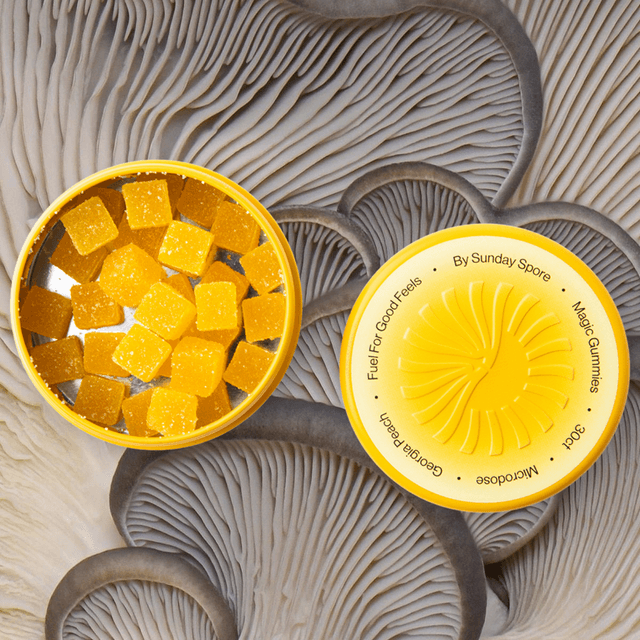
Precision Dosed
Every Sunday Spore gummy is lab-verified for precise, consistent dosing — no guessing, no scales, no batch variation. Just take one and go about your day.
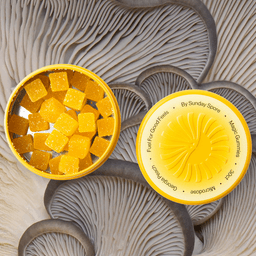
If you're ready to start microdosing...
Sunday Spore Microdose — precision-dosed mushroom gummies. Lab-tested, exact dosing, ships discreetly.
Physical Risks
At sub-perceptual doses, physical risks appear minimal. Magic mushrooms are among the least physiologically toxic recreational substances. However:
- Cardiac considerations exist for those with pre-existing heart conditions (5-HT2B receptor agonism)
- Drug interactions with SSRIs and other serotonergic medications are poorly understood at microdose levels
- No long-term safety data exists for chronic microdosing
Psychological Risks
- Emotional amplification - both positive and negative emotions may intensify
- Accidental over-dosing is common with unregulated, unstandardized material
- Mental health contraindications for those with personal or family history of psychotic disorders
- The illegality itself creates stress and anxiety that may counteract benefits
Practical Risks
- Unregulated supply: Without legal markets, there is no quality control, potency testing, or contamination screening
- Variable potency: Magic mushrooms vary enormously in active compound content - even within the same species and batch
- Legal consequences: Arrest, conviction, and a criminal record can devastate employment, housing, and travel prospects
Who Should Not Microdose
- Anyone with a personal or family history of schizophrenia or psychotic disorders
- People taking lithium (dangerous interaction risk)
- People on SSRIs or MAOIs (unpredictable interactions)
- Anyone under 25 (brain development is still occurring)
- People in contexts where drug testing occurs
- Anyone in a jurisdiction where possession carries severe criminal penalties
Legal Alternatives: Functional Mushrooms for Similar Outcomes
Here is where things get interesting for those seeking the benefits attributed to microdosing - better mood, enhanced cognition, reduced anxiety - without legal risk.
Functional mushroom species achieve overlapping outcomes through entirely different biological mechanisms. They are legal, well-studied, standardized, and available in convenient supplement forms.
Lion's Mane for Cognition and Neuroplasticity
Lion's mane (Hericium erinaceus) is the functional mushroom most relevant to the cognitive benefits attributed to microdosing. It works through:
- NGF stimulation: Lion's mane contains hericenones and erinacines that cross the blood-brain barrier and stimulate Nerve Growth Factor production
- BDNF enhancement: Brain-Derived Neurotrophic Factor supports new neural connections - the same "neuroplasticity" that microdosing advocates attribute to their practice
- Neuroprotection: Antioxidant and anti-inflammatory properties protect existing neural networks
Clinical evidence for lion's mane is stronger than for microdosing. A 2023 clinical trial found that lion's mane supplementation significantly improved cognitive performance on complex tasks after just 28 days. Participants showed faster reaction times and improved pattern recognition.
For microdosers interested in the creativity and focus aspects, lion's mane mushroom gummies represent the closest legal equivalent - supporting divergent thinking and cognitive flexibility through NGF-mediated neuroplasticity rather than serotonin receptor modulation.
Reishi for Mood and Anxiety
Reishi (Ganoderma lucidum) targets the mood and anxiety benefits that microdosers report:
- HPA axis modulation: Triterpene compounds reduce cortisol overproduction, addressing stress-driven mood disturbance at its source
- GABAergic activity: Supports the calming neurotransmitter system without the sedation or dependency risk of pharmaceutical GABA modulators
- Anti-inflammatory: Reduces neuroinflammation increasingly linked to depression and anxiety disorders
For those specifically seeking the anxiety-reduction benefits associated with microdosing, reishi offers a researched, legal pathway through different but converging mechanisms. See our full guide on mushroom gummies for anxiety.
How the Outcomes Compare
| Outcome | Microdosing Evidence | Functional Mushroom Evidence |
|---|---|---|
| Mood improvement | Strong observational, weak controlled | Moderate controlled (reishi) |
| Anxiety reduction | Strong observational, some controlled | Moderate controlled (reishi) |
| Focus/cognition | Mixed observational, weak controlled | Strong controlled (lion's mane) |
| Creativity | Moderate observational, uncontrolled | Emerging (lion's mane/NGF) |
| Neuroplasticity | Hypothesized, not measured directly | Demonstrated (lion's mane/NGF/BDNF) |
| Safety data | Limited long-term data | Extensive, generally well-tolerated |
| Legality | Federally illegal | Fully legal |
| Standardization | No quality control | Standardized extracts available |
The comparison is striking. For cognition and focus specifically, lion's mane has better controlled trial evidence than microdosing. For anxiety, reishi has comparable evidence with none of the legal risk.
The Stamets Stack: A Bridge Between Worlds
Paul Stamets himself proposed combining microdoses with lion's mane - suggesting he recognized that lion's mane contributes meaningfully to the cognitive effects people attribute to microdosing alone.
For those who want the lion's mane component without the legal risk, our lion's mane gummies deliver standardized doses of the same species Stamets includes in his protocol - the legal half of his stack, independently supported by clinical research.
Making an Informed Decision
The microdosing research landscape is genuinely mixed. The most honest summary:
- Something is happening - the sheer volume of positive self-reports from diverse populations suggests microdosing produces meaningful subjective effects for many people.
- Placebo is powerful - controlled trials show that a substantial portion of benefits may come from expectation, ritual, and mindset rather than pharmacology alone.
- Real effects likely exist - some neuroimaging and biomarker data suggests measurable changes at sub-perceptual doses, even if these do not consistently translate to outperformance on cognitive tasks versus placebo.
- The legal risks are real - regardless of decriminalization trends, magic mushroom possession remains a federal crime with genuine consequences.
- Legal alternatives work - for the most commonly sought outcomes (better mood, less anxiety, sharper cognition), functional mushrooms offer researched pathways without legal exposure.
At Sunday Spore, we believe in providing honest information and letting you make your own informed decisions. We sell functional mushroom gummies because they represent the intersection of research-backed efficacy and legal accessibility. They are not magic mushrooms. They work through different mechanisms. But for many people seeking the same practical outcomes - clearer thinking, calmer mood, more creative flexibility - they deliver.
Where to Start With Legal Functional Mushrooms
If you have been exploring microdosing for specific outcomes, here is how to match those goals with legal alternatives:
- For focus and cognitive clarity: Start with lion's mane mushroom gummies - 1000mg daily, allow 2-4 weeks for NGF-driven effects to accumulate.
- For anxiety and stress: Start with reishi for anxiety - 1000-1500mg daily, evening dosing preferred.
- For combined mood and cognition: Stack lion's mane (morning) with reishi (evening) for complementary pathways.
- For focus specifically: See our dedicated guide on mushroom gummies for focus for protocol details.
Functional mushrooms work gradually - expect 2-4 weeks of daily use before meaningful changes become apparent. They are building new neural infrastructure, not masking symptoms. The timeline is similar to what responsible microdosing protocols suggest, and the outcomes overlap more than most people expect.
Disclaimer
This content is for educational and informational purposes only. It is not medical advice and should not substitute professional medical guidance. Always consult a qualified healthcare provider before starting any supplement. These statements have not been evaluated by the FDA. Individual results vary.
“Three weeks into a Monday/Wednesday/Friday protocol and the difference in my foc...” — Sarah
“Bought the Big Guys for a camping trip with friends. The dosing is spot-on — eve...” — Marcus
Ready to start microdosing?
Try the Sunday Spore Microdose
Precision-dosed mushroom gummies designed for your microdosing protocol. Lab-tested. Exact dosing. Everything you need to start.
FAQ
Frequently Asked Questions
What are the reported benefits of microdosing magic mushrooms?
Is microdosing magic mushrooms legal?
How does microdosing compare to functional mushroom supplements?
What does a typical microdose look like?
Written by
Sunday Spore Editorial Team
Rigorously researched content from the Sunday Spore editorial team — covering mushroom science, functional wellness, and evidence-based supplementation.