Key Takeaways
- 1Observational studies show microdosers report significant reductions in depression symptoms
- 2Controlled microdosing trials show mixed results - placebo effects are strong in this population
- 3Full-dose magic mushroom therapy trials show rapid, sustained antidepressant effects (but these are not microdoses)
- 4Lion's mane has clinical evidence for reducing depression scores through NGF and anti-inflammatory mechanisms
- 5Never replace prescribed antidepressants without medical supervision
Quick Answer
Research on microdosing mushrooms for depression shows promising observational data but limited controlled evidence. Large surveys report reduced depression scores among microdosers, and full-dose clinical trials show rapid antidepressant effects. However, microdose-specific controlled trials are fewer and show mixed results, with strong placebo effects. Legal functional mushrooms like lion's mane have demonstrated antidepressant effects in clinical trials through NGF stimulation and neuroinflammation reduction.
Microdosing Depression: What the Science Shows
Microdosing depression research has exploded over the past five years. What was once an underground practice discussed in niche communities has become a legitimate area of scientific inquiry, with researchers at major universities publishing peer-reviewed studies examining whether sub-perceptual doses of magic mushrooms can alleviate depressive symptoms.
The short answer: it is complicated. The evidence base is a patchwork of promising observational data, limited controlled trials, strong placebo effects, and fundamental methodological challenges. Understanding what the research actually shows - rather than what headlines claim - is essential for anyone considering microdosing mushrooms for depression or exploring legal alternatives that target similar pathways.
This article breaks down the evidence honestly. We will examine what large-scale surveys tell us, what controlled trials reveal about placebo effects, how full-dose magic mushroom therapy differs from microdosing, and which legal functional mushrooms have demonstrated antidepressant activity in clinical settings.
The Research Landscape: Two Types of Evidence
Research on microdosing mushrooms for depression falls into two distinct categories, and conflating them leads to confusion.
Observational Studies and Surveys
Large-scale surveys consistently show that people who microdose report improvements in mood, emotional stability, and depression symptoms. The Global Drug Survey, studies from the University of British Columbia, and longitudinal tracking projects have all found that self-selected microdosers report meaningful reductions in depression scores compared to non-microdosing controls.
A 2021 prospective study tracking over 8,000 participants found that microdosers reported lower levels of depression and anxiety at 30-day follow-up compared to non-microdosers. The effect sizes were small but statistically significant.
The problem: observational studies cannot establish causation. People who choose to microdose differ systematically from those who do not - they may be more health-conscious, more open to new experiences, more likely to engage in other wellness practices, or more hopeful about recovery. These confounding variables make it impossible to attribute improvements solely to the microdose itself.
Controlled Trials
Controlled trials - where participants are randomly assigned to receive either a microdose or a placebo - paint a more complex picture. These studies attempt to isolate the pharmacological effect from expectation effects, lifestyle changes, and natural symptom fluctuation.
The results have been mixed, and the placebo problem looms large. We will examine specific trials below.
Full-Dose Magic Mushroom Therapy: Strong Evidence (But Not Microdosing)
Before diving into microdose-specific research, it is important to distinguish full-dose magic mushroom therapy from microdosing. These are fundamentally different interventions with different evidence bases.
The Clinical Trial Evidence
Researchers at Johns Hopkins University, Imperial College London, and other institutions have conducted rigorous clinical trials using full therapeutic doses of magic mushrooms (typically 25-30mg of the active compound) in controlled settings with psychological support.
The results have been remarkable:
- A 2022 trial at Johns Hopkins found that two sessions of magic mushroom-assisted therapy produced rapid and sustained antidepressant effects in patients with major depressive disorder, with 67% showing a greater than 50% reduction in depression scores at four weeks
- Imperial College's 2021 trial comparing magic mushroom therapy to the SSRI escitalopram found comparable efficacy, with the mushroom group showing faster onset and better secondary outcomes
- Multiple trials in treatment-resistant depression - patients who had failed at least two antidepressant medications - showed significant response rates
These trials demonstrate that magic mushrooms possess genuine antidepressant properties. The compounds promote neuroplasticity, disrupt rigid patterns of negative thinking, and appear to "reset" neural circuits involved in depression.
Why This Matters for Microdosing
Full-dose evidence tells us the underlying compounds have real antidepressant mechanisms. This provides biological plausibility for microdosing - if a substance is antidepressant at high doses, sub-threshold doses might retain some of that activity.
However, biological plausibility is not proof of efficacy. The dose-response relationship may not be linear. The therapeutic mechanisms at full doses - ego dissolution, mystical experiences, emotional breakthroughs - are entirely absent at microdoses. The question is whether the neurobiological effects alone, without the psychological experience, are sufficient to treat depression.
For a broader look at what microdosing protocols involve, see our guide on how to microdose mushrooms.
Microdose-Specific Studies and Their Limitations
The Self-Blinding Studies
The most methodologically rigorous microdosing research has used "self-blinding" designs, where participants who already microdose create their own placebo capsules and follow randomized schedules without knowing which days they receive active doses versus placebos.
The landmark 2021 self-blinding study published in eLife (Szigeti et al.) found that:
- Microdosers showed improvements in psychological wellbeing, mood, and life satisfaction
- However, these improvements were not significantly different between microdose days and placebo days
- Participants who believed they had taken a microdose (regardless of whether they actually had) showed greater improvements
This study did not conclude that microdosing is ineffective - it concluded that expectation effects are powerful and may account for a substantial portion of reported benefits. The distinction matters.
Other Controlled Evidence
A randomized controlled trial published in Translational Psychiatry (2022) found that microdosing magic mushrooms over four weeks did not significantly differ from placebo on measures of emotional processing and depression, though the microdose group showed some improvements in creativity-related measures.
Conversely, a controlled study from Maastricht University found that a single low dose produced acute improvements in emotional processing and convergent thinking, suggesting time-limited cognitive effects even if sustained antidepressant effects remain unproven.
Methodological Challenges
Microdosing research faces unique difficulties:
- Blinding is hard - many participants can detect whether they received an active dose based on subtle perceptual changes, breaking the blind
- Dose standardization - "microdose" ranges from 50-300mg of dried material, with variable potency between batches
- Study duration - most controlled trials last 4-6 weeks, but practitioners report that benefits accumulate over months
- Outcome measures - standardized depression scales may not capture the specific dimensions of mood and cognition that microdosing affects
The Placebo Problem in Microdosing Depression Research
The placebo effect deserves its own section because it is central to this entire discussion.
Depression is uniquely susceptible to placebo effects. In pharmaceutical antidepressant trials, placebo response rates of 30-40% are common. This is not "imaginary" improvement - placebo responses involve measurable changes in brain chemistry, including endogenous opioid release and alterations in the default mode network.
For microdosing, the placebo effect may be even stronger:
- Expectation amplification - people who seek out microdosing tend to have strong positive expectations, having read success stories and testimonials
- Ritual and intention - the practice of microdosing involves deliberate ritual (scheduling, journaling, mindfulness on dose days) that itself has therapeutic value
- Community effects - microdosers often join communities that provide social support, shared purpose, and positive reinforcement
- Lifestyle changes - many people who begin microdosing simultaneously improve diet, exercise, meditation, and sleep habits
None of this means microdosing "does not work." It means that the specific pharmacological contribution of the microdose itself - separate from the ritual, expectation, lifestyle changes, and community - remains unclear based on current controlled evidence.
For people interested in the broader reported benefits, our article on microdosing magic mushroom benefits covers what practitioners commonly report.
Proposed Mechanisms: How Microdosing Might Affect Depression
Even if controlled evidence is limited, the proposed biological mechanisms are grounded in legitimate neuroscience.
Neuroplasticity Enhancement
Magic mushrooms stimulate the 5-HT2A serotonin receptor, which triggers a cascade leading to increased expression of brain-derived neurotrophic factor (BDNF) and other growth factors. BDNF promotes neuroplasticity - the brain's ability to form new synaptic connections and reorganize neural circuits.
Depression is associated with reduced neuroplasticity, particularly in the prefrontal cortex and hippocampus. By promoting new neural connections, even sub-perceptual doses might gradually help the brain break free from the rigid, negative thought patterns that characterize depression.
Default Mode Network Modulation
The default mode network (DMN) is a brain network active during self-referential thinking - the internal monologue, rumination, and self-focused processing that becomes hyperactive in depression. Full doses of magic mushrooms dramatically reduce DMN connectivity, which correlates with reductions in rumination and depression.
Whether microdoses affect the DMN is less established. Some neuroimaging studies suggest subtle effects on brain connectivity at low doses, but the evidence is preliminary.
Serotonergic System Engagement
Magic mushrooms bind to multiple serotonin receptor subtypes. Even at low doses, this engagement may subtly shift serotonergic tone in ways that affect mood regulation, emotional processing, and stress reactivity. The mechanisms overlap with (but are distinct from) how SSRIs work - which target serotonin reuptake rather than receptor activation directly.
Anti-inflammatory Effects
Emerging research links depression to chronic neuroinflammation. Magic mushrooms have demonstrated anti-inflammatory properties, including downregulation of TNF-alpha and other inflammatory cytokines. This mechanism is shared with several functional mushroom species, which brings us to legal alternatives.
Legal Functional Mushroom Alternatives for Depression
For those seeking mushroom-based mood support without legal risk or the uncertainties of microdosing research, functional mushrooms offer a compelling alternative with their own clinical evidence base.
The key advantage: functional mushrooms like lion's mane and reishi are completely legal, widely available, have established safety profiles, and target some of the same neurobiological pathways implicated in depression - neuroplasticity, neuroinflammation, and stress response regulation.
Lion's Mane: Clinical Evidence for Depression
Lion's mane (Hericium erinaceus) has the strongest clinical evidence among functional mushrooms for antidepressant effects. Its mechanism of action - stimulating nerve growth factor (NGF) production - directly addresses the neuroplasticity deficit that characterizes depression.
The Clinical Trial Evidence
A randomized, double-blind, placebo-controlled trial published in 2023 found that lion's mane supplementation over eight weeks produced statistically significant reductions in depression and anxiety scores compared to placebo. Notably, the study also measured inflammatory biomarkers and found reductions in pro-inflammatory cytokines in the lion's mane group, suggesting a measurable biological mechanism underlying the mood improvements.
Earlier research from Nagano et al. found that women consuming lion's mane cookies for four weeks showed reduced depression and anxiety scores compared to placebo, with the researchers attributing effects to NGF-stimulating compounds (hericenones and erinacines).
How Lion's Mane Targets Depression
Lion's mane addresses depression through multiple converging mechanisms:
- NGF stimulation - promotes neurogenesis and synaptic plasticity in the hippocampus, a brain region that atrophies in chronic depression
- BDNF upregulation - supports the same neurotrophic factor pathway that magic mushrooms and exercise stimulate
- Anti-inflammatory action - reduces neuroinflammation associated with treatment-resistant depression
- Gut-brain axis - lion's mane has prebiotic effects that support microbial populations linked to serotonin production
The overlap with magic mushroom mechanisms is notable. Both promote neuroplasticity. Both reduce neuroinflammation. Both support BDNF expression. The difference: lion's mane achieves this through NGF stimulation rather than serotonin receptor agonism, and it does so legally, safely, and without psychoactive effects.
For a deeper dive into lion's mane specifically, see our comprehensive guide on lion's mane mushroom gummies.
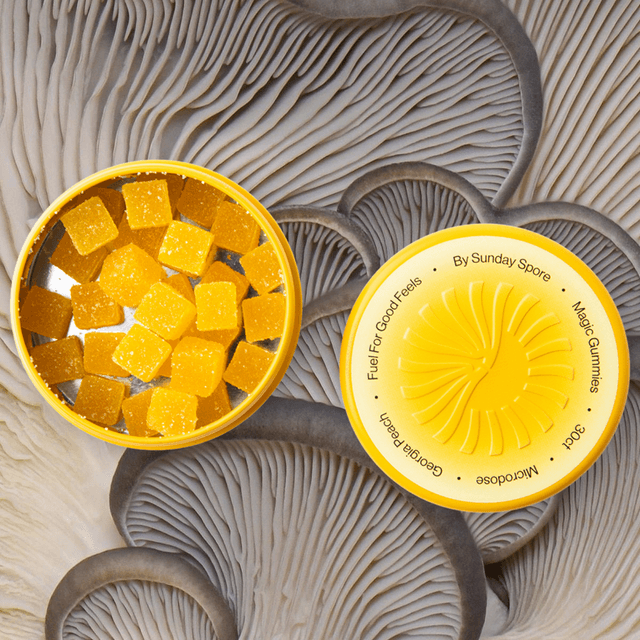
Precision Dosed
Every Sunday Spore gummy is lab-verified for precise, consistent dosing — no guessing, no scales, no batch variation. Just take one and go about your day.
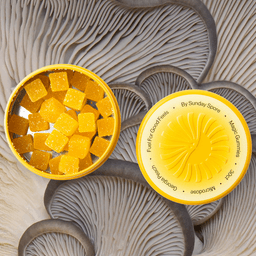
If you're ready to start microdosing...
Sunday Spore Microdose — precision-dosed mushroom gummies. Lab-tested, exact dosing, ships discreetly.
Dosing for Mood Support
Clinical trials showing antidepressant effects used doses of 1000-3000mg daily of lion's mane extract. Effects typically emerge at 4-8 weeks of consistent use. Morning dosing is preferred as lion's mane can be mildly stimulating and supports cognitive function throughout the day.
Reishi for Depression-Adjacent Symptoms
Reishi (Ganoderma lucidum) targets depression indirectly by addressing the constellation of symptoms that surround and perpetuate depressive episodes: poor sleep, chronic stress, and HPA axis dysregulation.
Sleep and Depression
The relationship between sleep disruption and depression is bidirectional - depression causes poor sleep, and poor sleep worsens depression. Breaking this cycle is often a critical first step in recovery.
Reishi's triterpene compounds promote deeper sleep without morning grogginess. By improving sleep architecture, reishi may help interrupt the sleep-depression cycle and create conditions where other interventions (therapy, exercise, lion's mane) can work more effectively.
Stress Response and Cortisol
Chronic stress is one of the strongest predictors of depression onset. Reishi acts as an adaptogen, modulating the HPA axis to normalize cortisol patterns. For people whose depression is driven by or maintained by chronic stress, reishi addresses a root contributor.
The Supporting Role
Reishi is best understood as an adjunct rather than a primary antidepressant. It creates the physiological conditions - better sleep, lower stress, reduced inflammation - that make depression recovery more accessible. Pairing reishi with lion's mane creates a complementary protocol: reishi supports the recovery environment while lion's mane actively promotes the neuroplasticity needed to establish new mood patterns.
For those whose depression is closely linked with anxiety, our article on mushroom gummies for anxiety covers anxiety-specific protocols in depth.
Building a Functional Mushroom Protocol for Mood
Primary Stack: Lion's Mane + Reishi
- Lion's mane (1000-2000mg daily, morning) - neuroplasticity, BDNF, anti-inflammatory
- Reishi (1000-1500mg daily, evening) - sleep support, stress modulation, additional anti-inflammatory activity
Timeline of Expected Effects
Weeks 1-2: Reishi supports improved sleep quality. Subtle reduction in stress reactivity. No significant mood changes yet from lion's mane.
Weeks 3-4: Lion's mane begins to show cognitive effects - slightly clearer thinking, less brain fog. Reishi's cumulative adaptogenic effects become more apparent.
Weeks 5-8: This is where clinical trials show measurable changes in depression scores. NGF-driven neuroplasticity has had time to promote new neural connections. Mood begins to stabilize.
Months 2-3: New baseline established. The combination of improved sleep, reduced inflammation, enhanced neuroplasticity, and normalized stress response creates a foundation for sustained mood improvement.
Adding Cognitive Support
For depression that manifests primarily as cognitive symptoms - difficulty concentrating, mental fog, inability to engage - adding mushroom gummies for focus can complement the mood protocol. Cordyceps and lion's mane together support both energy and cognitive clarity.
Safety Considerations: What You Must Know
Never Stop Antidepressants Without Medical Supervision
This cannot be overstated. If you are currently taking prescribed antidepressants (SSRIs, SNRIs, MAOIs, tricyclics, or any other medication for depression), do not stop, reduce, or modify your medication based on information in this article or any other online resource.
Abrupt antidepressant discontinuation can cause:
- Severe discontinuation syndrome (brain zaps, dizziness, nausea, insomnia)
- Rebound depression that may be worse than the original episode
- Suicidal ideation in some individuals
Any changes to your medication regimen must be made under direct medical supervision with a gradual tapering protocol.
Magic Mushroom Interactions
Magic mushrooms interact with serotonergic medications. Combining them with SSRIs can blunt the effects or, in rare cases with MAOIs, create dangerous serotonin syndrome. This is relevant for both full doses and microdoses. Never combine magic mushrooms with psychiatric medication without explicit guidance from a knowledgeable physician.
Functional Mushroom Safety
Lion's mane and reishi have excellent safety profiles and do not interact with serotonergic medications through the same pathways. They can generally be safely combined with antidepressants. However:
- Reishi may have mild blood-thinning effects - inform your doctor if you take anticoagulants
- Lion's mane is contraindicated for those with mushroom allergies
- Both should be sourced from reputable brands with third-party testing
- Start at lower doses and increase gradually
When Functional Mushrooms Are NOT Enough
Functional mushrooms are a complementary support - not a treatment for clinical depression. Seek immediate professional help if you experience:
- Suicidal thoughts or self-harm ideation
- Inability to perform basic daily activities (hygiene, eating, leaving bed)
- Depression lasting more than two weeks without improvement
- Psychotic symptoms (hallucinations, delusions, paranoia)
- Substance use as a coping mechanism
Depression is a serious medical condition. Functional mushrooms may support recovery as part of a comprehensive approach, but they do not replace therapy, medication, or professional clinical care.
When to Consider Functional Mushrooms vs. When to Seek Clinical Help
Functional Mushrooms May Be Appropriate When:
- You experience mild-to-moderate low mood that does not meet criteria for major depressive disorder
- You are already in treatment (therapy, medication) and want to add low-risk complementary support
- You have recovered from a depressive episode and want to support maintenance and prevention
- You are interested in neuroplasticity support alongside other wellness practices (exercise, meditation, therapy)
- Your doctor has confirmed that adding functional mushroom supplements is appropriate for your situation
Seek Professional Clinical Help When:
- Depressive symptoms are severe enough to impair daily functioning
- You have experienced symptoms for more than two consecutive weeks
- You have a history of recurrent depressive episodes
- You have thoughts of suicide or self-harm (call 988 Suicide and Crisis Lifeline immediately)
- Previous treatments have not been effective (you may be a candidate for newer interventions)
- Depression co-occurs with other conditions (anxiety disorders, PTSD, substance use)
The Honest Position
The responsible position on microdosing mushrooms for depression in 2026 is this: the practice shows observational promise, has biological plausibility, but lacks definitive controlled evidence separating its effects from placebo. Full-dose magic mushroom therapy has much stronger clinical evidence but is only legally available in limited settings (Oregon's regulated service centers, clinical trials, and some international retreats).
For most people seeking mushroom-based mood support today, functional mushrooms - particularly lion's mane - offer a legal, safe, evidence-based path that targets overlapping neurobiological mechanisms. They will not produce the dramatic acute effects of full-dose magic mushroom therapy, but they provide genuine, measurable neuroplasticity and anti-inflammatory support that accumulates over weeks of consistent use.
Whatever path you consider, do so in partnership with a healthcare provider who understands your full medical history, current medications, and individual risk factors. Depression is not something to manage alone, and no supplement - functional or otherwise - replaces the value of professional support.
Disclaimer
This content is for educational and informational purposes only. It is not medical advice and should not substitute professional medical guidance. Always consult a qualified healthcare provider before starting any supplement. These statements have not been evaluated by the FDA. Individual results vary.
“Three weeks into a Monday/Wednesday/Friday protocol and the difference in my foc...” — Sarah
“Bought the Big Guys for a camping trip with friends. The dosing is spot-on — eve...” — Marcus
Ready to start microdosing?
Try the Sunday Spore Microdose
Precision-dosed mushroom gummies designed for your microdosing protocol. Lab-tested. Exact dosing. Everything you need to start.
FAQ
Frequently Asked Questions
Does microdosing mushrooms help with depression?
Is it safe to microdose for depression while on antidepressants?
What legal mushrooms help with depression?
How long does it take for mushrooms to help depression?
Written by
Sunday Spore Editorial Team
Rigorously researched content from the Sunday Spore editorial team — covering mushroom science, functional wellness, and evidence-based supplementation.