Key Takeaways
- 1Mushroom gummies work when they contain the right species at research-supported doses
- 2Most ineffective products fail due to underdosing, mycelium-on-grain filler, or no lab testing
- 3Always verify a brand's COA, fruiting body sourcing, and per-gummy dosing before buying
- 4Effects are gradual - expect 1-4 weeks for functional mushrooms to show noticeable benefits
Quick Answer
Yes, mushroom gummies can work - but product quality varies enormously. Clinical research confirms that specific mushroom species (lion's mane for cognition, reishi for sleep/stress, cordyceps for energy) produce measurable effects at proper doses. The key factors determining whether a specific product works are: adequate dosing (500mg+ extract per gummy), fruiting body extracts (not mycelium-on-grain filler), and third-party lab testing confirming active compound levels.
Do Mushroom Gummies Work? What the Evidence Says
Do mushroom gummies work - or are they just another wellness fad? It's a fair question. The supplement industry has a long history of overpromising, social media is packed with influencers making outrageous claims, and the market is flooded with low-quality products that genuinely don't do anything.
But the answer requires specificity. The real questions are: which species have clinical evidence? At what doses? And which products actually deliver what they claim? Let's go through the research honestly - what's solid, what's promising, and what's still unproven.
The Evidence, Species by Species
Lion's Mane - Strong Evidence for Cognition
Lion's mane (Hericium erinaceus) has the most robust clinical evidence of any functional mushroom. Its key mechanism is stimulating Nerve Growth Factor (NGF) and Brain-Derived Neurotrophic Factor (BDNF) - proteins that support neuron growth and repair.
A 16-week randomized, double-blind, placebo-controlled trial found significantly improved cognitive function scores compared to placebo. When supplementation stopped, scores declined - confirming the effect was pharmacological, not expectation-driven.
Strength of evidence: Strong. Multiple controlled human trials with consistent results and a well-understood mechanism.
What it means for you: At 500mg+ daily, expect improved memory, focus, and reduced mental fog building over 2-4 weeks. For a deeper dive, see our lion's mane mushroom gummies guide and mushroom gummies for focus breakdown.
Reishi - Strong Evidence for Sleep and Stress
Reishi (Ganoderma lucidum) has centuries of traditional use backed by modern clinical research. Multiple RCTs show it reduces sleep onset latency and cortisol levels. Active compounds (triterpenes and polysaccharides) modulate the HPA axis - your body's central stress response system.
Strength of evidence: Strong for sleep and stress. Moderate for immune modulation.
What it means for you: Reishi gummies at proper doses improve sleep and reduce stress symptoms within 1-3 weeks through cumulative effects. See our reishi mushroom gummies guide and mushroom gummies for anxiety breakdown for detailed protocols.
Cordyceps - Moderate-to-Strong Evidence for Energy
Cordyceps (primarily Cordyceps militaris) targets cellular energy production through increased ATP availability. Studies confirm improved VO2 max and reduced fatigue in healthy adults after three weeks of supplementation.
Strength of evidence: Moderate-to-strong. ATP mechanism well-documented, consistent human exercise studies.
What it means for you: Genuine, non-jittery energy boost - especially noticeable during exercise and afternoon slumps. Expect results within 1-2 weeks of daily use. See our cordyceps mushroom gummies guide and mushroom gummies for energy breakdown for protocols.
Turkey Tail and Chaga - Moderate Evidence for Immunity
Turkey tail polysaccharopeptides (PSP and PSK) have been used as adjunct therapy in Japan for decades, with clinical trial support. Chaga demonstrates significant antioxidant activity and immune stimulation in preclinical models.
Strength of evidence: Moderate. Strong mechanistic evidence, fewer large-scale human RCTs. See our turkey tail and chaga guides for details.
Why So Many Products Don't Work
Here's where justified skepticism becomes important. Even when the mushroom species has solid research behind it, the product itself can fail. And most products on the market do fail, for three predictable reasons.
Problem 1: Underdosing
Research-supported doses for most functional mushrooms start at 500mg of extract per day, with many studies using 1000-3000mg. But walk through the supplement aisle and you'll find gummies containing 100-200mg - sometimes per gummy, sometimes per "serving" of 3-4 gummies. That's a fraction of what produced results in clinical trials.
A gummy with 150mg of lion's mane is not going to reproduce the effects of a study using 1000mg daily. It's that simple.
Problem 2: Mycelium-on-Grain Filler
This is the industry's dirty secret. Many "mushroom" products don't contain actual mushrooms - they contain mycelium grown on grain (rice, oats). The final product is mostly starch from the growing substrate. Independent testing has found some MOG products contain 60-70% grain starch with minimal active compounds like beta-glucans or triterpenes.
The label might say "mushroom supplement," but if it's mycelium-on-grain, you're mostly eating rice flour.
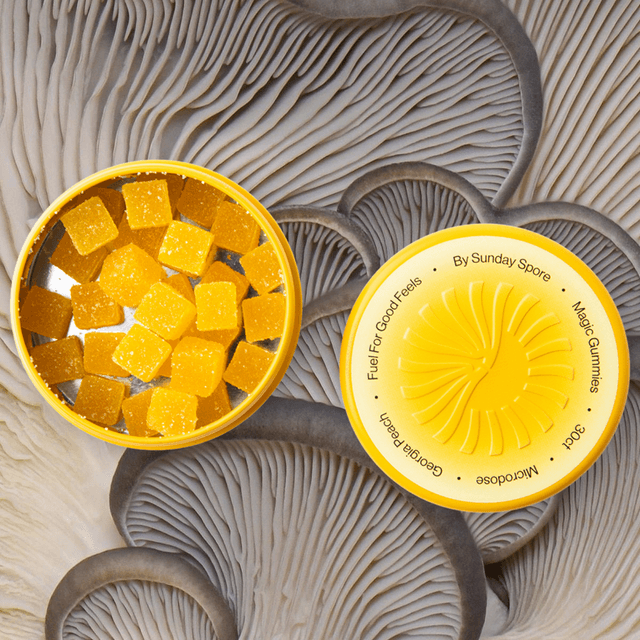
Precision Dosed
Every Sunday Spore gummy is lab-verified for precise, consistent dosing — no guessing, no scales, no batch variation. Just take one and go about your day.
If you're ready to start microdosing...
Sunday Spore Microdose — precision-dosed mushroom gummies. Lab-tested, exact dosing, ships discreetly.
Problem 3: No Standardization or Testing
Without third-party testing confirming active compound levels, a product is making promises it can't verify. Beta-glucan content (the primary active compound class in functional mushrooms) can vary enormously based on growing conditions, extraction methods, and processing. A product labeled "lion's mane 500mg" could contain 40% beta-glucans or 5% - and the label won't tell you.
If a brand doesn't publish a Certificate of Analysis (COA), there's literally no way to know whether you're getting a therapeutic dose of active compounds or expensive placebo.
The Placebo Question
Let's address this directly. Some studies suggest that a portion of reported supplement benefits may be expectation-driven. This is worth taking seriously.
But placebo effects don't explain everything. Studies with objective biomarkers (cortisol levels, inflammatory markers, cognitive test scores, VO2 max measurements) show effects that can't be placebo. The lion's mane cognition study is particularly instructive: benefits appeared during supplementation and disappeared when supplementation stopped. That's a pharmacological response, not wishful thinking.
The honest answer: placebo probably contributes something, especially for subjective benefits like "feeling sharper" or "sleeping better." But the measurable biological effects are real and reproducible.
How to Tell If a Product Will Work
The quick version: look for fruiting body extract (not mycelium-on-grain), third-party COA verifying active compound levels, and per-gummy dosing of 500mg+ of extract. If a brand can't provide these basics, the product is a gamble regardless of which species it contains.
For the complete breakdown of what to look for and avoid, see our best mushroom gummies 2026 buyer's guide.
Realistic Expectations
Functional mushrooms are not dramatic transformations. If a brand promises you'll "feel like a new person in 3 days," they're lying. These supplements work through gradual biological mechanisms - neuroplasticity, hormone regulation, cellular energy production. That takes time.
General timelines: lion's mane cognitive benefits at 2-4 weeks, reishi sleep/stress improvements at 1-3 weeks, cordyceps energy at 1-2 weeks, and immune support mushrooms measured in fewer sick days over months. For detailed timelines by species, see our guides on mushroom gummies for focus, anxiety, and sleep.
The Bottom Line
Do mushroom gummies work? The honest answer: specific species at adequate doses in quality products produce real, measurable effects supported by clinical research. But the average mushroom gummy on the market - underdosed, untested, packed with filler - probably doesn't do much.
The difference between "mushroom gummies" as a generic category and a well-formulated product is enormous. It's the difference between buying gas station vitamins and getting a pharmaceutical-grade supplement.
Be skeptical. But be specifically skeptical - question the product, not the science. The research is real. The question is whether what's in the bottle matches what's in the studies.
Disclaimer
This content is for educational and informational purposes only. It is not medical advice and should not substitute professional medical guidance. Always consult a qualified healthcare provider before starting any supplement. These statements have not been evaluated by the FDA. Individual results vary.
“Three weeks into a Monday/Wednesday/Friday protocol and the difference in my foc...” — Sarah
“Bought the Big Guys for a camping trip with friends. The dosing is spot-on — eve...” — Marcus
Ready to start microdosing?
Try the Sunday Spore Microdose
Precision-dosed mushroom gummies designed for your microdosing protocol. Lab-tested. Exact dosing. Everything you need to start.

FAQ
Frequently Asked Questions
What does the research say about mushroom gummies?
Why don't some mushroom gummies work?
How long do mushroom gummies take to work?
How can I tell if mushroom gummies are high quality?
Written by
Sunday Spore Editorial Team
Rigorously researched content from the Sunday Spore editorial team — covering mushroom science, functional wellness, and evidence-based supplementation.