Key Takeaways
- 1Functional mushrooms provide targeted health benefits through specific biological mechanisms
- 2The 'big five' functional species are lion's mane, reishi, cordyceps, chaga, and turkey tail
- 3Each species works through a different pathway - they complement rather than duplicate each other
- 4Adaptogens help your body adapt to stress rather than masking symptoms
- 5Quality matters enormously - fruiting body extracts with third-party testing are non-negotiable
Quick Answer
Functional mushroom gummies contain species that provide specific health benefits beyond basic nutrition - primarily lion's mane (cognition), reishi (sleep/stress), cordyceps (energy), chaga (antioxidant), and turkey tail (immunity). They work through distinct biological mechanisms: NGF stimulation, HPA axis modulation, ATP production, and immune modulation. Unlike regular vitamins, functional mushrooms are adaptogenic - they help your body respond to stress and return to homeostasis.
Functional Mushroom Gummies: What They Are and How They Work
Functional mushroom gummies are dietary supplements that deliver concentrated extracts from mushroom species with documented health benefits - packaged in a chewable gummy format for convenience and consistent dosing. Unlike a standard multivitamin or a protein supplement, these products contain bioactive compounds that interact with specific biological systems: your nervous system, immune response, cellular energy production, and hormonal stress pathways.
The term "functional" distinguishes these species from ordinary culinary mushrooms. A portobello provides calories and some micronutrients. A functional mushroom like lion's mane provides hericenones and erinacines that stimulate nerve growth factor production in your brain. That distinction - targeted biological activity beyond basic nutrition - is what defines the category.
The gummy delivery format has become the dominant way people consume these extracts, and for good reason. It solves the three biggest compliance problems with mushroom supplements: the unpleasant taste of raw extracts, inconsistent dosing from powders, and the inconvenience of brewing teas or tinctures. A well-formulated gummy delivers a precise, standardized dose of mushroom extract in a form you will actually take every day.
But the functional mushroom space is also flooded with low-quality products that contain minimal active compounds. Understanding what makes these mushrooms work - at a biological level - is the foundation for choosing products that deliver real results rather than expensive placebo effects.
What Makes a Mushroom "Functional"
Not every mushroom qualifies as functional. The designation requires three things: the presence of specific bioactive compounds, demonstrated interaction with human biological systems, and research supporting a particular health outcome.
Bioactive Compounds
Functional mushrooms contain classes of compounds rarely found in other foods or supplements:
- Beta-glucans - complex polysaccharides that modulate immune function by activating macrophages, natural killer cells, and dendritic cells
- Triterpenes - organic compounds (particularly ganoderic acids in reishi) that influence the HPA axis and inflammatory pathways
- Hericenones and erinacines - unique to lion's mane, these cross the blood-brain barrier and stimulate NGF (nerve growth factor) synthesis
- Cordycepin - an adenosine analog found in cordyceps that influences ATP production and cellular energy metabolism
- Ergothioneine - a potent antioxidant amino acid concentrated in functional mushroom species
These are not vague "antioxidants" or general nutrients. Each compound class has a specific mechanism of action and targets a particular biological system.
The Adaptogenic Mechanism
Most functional mushrooms are classified as adaptogens - substances that help the body adapt to stress and return to homeostasis. This is a fundamentally different approach from conventional supplements.
A stimulant forces energy production regardless of your body's state. An adaptogen supports your body's own regulatory systems so they respond more effectively to whatever challenge you face. When you are under-performing, adaptogens help you rise. When you are over-stressed, they help you calm. The direction of effect depends on what your body needs.
This bidirectional activity is mediated primarily through the hypothalamic-pituitary-adrenal (HPA) axis - your central stress response system. Functional mushrooms influence cortisol patterns, inflammatory signaling, and neurotransmitter balance through this regulatory hub rather than overriding it.
The Big Five Functional Mushroom Species
Five species dominate the functional mushroom category, each with distinct mechanisms and applications. Understanding their individual profiles is essential for choosing the right product for your goals.
Lion's Mane (Hericium erinaceus) - Cognition and Focus
Lion's mane is the premier nootropic mushroom. Its unique compounds - hericenones (from the fruiting body) and erinacines (from the mycelium) - stimulate the production of nerve growth factor (NGF), a protein essential for neuron growth, maintenance, and survival.
How it works: NGF supports the creation of new neural connections, maintains existing ones, and promotes myelin sheath integrity. This translates to improved memory consolidation, faster recall, sharper focus, and protection against age-related cognitive decline.
Research highlights: Clinical trials have demonstrated improvements in mild cognitive impairment scores, reduced symptoms of depression and anxiety, and enhanced cognitive function in healthy adults over 8-16 week supplementation periods.
Best for: Mental clarity, focus during work, memory support, long-term brain health.
For a deep dive into the cognitive research, see our complete lion's mane guide.
Reishi (Ganoderma lucidum) - Sleep and Stress
Reishi is the most studied adaptogenic mushroom, with over 400 bioactive compounds identified. Its primary active constituents - ganoderic acids (triterpenes) and beta-glucans - modulate the stress response and promote parasympathetic nervous system activation.
How it works: Reishi's triterpenes act on the HPA axis to normalize cortisol patterns - reducing the elevated evening cortisol that disrupts sleep onset and preventing the exaggerated stress responses that cause anxiety. Its GABAergic activity promotes calm without sedation.
Research highlights: Studies show improved sleep quality scores, reduced time to fall asleep, lower perceived stress, and immune system modulation. Reishi does not cause drowsiness - it removes the barriers to natural sleep.
Best for: Sleep quality, stress resilience, evening wind-down, long-term nervous system health.
Our reishi mushroom gummies article covers dosing protocols and timing strategies.
Cordyceps (Cordyceps militaris) - Energy and Performance
Cordyceps is the functional mushroom for physical and cellular energy. Its primary mechanism involves adenosine analogs - particularly cordycepin - that enhance ATP production and oxygen utilization at the cellular level.
How it works: Cordycepin increases mitochondrial efficiency, improves oxygen uptake (VO2 max), and enhances blood flow. Unlike caffeine, which blocks adenosine receptors to prevent fatigue signals, cordyceps actually increases your cells' capacity to produce energy. The result is sustainable vitality without jitters, crashes, or tolerance buildup.
Research highlights: Clinical studies demonstrate improved exercise performance, increased VO2 max, reduced fatigue in daily activities, and enhanced recovery from physical exertion. Effects compound over 1-3 weeks of consistent use.
Best for: Physical energy, athletic performance, workout recovery, reducing afternoon fatigue.
Learn about dosing and stacking for performance in our cordyceps guide.
Chaga (Inonotus obliquus) - Antioxidant and Anti-Inflammatory
Chaga contains one of the highest ORAC (Oxygen Radical Absorbance Capacity) scores of any natural substance. Its dense concentration of melanin, betulinic acid, and superoxide dismutase provides extraordinary antioxidant and anti-inflammatory activity.
How it works: Chaga's compounds neutralize free radicals, reduce oxidative stress markers, inhibit NF-kB inflammatory signaling, and support the body's endogenous antioxidant systems (glutathione, SOD). This isn't just damage prevention - it's active support of cellular repair mechanisms.
Research highlights: Studies show significant reduction in oxidative stress markers, lower inflammatory cytokines, improved markers of immune function, and potential protective effects against DNA damage.
Best for: Immune foundation, reducing inflammation, skin health, general cellular protection.
Our chaga mushroom gummies breakdown details extraction methods and bioavailability.
Turkey Tail (Trametes versicolor) - Immune Modulation
Turkey tail is the most clinically validated functional mushroom for immune support. Its polysaccharide compounds - PSK (polysaccharide-K) and PSP (polysaccharopeptide) - are so effective that they are approved as adjunct therapies in several countries.
How it works: Turkey tail's beta-glucans and protein-bound polysaccharides activate multiple arms of the immune system simultaneously. They stimulate natural killer cells, enhance T-cell activity, increase macrophage function, and promote healthy gut microbiome composition (which houses 70% of immune tissue).
Research highlights: Extensive clinical data supports immune enhancement, gut microbiome improvements, and significant immune system modulation. Turkey tail has more peer-reviewed immune research than any other functional mushroom.
Best for: Immune system strength, gut health, seasonal resilience, recovery support.
See our turkey tail gummies guide for the immune research details.
How Functional Mushrooms Differ from Regular Supplements
The supplement aisle is crowded. Understanding how functional mushrooms occupy a unique category helps explain both their advantages and their limitations.
Targeted Mechanisms vs. Nutritional Gaps
Standard supplements (vitamins, minerals, amino acids) fill nutritional deficiencies. If you lack vitamin D, taking vitamin D fixes the problem. The mechanism is simple replacement.
Functional mushrooms operate differently. They are not correcting deficiencies - they are optimizing systems. Your body does not have a "lion's mane deficiency." Instead, lion's mane provides compounds that enhance your brain's existing capacity for neuroplasticity. The effect is enhancement, not correction.
Adaptogenic vs. Stimulatory
Most performance supplements work in one direction. Caffeine stimulates. Melatonin sedates. They override your body's current state and push it in a predetermined direction.
Adaptogens - including most functional mushrooms - work with your body's regulatory systems. They support homeostasis rather than forcing a particular outcome. This means fewer side effects, no tolerance buildup, no crashes, and benefits that compound rather than diminish over time.
Cumulative vs. Acute
You take ibuprofen and the headache stops in 30 minutes. That is an acute intervention.
Functional mushrooms work cumulatively. The compounds build up in your system, the biological pathways they support strengthen over time, and the benefits emerge gradually. This requires patience and consistency - but it also means the benefits are structural, not temporary.
Functional Mushrooms vs. Culinary Mushrooms vs. Psychoactive Mushrooms
This is a critical distinction that eliminates confusion in the marketplace.
Culinary Mushrooms
Shiitake, portobello, cremini, oyster, maitake. These are food. They provide fiber, B vitamins, selenium, and some beta-glucans. They are nutritious but not therapeutic at normal dietary amounts. You would need to eat pounds daily to approach the bioactive compound concentrations found in a functional mushroom extract.
Functional Mushrooms
Lion's mane, reishi, cordyceps, chaga, turkey tail. These are concentrated medicinal species containing bioactive compounds at therapeutic levels. They are legal dietary supplements in all 50 states. They produce no intoxication, no altered states, no psychoactive effects. They are as legal as vitamin C.
Psychoactive Mushrooms
An entirely separate biological category containing compounds that act on serotonin receptors to produce altered states of consciousness. These are federally classified as Schedule I substances and have absolutely nothing in common with functional mushroom supplements beyond the word "mushroom."
When you see "functional mushroom gummies" on a label, you are looking at the middle category - legal, non-psychoactive, health-supporting supplements. Our legal mushroom gummies guide provides a complete breakdown of the regulatory landscape.
How to Choose Quality Functional Mushroom Gummies
The functional mushroom market has a significant quality problem. Most products on the market fail to deliver therapeutic doses of active compounds. Here is what separates effective products from expensive placebos.
Fruiting Body vs. Mycelium on Grain
This is the single most important quality indicator. Mushroom supplements can be made from:
- Fruiting body - the actual mushroom that grows above ground, concentrated with bioactive compounds
- Mycelium on grain - fungal root structure grown on rice or oat substrate, which is then ground up - grain and all
Mycelium-on-grain products often contain 50-70% starch filler from the growing substrate. The beta-glucan content can be 5-10x lower than fruiting body extracts. Always confirm "fruiting body" or "fruiting body extract" on the label.
Extraction Method
Raw mushroom powder - even from fruiting bodies - has limited bioavailability because the active compounds are locked inside chitin cell walls that humans cannot digest. Proper extraction (hot water, dual extraction, or alcohol extraction) breaks these walls and makes compounds bioavailable.
Look for "extract" on the label, ideally with a specified extraction ratio (e.g., 10:1, 15:1). Plain "mushroom powder" without extraction will pass through your digestive system largely intact.
Third-Party Testing and COAs
A Certificate of Analysis (COA) from an independent lab verifies:
- Beta-glucan percentage (minimum 20% for quality extracts, 30%+ for premium)
- Absence of heavy metals, pesticides, and contaminants
- Actual mushroom content vs. filler
- Species verification (DNA testing confirms you are getting what the label claims)
If a brand does not publish COAs or refuses to provide them on request, move on. Transparency is non-negotiable in this space.
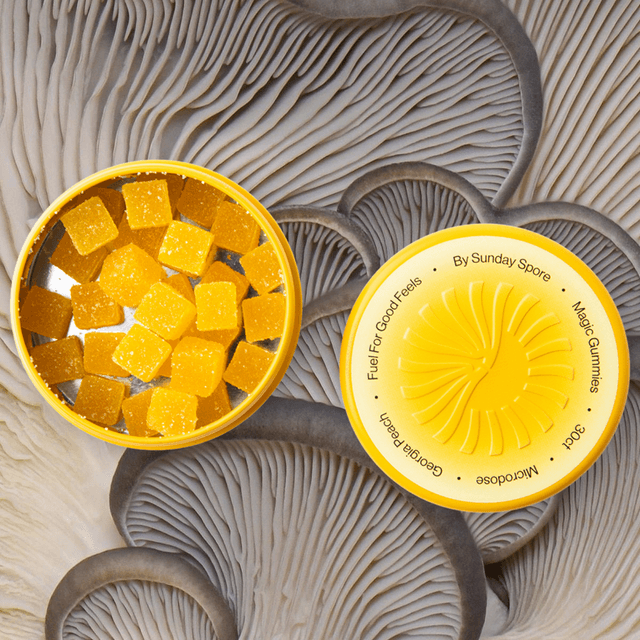
Precision Dosed
Every Sunday Spore gummy is lab-verified for precise, consistent dosing — no guessing, no scales, no batch variation. Just take one and go about your day.
If you're ready to start microdosing...
Sunday Spore Microdose — precision-dosed mushroom gummies. Lab-tested, exact dosing, ships discreetly.
Dosing
Clinical research typically uses 500mg-3000mg of extract per day depending on species. A gummy claiming "500mg mushroom blend" split across five species gives you only 100mg per species - far below any researched therapeutic dose.
Check the per-species dose, not just the total blend weight. A quality product delivers a meaningful amount of each individual mushroom rather than sprinkling trace amounts across many species.
For a comprehensive product comparison, our best mushroom gummies 2026 ranking evaluates leading brands against these criteria.
Why the Gummy Format Works
Gummies have become the preferred delivery format for functional mushrooms, and the reasons go beyond taste preference.
Precise Dosing
Each gummy contains an exact, pre-measured amount of extract. No measuring scoops, no estimating teaspoons, no variation between servings. When research says "500mg lion's mane daily showed cognitive benefits," you know exactly how many gummies deliver that dose.
Compliance and Consistency
The best supplement is the one you actually take. Mushroom extracts in powder or tincture form taste earthy, bitter, and often unpleasant. Gummies eliminate the taste barrier entirely. This seemingly trivial advantage has an enormous impact on long-term compliance - and functional mushrooms require consistent daily use to produce results.
Absorption Considerations
The chewing process begins digestion in the mouth, where sublingual absorption can accelerate uptake of certain compounds. The gummy matrix also provides a gentle delivery vehicle that reduces the stomach irritation some people experience with capsules or raw powders taken on an empty stomach.
Portability
A bottle of gummies travels easily. No water needed, no mess, no preparation. This matters for maintaining consistency during travel, busy mornings, or irregular schedules.
Common Goals and Which Species to Choose
Different goals call for different species - or combinations of species. Here is a decision framework based on what you are trying to achieve.
Cognitive Performance and Focus
Primary: Lion's mane (NGF stimulation, neuroplasticity) Supporting: Cordyceps (cellular energy for brain metabolism)
This combination provides both the neuroplastic substrate (new connections) and the energy to power enhanced cognitive function.
Sleep Quality and Stress Resilience
Primary: Reishi (HPA axis modulation, GABAergic activity) Supporting: Lion's mane (anxiety reduction via NGF pathways)
Reishi addresses the cortisol dysregulation that prevents sleep onset, while lion's mane reduces the rumination and anxiety that keep you awake.
Physical Energy and Athletic Performance
Primary: Cordyceps (ATP production, oxygen utilization) Supporting: Chaga (anti-inflammatory, recovery support)
Cordyceps fuels performance while chaga reduces exercise-induced inflammation and accelerates recovery.
Immune System Strength
Primary: Turkey tail (comprehensive immune modulation) Supporting: Chaga (antioxidant protection, anti-inflammatory)
Turkey tail activates multiple immune pathways while chaga provides the antioxidant foundation that prevents immune system degradation.
Comprehensive Daily Support
All five species in meaningful doses cover cognition, energy, sleep, immunity, and cellular protection simultaneously. This "full spectrum" approach is ideal for general wellness optimization.
For detailed stacking protocols, see our mushroom stacking guide.
What to Expect: A Realistic Timeline
Functional mushroom gummies are not instant-effect supplements. Setting accurate expectations prevents premature discontinuation and helps you evaluate whether a product is working.
Week 1-2
Cordyceps: Subtle energy improvements begin. Less afternoon fatigue, slightly easier workouts. Effects are mild but noticeable if you pay attention.
Reishi: Sleep onset may improve slightly. Stress reactivity begins to soften. These changes are subtle enough that many people miss them initially.
Lion's mane, chaga, turkey tail: Building phase. Active compounds are accumulating but effects are not yet perceptible.
Week 2-4
Cordyceps: Clear energy improvements. Noticeably better exercise tolerance. Reduced reliance on caffeine for afternoon alertness.
Reishi: Measurable sleep quality improvement. Calmer stress response. Less evening winding-up.
Lion's mane: Cognitive effects begin emerging. Improved focus duration, better word recall, enhanced mental clarity during demanding tasks.
Chaga and turkey tail: Immune and anti-inflammatory benefits are building but remain difficult to perceive without biomarker testing.
Month 2-3
All species are at full effect. Benefits compound and stabilize. This is when most people report the clearest "before and after" differences - particularly if they temporarily stop taking the supplements and notice the contrast.
Long-Term (3+ Months)
Neuroprotective, immune-building, and anti-inflammatory benefits continue accumulating. These are structural changes that provide increasing returns over time. Unlike stimulants that lose effectiveness, functional mushrooms become more beneficial with extended use.
For a deeper look at the evidence, our article on whether mushroom gummies actually work examines the clinical data behind these timelines.
The Market Quality Problem
The functional mushroom gummy market has grown rapidly, and product quality has not kept pace. Understanding the common failures helps you avoid wasting money on ineffective products.
The Underdosing Epidemic
Many brands list impressive ingredient panels - five, eight, even twelve mushroom species - but deliver only trace amounts of each. A "proprietary blend" of 500mg total across eight species provides roughly 60mg per species. Clinical research uses 500-3000mg of a single species. The math does not work.
Mycelium Masquerading as Mushroom
A significant percentage of products labeled "mushroom" actually contain myceliated grain - the fungal root structure grown on rice substrate, then ground up whole. This is cheaper to produce but contains a fraction of the bioactive compounds found in actual fruiting body extracts. The resulting product may be 60-70% rice starch by weight.
No Extraction, No Bioavailability
Some products use raw mushroom powder without extraction. The bioactive compounds in mushrooms are locked behind chitin cell walls - the same material that makes insect exoskeletons rigid. Without extraction to break these walls, the compounds pass through your digestive system without being absorbed. You are essentially eating expensive fiber.
Misleading "Equivalent" Claims
Watch for "equivalent to 2000mg of mushrooms" claims on products containing 200mg of actual extract. This refers to the weight of raw mushrooms before concentration - a technically true but practically meaningless metric. What matters is the actual extract weight and its beta-glucan content.
The Path Forward
The solution is straightforward: buy from brands that use fruiting body extracts, publish third-party COAs with beta-glucan percentages above 20%, provide transparent per-species dosing, and use verified extraction methods. These products cost more, but they are the only ones delivering what the research supports.
Building Your Functional Mushroom Protocol
Starting a functional mushroom regimen does not require complexity. Here is a practical framework:
Step 1: Identify your primary goal (cognition, energy, sleep, immunity, or general wellness).
Step 2: Select 1-3 species aligned with that goal using the combinations outlined above.
Step 3: Choose a quality product meeting the criteria in this guide (fruiting body, extracted, third-party tested, adequate dosing).
Step 4: Take consistently every day for a minimum of 30 days before evaluating results. Sixty days gives a clearer picture.
Step 5: Adjust based on results. Add complementary species, modify timing, or increase dose within recommended ranges.
Functional mushroom gummies represent one of the most accessible entry points into adaptogenic supplementation. They deliver researched compounds in a format that removes every barrier to consistent use. The key is choosing products that contain what the label claims in doses that the research supports - and giving them enough time to work through their cumulative mechanisms.
The species profiled in this guide - lion's mane, reishi, cordyceps, chaga, and turkey tail - have centuries of traditional use validated by modern clinical research. They are not miracle cures, and they are not instant fixes. They are biological tools that support your body's existing systems in measurable, research-backed ways. Used consistently and sourced well, they deliver.
Disclaimer
This content is for educational and informational purposes only. It is not medical advice and should not substitute professional medical guidance. Always consult a qualified healthcare provider before starting any supplement. These statements have not been evaluated by the FDA. Individual results vary.
“Three weeks into a Monday/Wednesday/Friday protocol and the difference in my foc...” — Sarah
“Bought the Big Guys for a camping trip with friends. The dosing is spot-on — eve...” — Marcus
Ready to start microdosing?
Try the Sunday Spore Microdose
Precision-dosed mushroom gummies designed for your microdosing protocol. Lab-tested. Exact dosing. Everything you need to start.
FAQ
Frequently Asked Questions
What makes a mushroom 'functional'?
Are functional mushroom gummies the same as magic mushroom gummies?
How long do functional mushroom gummies take to work?
Can you take functional mushroom gummies every day?
Written by
Sunday Spore Editorial Team
Rigorously researched content from the Sunday Spore editorial team — covering mushroom science, functional wellness, and evidence-based supplementation.