Key Takeaways
- 1Magic mushroom microdosing uses 0.1-0.3g on structured schedules (every 3rd day or 4-on/3-off)
- 2Functional mushroom microdosing (lion's mane, reishi) is legal, daily, and research-backed
- 3Both approaches target mood, focus, and anxiety - through different biological mechanisms
- 4Magic mushroom microdosing remains federally illegal; functional mushrooms are legal everywhere
- 5Start low, track your response, and adjust based on how you feel over 2-4 weeks
Quick Answer
Microdosing mushrooms involves taking sub-perceptual doses on a structured schedule. For magic mushrooms, typical protocols use 0.1-0.3g every 3rd day (Fadiman) or 4-on/3-off (Stamets). For legal functional mushrooms, daily dosing of lion's mane (500-1000mg) and reishi (1000-1500mg) provides research-backed cognitive and mood benefits through different mechanisms - no legal risk, no tolerance cycling needed.
How to Microdose Mushrooms: Two Approaches Explained
If you're researching how to microdose mushrooms, you've probably encountered two very different worlds of information. On one side, there's the growing conversation around microdosing magic mushrooms - sub-perceptual doses of psychoactive species taken on structured schedules. On the other, there's functional mushroom microdosing - daily low-dose protocols using legal species like lion's mane, reishi, and cordyceps that target similar cognitive and mood outcomes through entirely different biological pathways.
Both approaches fall under the broad umbrella of mushroom microdosing, but they differ in legality, mechanism, scheduling, safety profile, and accessibility. Understanding these differences is essential before you decide which path makes sense for your goals.
This guide covers both approaches factually. We'll explain the protocols, the science, the risks, and the practical steps - so you can make an informed decision based on evidence rather than hype.
The Two Categories: Magic Mushrooms vs. Functional Mushrooms
Magic Mushroom Microdosing
Magic mushroom microdosing refers to taking sub-perceptual doses of psychoactive mushroom species - typically Psilocybe cubensis - on a cycling schedule. "Sub-perceptual" means the dose is low enough that you don't experience any psychedelic effects like visual changes, altered perception, or impaired function. The goal is subtle shifts in mood, creativity, and cognitive flexibility over time.
This practice has gained significant attention through researchers like James Fadiman and mycologist Paul Stamets, who have proposed structured protocols (covered below). Anecdotal reports are extensive, though controlled clinical research on microdosing specifically is still limited.
Critical legal note: Magic mushroom microdosing remains federally illegal in the United States and most countries. Some jurisdictions (Oregon, Colorado, parts of Canada) have moved toward decriminalization or regulated therapeutic access, but personal possession and use outside these frameworks carries legal risk.
Functional Mushroom Microdosing
Functional mushroom microdosing uses daily doses of non-psychoactive, legal mushroom species - primarily lion's mane, reishi, and cordyceps - that have established research supporting cognitive, mood, and stress-regulation benefits. These species work through completely different mechanisms than magic mushrooms: NGF stimulation (lion's mane), HPA axis modulation (reishi), and cellular energy support (cordyceps).
The term "microdosing" here is somewhat colloquial - these are really just evidence-based daily supplement doses. But the comparison is apt because the targeted outcomes overlap significantly: better focus, reduced anxiety, improved mood stability, and enhanced mental clarity.
Functional mushroom microdosing is legal everywhere, doesn't require cycling schedules, and has substantially more clinical safety data behind it.
Magic Mushroom Protocols: Fadiman and Stamets
The following section explains the most commonly referenced magic mushroom microdosing protocols for educational purposes. This is factual information - not an endorsement or recommendation.
The Fadiman Protocol
Developed by psychologist James Fadiman based on thousands of self-reports collected over a decade, this protocol uses a three-day cycle:
- Day 1: Microdose day (0.1-0.3g dried mushroom)
- Day 2: Transition day (no dose, effects may still be subtly present)
- Day 3: Rest day (baseline, no residual effects)
- Repeat from Day 1
The logic behind the three-day cycle is twofold: it prevents tolerance buildup (which occurs rapidly with psychoactive compounds) and provides clear baseline days for comparison, helping you assess whether the microdose is actually producing effects versus placebo.
Fadiman recommends running this protocol for 4-8 weeks, then taking a 2-4 week break to reset and evaluate. For more detail on scheduling approaches, see our mushroom microdosing schedule guide.
The Stamets Protocol (Stacking)
Mycologist Paul Stamets proposed a different approach that incorporates functional mushrooms alongside magic mushroom microdoses:
- Days 1-4: Microdose (magic mushroom + lion's mane + niacin)
- Days 5-7: Rest (no magic mushroom dose; lion's mane can continue)
- Repeat
Stamets theorized that combining these compounds creates synergistic effects - the niacin as a vasodilator to distribute compounds more broadly, and lion's mane for its neurogenic properties. This "stacking" approach is more aggressive than Fadiman's protocol and has less formal research behind it, though Stamets has advocated for clinical investigation.
Typical Dosing Range
For magic mushroom microdoses, the commonly cited range is:
- Low end: 0.05-0.1g dried (very subtle, good starting point)
- Standard: 0.1-0.2g dried (most commonly reported)
- Upper end: 0.2-0.3g dried (still sub-perceptual for most, but approaching threshold)
"Sub-perceptual" is the defining characteristic. If you notice any visual changes, altered time perception, or impairment, the dose is too high for microdosing purposes. Individual sensitivity varies significantly - body weight, metabolism, and the specific mushroom's potency all affect response.
For those interested in the reported benefits people seek from this practice, our microdosing benefits overview covers the research landscape in more detail.
Functional Mushroom Microdosing: The Legal Path
Functional mushroom microdosing uses research-backed daily doses of legal species to target cognitive performance, mood regulation, and stress resilience. Unlike magic mushroom protocols, these don't require cycling, don't carry legal risk, and have decades of clinical research supporting their safety and efficacy.
Lion's Mane for Cognitive Function
Lion's mane (Hericium erinaceus) is the cornerstone of functional mushroom microdosing protocols focused on mental performance. It works by stimulating your brain's production of Nerve Growth Factor (NGF) and Brain-Derived Neurotrophic Factor (BDNF) - proteins essential for neuron growth, repair, and connection formation.
Daily protocol: 500-1000mg fruiting body extract, taken in the morning
What research shows: A 16-week randomized controlled trial found significant improvements in cognitive function scores compared to placebo. Effects are cumulative - most people notice meaningful changes at weeks 3-4, with benefits continuing to build over months.
Best for: Focus, working memory, mental clarity, learning capacity
For a complete breakdown of lion's mane dosing and what to expect week by week, see our lion's mane mushroom gummies guide.
Reishi for Mood and Stress
Reishi (Ganoderma lucidum) targets the HPA (hypothalamic-pituitary-adrenal) axis - your body's central stress response system. By modulating cortisol patterns and supporting GABA activity, reishi helps regulate the physiological stress response that drives anxiety, sleep disruption, and mood instability.
Daily protocol: 1000-1500mg fruiting body extract, taken in the evening
What research shows: Clinical trials demonstrate reduced anxiety scores, improved sleep quality, and better stress resilience over 8-12 weeks of daily use. Triterpenes (ganoderic acids) are the primary bioactive compounds.
Best for: Anxiety reduction, sleep quality, emotional stability, stress resilience
If anxiety management is your primary goal, our mushroom gummies for anxiety guide covers how reishi and other species compare for this specific outcome.
Cordyceps for Energy and Motivation
Cordyceps (Cordyceps militaris) supports cellular energy production through ATP synthesis and oxygen utilization. It doesn't work like caffeine - instead of borrowing from tomorrow's energy, it improves your cells' baseline capacity to produce energy efficiently.
Daily protocol: 500-1000mg fruiting body extract, taken in the morning
What research shows: Studies show improved oxygen uptake (VO2 max), reduced fatigue perception, and enhanced exercise performance. Mental energy and motivation improvements are commonly reported alongside physical benefits.
Best for: Physical and mental energy, exercise performance, reducing fatigue
Stacking Functional Mushrooms
One advantage of functional mushrooms is that they can be combined without negative interactions. A common daily stack:
- Morning: Lion's mane (500-1000mg) + Cordyceps (500mg) - cognitive + energy
- Evening: Reishi (1000-1500mg) - stress regulation + sleep support
This protocol covers the three primary goals most people bring to microdosing: better thinking, more energy, and less anxiety. Each species works through distinct mechanisms, so combining them adds breadth without redundancy.
Comparing Outcomes: What Each Approach Targets
Both magic mushroom and functional mushroom microdosing share common goals, but they achieve them through fundamentally different biology:
Focus and Cognitive Performance
- Magic mushrooms: Proposed mechanism involves increased neural connectivity and reduced default mode network (DMN) activity, allowing more flexible thinking patterns. Evidence is mostly anecdotal and from survey studies.
- Functional mushrooms (lion's mane): Works through NGF and BDNF stimulation, physically supporting neuron growth and synaptic strengthening. Evidence from randomized controlled trials. See our mushroom gummies for focus guide for specific protocols.
Mood and Depression
- Magic mushrooms: Hypothesized to promote neuroplasticity and disrupt rigid thought patterns associated with depression. Several clinical trials on full doses show promise; microdose-specific research is limited.
- Functional mushrooms (reishi + lion's mane): Reishi modulates the HPA axis and cortisol, lion's mane supports BDNF (low BDNF is associated with depression). Both mechanisms are established in peer-reviewed research.
For a deeper look at the evidence for mushrooms and mood, see our microdosing for depression guide.
Anxiety Reduction
- Magic mushrooms: Some microdosers report reduced anxiety; others report increased anxiety, particularly at higher microdoses or in people with anxiety disorders. Effects are inconsistent across self-reports.
- Functional mushrooms (reishi): Consistent anxiolytic effects demonstrated in clinical trials through GABA modulation and cortisol regulation. Predictable, dose-dependent response with established safety data.
Creativity and Cognitive Flexibility
- Magic mushrooms: This is perhaps the area where anecdotal reports are strongest - many microdosers specifically cite enhanced creativity, novel thinking, and problem-solving. Mechanism may involve reduced DMN filtering.
- Functional mushrooms: Less directly targeted at creativity, though the improved focus and working memory from lion's mane may support creative work indirectly by keeping you in flow states longer.
Safety Considerations
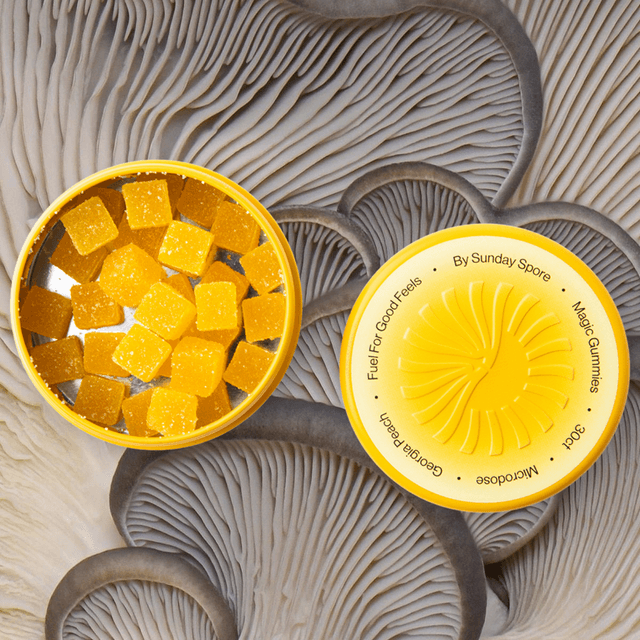
Precision Dosed
Every Sunday Spore gummy is lab-verified for precise, consistent dosing — no guessing, no scales, no batch variation. Just take one and go about your day.
If you're ready to start microdosing...
Sunday Spore Microdose — precision-dosed mushroom gummies. Lab-tested, exact dosing, ships discreetly.
Magic Mushroom Microdosing Risks
Legal risk: This is the most concrete concern. Magic mushrooms remain a Schedule I substance federally. Possession carries criminal penalties in most U.S. states, even at microdose quantities. The legal landscape is shifting - Oregon, Colorado, and some cities have moved toward decriminalization - but for most people in most places, this carries real legal exposure.
Psychological risks:
- Increased anxiety in sensitive individuals (particularly at higher microdoses)
- Emotional amplification - existing difficult emotions may intensify
- Difficulty with dose consistency (mushroom potency varies significantly)
- Potential for gradually increasing doses beyond sub-perceptual range
Physical concerns:
- Potential cardiovascular effects with chronic use (5-HT2B receptor agonism)
- No long-term safety studies on repeated microdosing
- Drug interactions (particularly with SSRIs and other serotonergic medications)
- Unregulated supply means unknown purity and exact compound content
Contraindications:
- History of psychotic disorders or bipolar disorder
- Current use of SSRIs, MAOIs, or lithium
- Pregnancy or nursing
- Cardiovascular conditions
Functional Mushroom Safety Profile
Established safety data: Functional mushrooms have been used for thousands of years in traditional medicine and have been studied in modern clinical trials with excellent safety profiles.
Possible mild effects:
- Digestive discomfort in the first few days (usually resolves)
- Mild headache at higher doses (rare)
- Slight energizing effect from lion's mane that may affect sleep if taken too late
Drug interactions (mild, but worth noting):
- Lion's mane may mildly affect blood clotting - consult your doctor if on blood thinners
- Reishi may lower blood pressure slightly - relevant if on BP medication
- Cordyceps may affect blood sugar - relevant for diabetes medications
No tolerance buildup: Unlike magic mushrooms, functional mushrooms don't develop tolerance with daily use. You can take them consistently without needing to cycle off or increase your dose.
For a comprehensive safety overview covering all species, our mushroom gummies safety guide covers contraindications and interactions in detail.
Legal Status: A Clear Distinction
This is not a gray area. The legal distinction between these two approaches is absolute:
Magic mushrooms:
- Federally illegal (Schedule I) in the United States
- Illegal in most countries worldwide
- Decriminalized (not legalized) in select cities: Denver, Oakland, Santa Cruz, Ann Arbor, Seattle, Washington D.C.
- Regulated therapeutic access in Oregon (supervised only) and Colorado (healing centers only)
- Legal in some form in the Netherlands (truffles), Jamaica, and Brazil
Functional mushrooms (lion's mane, reishi, cordyceps, chaga, turkey tail):
- Legal everywhere as dietary supplements
- Sold openly in stores and online
- No prescription required
- No quantity restrictions
- No criminal risk whatsoever
If legal accessibility is a factor in your decision - and for most people it should be - functional mushrooms are the only risk-free option.
Getting Started: A Functional Mushroom Microdosing Protocol
For those choosing the legal, research-backed path, here's a practical starting protocol:
Week 1: Baseline and Introduction
Goal: Establish your baseline and introduce one species
- Start a simple daily journal noting energy (1-10), focus (1-10), mood (1-10), and sleep quality (1-10) for 3 days before starting
- Begin with lion's mane only: 500mg in the morning with food
- Continue journaling daily
- Note any digestive changes (normal if mild, usually resolves by day 3-4)
Week 2: Assess and Adjust
Goal: Evaluate lion's mane response and consider adding a second species
- If tolerating 500mg well, increase to 750mg or 1000mg
- If focus/cognition is your primary goal, stay with lion's mane alone for now
- If stress/anxiety is a concern, add reishi: 1000mg in the evening
- Continue daily tracking
Weeks 3-4: Full Protocol
Goal: Run your complete stack and look for cumulative effects
- Lion's mane: 500-1000mg morning
- Reishi: 1000-1500mg evening (if using)
- Cordyceps: 500mg morning (add if energy is a goal)
- This is typically when lion's mane cognitive effects become noticeable
- Compare journal scores from week 3-4 to your pre-protocol baseline
Weeks 5-8: Optimization
Goal: Fine-tune timing, dosing, and stacking based on your data
- Adjust doses based on what your tracking shows
- Experiment with timing (some people prefer lion's mane with lunch rather than breakfast)
- Most people find their optimal protocol within 6-8 weeks
- There's no need to cycle off - continue daily for ongoing benefits
Tracking Your Results
Whether you choose magic mushrooms or functional mushrooms, tracking is essential. Without data, you can't separate real effects from placebo or coincidence.
What to Track Daily
- Focus quality (1-10): How easily could you sustain deep attention?
- Mood baseline (1-10): Overall emotional state, independent of events
- Anxiety level (1-10): Background worry, tension, rumination
- Energy (1-10): Physical and mental energy throughout the day
- Sleep quality (1-10): How rested do you feel?
- Notable observations: Any unusual clarity, creativity, emotional responses
How to Evaluate
- Compare weekly averages rather than individual days (daily variation is normal)
- Look for trends over 2-4 week windows
- For magic mushroom protocols: compare dose days vs. off days vs. baseline
- For functional mushrooms: compare week 4+ to your pre-protocol baseline
- If you see no difference after 6-8 weeks, the protocol may not be right for you
Common Mistakes
- Expecting immediate results - Functional mushrooms build effects over weeks, not hours
- Not tracking baseline - Without knowing where you started, you can't measure change
- Changing multiple variables at once - Add one species at a time so you know what's doing what
- Inconsistent dosing - Skipping days undermines cumulative effects (especially lion's mane)
- Confirmation bias - Track before you form expectations; look at numbers, not feelings about numbers
The Bottom Line
The question of how to microdose mushrooms has two fundamentally different answers depending on which category of mushroom you're asking about.
Magic mushroom microdosing is a practice with growing anecdotal support and emerging research - but it carries legal risk, has limited long-term safety data, requires careful cycling, and depends on an unregulated supply. It may offer unique benefits, particularly around creativity and cognitive flexibility, but these remain to be confirmed by rigorous controlled trials.
Functional mushroom microdosing - daily protocols with lion's mane, reishi, and cordyceps - is legal, well-researched, safe for long-term daily use, and targets many of the same outcomes people seek from magic mushroom microdosing. The mechanisms are different, but the goals overlap significantly: better focus, stable mood, reduced anxiety, and improved mental performance.
For most people, the functional mushroom path offers the better risk-to-benefit ratio: real, research-backed effects with zero legal exposure and established safety data. Start with lion's mane for cognition, add reishi if stress or anxiety is a primary concern, and give it at least 4 weeks of consistent daily use before evaluating results.
The best protocol is the one you can sustain safely and consistently. For the vast majority of people, that means functional mushrooms - taken daily, tracked methodically, and adjusted based on your actual response over time.
Disclaimer
This content is for educational and informational purposes only. It is not medical advice and should not substitute professional medical guidance. Always consult a qualified healthcare provider before starting any supplement. These statements have not been evaluated by the FDA. Individual results vary.
“Three weeks into a Monday/Wednesday/Friday protocol and the difference in my foc...” — Sarah
“Bought the Big Guys for a camping trip with friends. The dosing is spot-on — eve...” — Marcus
Ready to start microdosing?
Try the Sunday Spore Microdose
Precision-dosed mushroom gummies designed for your microdosing protocol. Lab-tested. Exact dosing. Everything you need to start.

FAQ
Frequently Asked Questions
What's the difference between microdosing magic mushrooms and functional mushrooms?
How often should you microdose mushrooms?
Can you microdose mushrooms every day?
What are the risks of microdosing mushrooms?
Written by
Sunday Spore Editorial Team
Rigorously researched content from the Sunday Spore editorial team — covering mushroom science, functional wellness, and evidence-based supplementation.