Key Takeaways
- 1Functional microdose gummies (lion's mane, reishi, cordyceps) are completely legal and research-backed
- 2Magic mushroom microdose gummies remain federally illegal despite growing decriminalization
- 3Legal microdose gummies work through daily protocols - no cycling needed
- 4Start with a single species at the low end of dosing, then build your protocol over 2-4 weeks
- 5Quality matters enormously - always verify third-party testing and fruiting body sourcing
Quick Answer
Microdose mushroom gummies come in two categories: legal functional mushroom gummies (lion's mane, reishi, cordyceps) taken at targeted low doses for specific benefits, and illegal magic mushroom gummies containing sub-perceptual amounts of psychoactive compounds. Functional mushroom microdose gummies are legal, research-backed, and available as dietary supplements. They provide cognitive, mood, and energy support through mechanisms like NGF stimulation and ATP production.
Microdose Mushroom Gummies: Understanding Your Options
Microdose mushroom gummies have become one of the fastest-growing segments of the wellness supplement market - but the term means very different things depending on who's selling them. On one side, you have legal functional mushroom gummies formulated with species like lion's mane, cordyceps, and reishi at targeted low doses designed for specific cognitive and physiological benefits. On the other, you have illegal magic mushroom gummies containing sub-perceptual amounts of psychoactive compounds, sold through gray-market channels with minimal oversight.
The confusion between these two categories is not accidental. Brands on both sides of the legal line benefit from the ambiguity, and consumers searching for "microdose mushroom gummies" end up encountering products from both worlds without always understanding the distinction. This guide exists to make that distinction clear, explain how each category actually works, and help you make an informed decision about which approach - if either - aligns with your goals.
Whether you're interested in how to microdose mushrooms for focus, mood, energy, or general wellness, understanding what you're actually buying is the first and most important step.
Two Categories: Legal Functional vs. Illegal Psychoactive
The microdose mushroom gummy market splits cleanly into two categories with entirely different mechanisms, legal statuses, and safety profiles.
Category 1: Functional Mushroom Microdose Gummies (Legal)
Functional mushroom gummies use non-psychoactive species - lion's mane (Hericium erinaceus), reishi (Ganoderma lucidum), cordyceps (Cordyceps militaris), chaga (Inonotus obliquus), and others - formulated at targeted doses within gummy delivery systems. These are classified as dietary supplements under FDA regulations, are legal in all 50 states and most countries, and are sold openly by reputable supplement brands.
The "microdose" framing here refers to using these mushrooms at specific, intentional doses for targeted benefits rather than simply taking a generic mushroom blend. The approach is precise: specific species, specific extracts, specific doses, specific outcomes.
These gummies work through well-characterized biological mechanisms - nerve growth factor stimulation, ATP production enhancement, HPA axis modulation, and immune system regulation. Clinical research supports the efficacy of these species at established doses.
Category 2: Magic Mushroom Microdose Gummies (Illegal)
Magic mushroom microdose gummies contain sub-perceptual amounts of psychoactive compounds derived from species like Psilocybe cubensis. "Sub-perceptual" means the dose is intentionally low enough that no psychedelic effects are perceived - no visuals, no altered states, no impairment. Typical doses range from 50-200mg of dried mushroom equivalent per gummy.
These products remain federally illegal in the United States under the Controlled Substances Act. Some jurisdictions - Oregon, Colorado, and several cities - have moved toward decriminalization or regulated therapeutic frameworks, but purchasing, possessing, or consuming magic mushroom gummies outside these specific legal frameworks carries criminal risk.
The gray market for these products has exploded, with online retailers and local shops selling them with varying degrees of openness. Quality control is essentially nonexistent, dosing accuracy is unreliable, and there's no regulatory oversight ensuring what's on the label matches what's in the product.
For a deeper exploration of the legal landscape, see our legal mushroom gummies guide.
How Functional Mushroom Microdose Gummies Work
Legal functional mushroom gummies work through entirely different biological pathways than magic mushrooms. Understanding these mechanisms helps you choose the right species for your specific goals and set realistic expectations about the timeline and nature of benefits.
The Key Difference: Optimization vs. Alteration
Magic mushroom microdosing works by subtly altering serotonin signaling - the same mechanism as a full psychedelic dose, just at a much lower intensity. Functional mushroom microdosing works by optimizing existing biological systems - stimulating your body's own production of nerve growth factors, improving mitochondrial energy output, or modulating your stress response back toward healthy baseline function.
This distinction matters practically: functional mushroom effects are gradual, cumulative, and sustainable. They build over days to weeks of consistent use. You won't "feel" them acutely the way you might notice even a subtle psychoactive shift. Instead, you'll notice that your focus sustains longer, your energy is more stable, or your stress response is less reactive - often only in retrospect.
Bioavailability in Gummy Form
One legitimate question about mushroom gummies is whether the gummy format compromises bioavailability compared to capsules, powders, or tinctures. The answer is nuanced:
- Hot water extracts (the standard for quality mushroom supplements) dissolve readily in gummy matrices, so beta-glucans and hericenones transfer well
- Dual-extracted products (water + alcohol extraction) capture both water-soluble and alcohol-soluble compounds
- Sugar content in gummies doesn't meaningfully interfere with absorption
- The real variable is extract quality, not delivery format - a high-quality gummy outperforms a low-quality capsule
The gummy format's main advantage is consistency and ease of compliance. People actually take them daily because they're pleasant, which matters more than a marginal bioavailability difference when the real challenge is sustained daily use over weeks.
Species Breakdown: Choosing Your Functional Microdose
Each functional mushroom species offers a distinct benefit profile. The "microdose" approach means selecting the specific species that match your goals and using them at targeted doses rather than relying on kitchen-sink blends that dilute everything.
Lion's Mane: Cognitive Microdosing
Lion's mane is the premier functional mushroom for cognitive enhancement. It works through a unique mechanism that no other natural supplement replicates: stimulating your brain's production of Nerve Growth Factor (NGF) through compounds called hericenones and erinacines.
What it targets:
- Working memory and recall
- Sustained attention and focus
- Mental clarity and reduced brain fog
- Long-term neuroprotection
Microdose protocol:
- Starting dose: 500mg lion's mane extract per day (typically 1 gummy)
- Effective range: 500-1500mg daily
- Timeline: Noticeable cognitive effects typically emerge at weeks 2-3
- Best timing: Morning or early afternoon (some people find it mildly stimulating)
Lion's mane is the single most popular functional mushroom for people interested in the cognitive benefits associated with microdosing. If you're coming from the magic mushroom microdosing world looking for legal alternatives that support focus and clarity, lion's mane is the closest functional analog. For a detailed exploration of this species in gummy form, see our lion's mane mushroom gummies guide.
Cordyceps: Energy Microdosing
Cordyceps targets physical and mental energy through cellular-level mechanisms - specifically by supporting ATP production (your cells' energy currency) and improving oxygen utilization. This makes it fundamentally different from stimulants like caffeine, which work by blocking adenosine receptors.
What it targets:
- Sustained physical energy without crashes
- Exercise performance and recovery
- Mental stamina during demanding tasks
- Reduced fatigue in daily life
Microdose protocol:
- Starting dose: 500mg cordyceps extract per day
- Effective range: 500-1500mg daily
- Timeline: Energy benefits often noticeable within the first week
- Best timing: Morning (distinctly energizing for many people - avoid evening dosing)
Cordyceps is the fastest-acting functional mushroom in terms of noticeable effects. Many users report feeling a tangible increase in baseline energy within 3-5 days of consistent use - not a stimulant buzz, but a sense that tasks require less effort and fatigue sets in later.
Reishi: Mood and Sleep Microdosing
Reishi targets the stress-mood-sleep axis through HPA (hypothalamic-pituitary-adrenal) axis modulation. It's classified as an adaptogen - meaning it helps normalize stress responses that have become dysregulated, whether that manifests as anxiety, sleep disruption, or mood instability.
What it targets:
- Stress resilience and anxiety reduction
- Sleep quality (both onset and maintenance)
- Mood stability and emotional regulation
- Immune system balance
Microdose protocol:
- Starting dose: 500mg reishi extract per day
- Effective range: 500-2000mg daily
- Timeline: Stress and sleep benefits typically emerge at weeks 1-2; mood effects by weeks 3-4
- Best timing: Evening (calming effects support sleep architecture)
Reishi is the functional mushroom closest in target outcomes to what many people seek from magic mushroom microdosing - mood regulation, anxiety reduction, and a general sense of groundedness. The mechanisms are entirely different, but the experiential outcomes overlap meaningfully.
For more on the mood and anxiety applications, see our coverage of mushroom gummies for focus which compares species for different cognitive and emotional targets.
Stacking: Multi-Species Protocols
Many experienced users combine multiple species in what's called a "stack" - using lion's mane for cognitive support, cordyceps for energy, and reishi for mood/sleep simultaneously. This approach is supported by the fact that these species work through entirely different mechanisms that don't compete or interfere with each other.
A common functional microdose stack:
- Morning: Lion's mane (500-1000mg) + Cordyceps (500mg)
- Evening: Reishi (500-1000mg)
The important principle is to start with a single species so you can clearly attribute effects, then add a second species after 2-3 weeks if desired. Starting with everything at once makes it impossible to know what's working.
Dosing Protocols for Functional Microdose Gummies
Unlike magic mushroom microdosing - which requires strict cycling schedules to prevent tolerance - functional mushroom gummies are designed for daily use. There's no tolerance buildup with lion's mane, cordyceps, or reishi because they don't work on receptor systems that downregulate.
The On-Ramp Protocol (Recommended for Beginners)
Week 1: Single species, lowest recommended dose (typically 1 gummy)
- Assess for any digestive sensitivity
- Note baseline for the specific benefit you're targeting
Weeks 2-3: Maintain or increase to full serving if well-tolerated
- Benefits should begin emerging
- Continue tracking the specific outcomes you care about
Week 4+: Optional - add a second species if desired
- Keep the first species stable
- Add the new species at its starting dose
Ongoing: Daily use, consistent timing, indefinite duration
- No cycling or "off" periods needed for functional mushrooms
- Some people take brief pauses (1 week off per quarter) to reassess baseline, but this is preference, not necessity
For more detailed scheduling guidance, our mushroom microdosing schedule article covers both functional and magic mushroom timing protocols in depth.
Dose Ranges by Species
| Species | Starting Dose | Effective Range | Upper Limit |
|---|---|---|---|
| Lion's Mane | 500mg | 500-1500mg | 3000mg |
| Cordyceps | 500mg | 500-1500mg | 3000mg |
| Reishi | 500mg | 500-2000mg | 3000mg |
| Chaga | 500mg | 500-1500mg | 2000mg |
| Turkey Tail | 500mg | 1000-3000mg | 4000mg |
These ranges refer to extract doses, not raw mushroom powder. A quality gummy product should specify whether it contains extract or powder, and at what concentration ratio (typically 8:1 or 10:1 for dual-extraction products).
Magic Mushroom Microdose Gummies: What to Know
This section provides factual information about magic mushroom microdose gummies for educational purposes. This is not an endorsement or recommendation - these products are federally illegal.
What They Are
Magic mushroom microdose gummies typically contain 50-200mg of dried mushroom equivalent per gummy, infused or coated with psychoactive mushroom extract. They're sold through gray-market channels - online retailers, local shops in decriminalized areas, or informal networks.
The appeal is dosing convenience and consistency. Traditional magic mushroom microdosing requires measuring dried mushrooms on a scale, where potency can vary dramatically between individual mushrooms or even different parts of the same mushroom. Gummies theoretically solve this by providing pre-measured doses.
Legal Status (2026)
- Federally: Schedule I controlled substance - fully illegal
- Oregon: Licensed therapeutic use available since 2023; personal possession decriminalized
- Colorado: Personal use decriminalized; licensed healing centers operating
- Several cities (Denver, Oakland, Santa Cruz, Detroit, others): Decriminalized but not legalized
- Most states: Fully illegal, criminal penalties for possession
"Decriminalized" does not mean "legal." It typically means enforcement is deprioritized for personal amounts, but manufacturing, distribution, and sale remain criminal activities.
The Quality Problem
The most significant practical risk with magic mushroom microdose gummies is the complete absence of quality control:
- No standardized testing - potency can vary wildly between batches
- No regulatory oversight - no one verifies what's actually in the product
- Contamination risk - heavy metals, mold, and adulterants are common
- Dosing inconsistency - what the label says and what you get may differ substantially
- Synthetic substitutes - some products contain research chemicals instead of actual mushroom compounds
For a broader discussion of the benefits people seek from this approach, see our article on microdosing benefits.
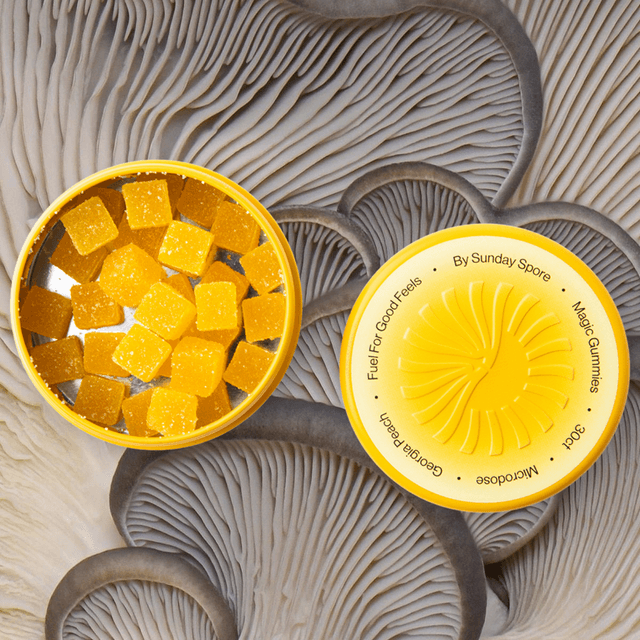
Precision Dosed
Every Sunday Spore gummy is lab-verified for precise, consistent dosing — no guessing, no scales, no batch variation. Just take one and go about your day.
If you're ready to start microdosing...
Sunday Spore Microdose — precision-dosed mushroom gummies. Lab-tested, exact dosing, ships discreetly.
How to Choose Safe, Quality Microdose Gummies
Assuming you're choosing legal functional mushroom microdose gummies - which is what we recommend and what we'll focus on here - quality varies enormously across the market. These markers separate effective products from expensive placebo:
Non-Negotiable Quality Markers
1. Fruiting body extract (not mycelium on grain) The fruiting body is the actual mushroom - the part that contains the highest concentration of bioactive compounds. "Mycelium on grain" products grow mushroom mycelium on rice or oat substrate, then grind the whole thing up. The result is largely starch with minimal active compounds. Any quality product clearly states "fruiting body" on the label.
2. Third-party testing with accessible COAs Certificate of Analysis from an independent lab should verify:
- Active compound levels (beta-glucans, hericenones/erinacines for lion's mane)
- Heavy metal levels (lead, mercury, cadmium, arsenic)
- Microbial contamination (mold, bacteria)
- Pesticide residues
If a brand can't or won't provide COAs, move on.
3. Specified extract ratio Quality extracts specify their concentration - "10:1" means 10kg of raw mushroom concentrated into 1kg of extract. This tells you the product has meaningful concentration of active compounds rather than just ground-up mushroom.
4. Beta-glucan percentage listed Beta-glucans are the primary bioactive polysaccharides in medicinal mushrooms. Quality products specify the percentage - typically 30%+ for a genuine extract. This number is measurable and verifiable through third-party testing.
Red Flags to Avoid
- "Proprietary blend" - hides individual species doses; you can't assess if anything is present at effective levels
- No extraction method specified - likely just ground powder, not extracted
- Unrealistic claims - "feel effects immediately," "replaces prescription medications," "legal microdose alternative" (implying psychoactive effects)
- Amazon-only brands with no website - minimum accountability, often white-labeled commodity products
- Extremely low prices - quality dual-extracted fruiting body supplements have real production costs; $0.20/gummy products are almost certainly low-quality
For our current assessment of the market, see the best mushroom gummies 2026 roundup.
What to Expect: Timeline of Effects
One of the most common reasons people abandon functional mushroom microdose protocols is misaligned expectations. If you're expecting to "feel something" immediately - the way you'd notice caffeine or a psychoactive substance - you'll be disappointed and may conclude the products don't work.
Week 1: Adjustment Period
- Little to nothing noticeable for most people
- Possible mild digestive adjustment (temporary)
- Cordyceps users may notice a subtle energy uptick earlier than other species
- This is normal - functional mushrooms work through gradual biological optimization
Weeks 2-3: First Signals
- Lion's mane: Increased clarity during focused work, fewer "tip of the tongue" moments
- Cordyceps: Noticeably more sustained energy, less afternoon fatigue
- Reishi: Easier sleep onset, slightly reduced reactivity to stressors
- Effects are subtle - you may only notice them in retrospect or when comparing to your pre-supplement baseline
Weeks 4-8: Full Expression
- Benefits become clearly established and consistent
- You may notice effects most clearly when you miss a dose and feel the contrast
- Cognitive benefits (lion's mane) tend to keep building through week 8+
- Sleep and mood benefits (reishi) typically plateau around week 4
Long-Term (3+ Months)
- Sustained daily benefits with no diminishing returns
- Some users report continued improvement in cognitive measures beyond 3 months (consistent with clinical trial data on lion's mane)
- No withdrawal or rebound effects if you choose to stop
- Benefits gradually fade over 1-2 weeks after discontinuation (indicating they're maintained by ongoing supplementation, not permanent changes)
Red Flags in the Microdose Gummy Market
The "microdose" label has become a marketing buzzword that many brands exploit. Be aware of these concerning patterns:
Intentional Category Blurring
Some brands deliberately create ambiguity between functional and psychoactive mushrooms in their marketing. They use imagery, language, and branding that implies psychoactive effects ("trip-free microdose," "mind-expanding," "consciousness support") while selling legal functional mushroom products. This is misleading in both directions - it overpromises for the functional product and trivializes the distinction between legal and illegal substances.
Unregulated "Adaptogenic Blends"
Products marketed as "microdose blends" that combine mushrooms with other substances - often kava, kratom, or undisclosed "adaptogens" - deserve extreme caution. The interaction profiles are unknown, quality control on multi-ingredient blends is even less reliable, and some of these additional ingredients carry their own meaningful risks.
Synthetic Analogs
A growing concern in the gray market: products labeled as mushroom microdose gummies that actually contain synthetic research chemicals. These compounds may produce mild psychoactive effects (leading consumers to believe they're "working"), but have no safety data and potentially serious health risks. This is primarily a problem in the illegal magic mushroom gummy space, but some sketchy brands in the "legal" space have been caught adding undisclosed active ingredients.
Social Media Hype Cycles
Be skeptical of brands whose entire evidence base consists of influencer testimonials and user-generated "transformation" content. Functional mushrooms have legitimate clinical research behind them - a quality brand will reference this research rather than relying on anecdotal hype. The science is real; you shouldn't need a TikTok testimonial to validate it.
Getting Started: A Practical Protocol
If you're ready to begin a functional mushroom microdose protocol, here's a structured approach based on the principles we've covered:
Step 1: Choose Your Primary Target
Identify the single benefit that matters most to you right now:
- Focus and memory → Lion's mane
- Energy and stamina → Cordyceps
- Stress and sleep → Reishi
- General immunity → Turkey tail or chaga
Start with one. Not a blend, not a stack - one species that you can evaluate clearly.
Step 2: Select a Quality Product
Use the quality markers from the section above:
- Fruiting body extract (not mycelium on grain)
- Third-party tested with available COAs
- Specified extract ratio and beta-glucan percentage
- Reputable brand with transparent sourcing
Step 3: Establish Your Baseline
Before starting, spend 2-3 days noting your current state for the specific benefit you're targeting:
- If targeting focus: how many hours of concentrated work can you sustain?
- If targeting energy: when does your energy typically drop?
- If targeting sleep: how long does it take to fall asleep? How do you feel upon waking?
This baseline makes it possible to evaluate whether the protocol is actually working, rather than relying on vague impressions.
Step 4: Begin at the Low End
Start with the minimum recommended serving (typically 1 gummy, usually 500mg extract). Take it at the same time each day:
- Lion's mane and cordyceps: morning
- Reishi: evening
Step 5: Track for 4 Weeks Minimum
Commit to a minimum 4-week evaluation period before judging efficacy. Use a simple daily rating (1-10) for your target outcome, or brief notes at the end of each day. Don't obsess over daily fluctuations - look at weekly trends.
Step 6: Adjust and Expand
After 4 weeks:
- If clear benefit: maintain current protocol, optionally increase to full serving if still at starting dose
- If unclear: try increasing to the full recommended serving for another 2 weeks
- If no benefit after 6 weeks at full dose: this species or product may not be effective for you - try a different brand (quality varies) or a different species
Once you're stable and satisfied with one species, you can add a second if you have additional goals. Repeat the same systematic process - baseline, start low, track, evaluate.
The Bottom Line
Microdose mushroom gummies represent two fundamentally different approaches to cognitive and mood enhancement. The legal path - functional mushroom gummies from species like lion's mane, reishi, and cordyceps - offers research-backed benefits with excellent safety profiles, full legal standing, and no need for complex cycling protocols. The illegal path - magic mushroom microdose gummies - carries legal risk, quality control concerns, and an evidence base that remains largely anecdotal.
For most people exploring this space, functional mushroom microdose gummies represent the smarter starting point: verifiable, safe, legal, and supported by a growing body of clinical research. They won't produce any psychoactive experience - but that's the point. They work by optimizing your biology day after day, building measurable improvements in focus, energy, and stress resilience through consistent use.
Start with one species. Choose quality over hype. Give it time. And track your results so you know what's actually working rather than guessing based on how you feel on any given day.
Disclaimer
This content is for educational and informational purposes only. It is not medical advice and should not substitute professional medical guidance. Always consult a qualified healthcare provider before starting any supplement. These statements have not been evaluated by the FDA. Individual results vary.
“Three weeks into a Monday/Wednesday/Friday protocol and the difference in my foc...” — Sarah
“Bought the Big Guys for a camping trip with friends. The dosing is spot-on — eve...” — Marcus
Ready to start microdosing?
Try the Sunday Spore Microdose
Precision-dosed mushroom gummies designed for your microdosing protocol. Lab-tested. Exact dosing. Everything you need to start.

FAQ
Frequently Asked Questions
Are microdose mushroom gummies legal?
What do microdose mushroom gummies do?
How many microdose mushroom gummies should I take?
Can you feel microdose mushroom gummies?
Written by
Sunday Spore Editorial Team
Rigorously researched content from the Sunday Spore editorial team — covering mushroom science, functional wellness, and evidence-based supplementation.