Key Takeaways
- 1Functional mushrooms work through different pathways - combining them creates synergistic, not redundant, effects
- 2No negative interactions exist between standard functional mushroom species at normal doses
- 3Time stacks by mechanism: stimulating species (cordyceps, lion's mane) in morning, calming (reishi) in evening
- 4Start with one species for 2 weeks before adding another - so you can identify what each contributes
- 5Quality matters more than quantity - 2 well-dosed species outperforms 5 underdosed ones
Quick Answer
Mushroom stacking means combining multiple functional mushroom species to target different biological pathways simultaneously. Because each species works through distinct mechanisms (lion's mane for NGF, cordyceps for ATP, reishi for HPA axis), they complement rather than compete with each other. Common stacks include lion's mane + cordyceps for focus and energy, reishi + lion's mane for anxiety and cognition, and a full 5-mushroom stack for comprehensive daily support.
Mushroom Stacking: Why Combining Species Works
Mushroom stacking is the practice of taking two or more functional mushroom species together to target multiple biological systems at once. Unlike pharmaceuticals where combining drugs often creates dangerous interactions, functional mushrooms operate through entirely separate mechanisms - they complement each other rather than compete for the same receptors or pathways.
The logic is straightforward. Lion's mane stimulates nerve growth factor in your brain. Cordyceps increases oxygen utilization and ATP production in your cells. Reishi modulates your stress response through the HPA axis. Chaga delivers concentrated antioxidant protection. Turkey tail activates specific immune cell populations. None of these pathways overlap, which means combining species gives you coverage across multiple systems without diminishing returns on any individual one.
This is why mushroom stacking has become the default approach for experienced supplement users. Once you understand what each species does independently - and the research behind it - combining them for broader support becomes an obvious next step.
If you're still evaluating individual species, start with our guides on lion's mane, cordyceps, reishi, chaga, and turkey tail. This guide assumes you have a baseline understanding of what each one does and want to know how to combine them effectively.
The Science Behind Stacking: Different Pathways, Additive Benefits
Why Multiple Species Don't Cancel Each Other Out
The concern people raise most often about stacking is whether species might interfere with each other. This concern makes sense if you think about pharmaceutical interactions, where drugs competing for the same liver enzymes or receptor sites can create problems. But functional mushrooms work through fundamentally different mechanisms.
Lion's mane compounds (hericenones and erinacines) stimulate neurotrophin production in the central nervous system. Cordyceps compounds (cordycepin, adenosine analogs) enhance mitochondrial efficiency and oxygen uptake. Reishi triterpenes modulate cortisol signaling and calm the hypothalamic-pituitary-adrenal axis. These are separate systems using separate biochemical pathways.
No published research has identified negative interactions between any combination of the five major functional mushroom species at supplemental doses. This doesn't mean interactions are impossible at extreme doses, but within the research-supported ranges covered in this guide, stacking is well-supported by the available evidence.
Synergy vs. Simple Addition
Some combinations appear to produce effects greater than the sum of their parts. The best-documented example is combining a neurotrophin stimulator (lion's mane) with a cellular energy enhancer (cordyceps). Your brain can grow new neural connections more effectively when the neurons have abundant ATP for the energy-intensive process of neurite extension and synapse formation.
Similarly, combining immune modulators (turkey tail's PSK and PSP polysaccharides) with systemic antioxidant protection (chaga's SOD and melanin compounds) creates a dual-layer immune defense - your immune cells are both more active and better protected from oxidative damage during their response.
Whether this qualifies as true pharmacological synergy or simply additive benefit with good timing is still being studied. From a practical standpoint, it doesn't matter. The results are consistently better than single-species supplementation for people pursuing multiple health goals.
Core Species and Their Mechanisms
Before building a stack, you need a clear picture of what each species brings to the table. Here's a summary of the five most commonly stacked functional mushrooms and their primary mechanisms:
Lion's Mane (Hericium erinaceus)
Primary mechanism: Stimulates Nerve Growth Factor (NGF) and Brain-Derived Neurotrophic Factor (BDNF) production
Key compounds: Hericenones (fruiting body), erinacines (mycelium)
Target system: Central nervous system - hippocampus, prefrontal cortex
Best for: Focus, memory, cognitive clarity, neuroprotection
Research-supported dose: 500-1000mg fruiting body extract daily
Cordyceps (Cordyceps militaris)
Primary mechanism: Enhances ATP production, increases oxygen utilization (VO2 max)
Key compounds: Cordycepin, adenosine, polysaccharides
Target system: Mitochondria, cardiovascular system, respiratory system
Best for: Physical energy, endurance, post-exercise recovery, mental stamina
Research-supported dose: 300-1000mg fruiting body extract daily
Reishi (Ganoderma lucidum)
Primary mechanism: Modulates the HPA (hypothalamic-pituitary-adrenal) axis, regulates cortisol
Key compounds: Ganoderic acids (triterpenes), beta-glucans, polysaccharides
Target system: Neuroendocrine system, immune system, liver
Best for: Stress resilience, sleep quality, anxiety reduction, immune modulation
Research-supported dose: 500-1500mg fruiting body extract daily
Chaga (Inonotus obliquus)
Primary mechanism: Provides concentrated antioxidant protection (highest ORAC score of any mushroom)
Key compounds: Superoxide dismutase (SOD), melanin, betulinic acid, polysaccharides
Target system: Systemic oxidative stress, immune system, gut lining
Best for: Inflammation reduction, cellular protection, gut health, immune support
Research-supported dose: 500-1000mg extract daily
Turkey Tail (Trametes versicolor)
Primary mechanism: Activates innate and adaptive immune cells via polysaccharide-K (PSK) and polysaccharopeptide (PSP)
Key compounds: PSK, PSP, beta-glucans
Target system: Immune system - NK cells, T cells, dendritic cells, gut microbiome
Best for: Immune defense, gut microbiome diversity, recovery support
Research-supported dose: 1000-3000mg extract daily
Best Stacks by Goal
The most effective approach to stacking is goal-driven. Instead of taking everything and hoping for broad benefits, identify your primary objective and build a focused stack around it. You can always expand later.
The Focus and Productivity Stack
Species: Lion's mane + Cordyceps
Timing: Both in the morning, with or after breakfast
Doses: Lion's mane 1000mg + Cordyceps 500mg
Why it works: Lion's mane builds the neural infrastructure for sustained attention and working memory. Cordyceps ensures those neurons have the cellular energy (ATP) to fire consistently through long cognitive sessions. The combination addresses both the structural and energetic sides of mental performance.
What to expect: Clearer thinking and fewer afternoon energy dips within 2-3 weeks. The effects compound over months as NGF-stimulated neural connections mature. This is the stack most people start with because the results are noticeable relatively quickly.
For more on how mushrooms support concentration, see our mushroom gummies for focus guide.
The Anxiety and Calm Stack
Species: Reishi + Lion's mane
Timing: Lion's mane in the morning, Reishi in the evening (or both together if you don't find lion's mane stimulating)
Doses: Lion's mane 500mg + Reishi 1000mg
Why it works: Reishi's triterpenes modulate the HPA axis, bringing cortisol levels back to a healthy baseline without sedation. Lion's mane supports the prefrontal cortex - the part of your brain responsible for emotional regulation and rational thinking. When your stress response is calmer and your prefrontal cortex is well-maintained, anxious rumination decreases.
What to expect: Reduced reactivity to stressors within the first week (reishi acts relatively quickly on cortisol). Deeper improvements in emotional resilience and cognitive clarity over 4-6 weeks as lion's mane builds neural support.
The Sleep and Recovery Stack
Species: Reishi + Chaga
Timing: Both in the evening, 1-2 hours before bed
Doses: Reishi 1500mg + Chaga 500mg
Why it works: Reishi calms the nervous system and regulates the transition from cortisol dominance (wake state) to melatonin dominance (sleep state). Chaga's antioxidant compounds reduce systemic inflammation that interferes with deep sleep stages. Together, they address the two most common barriers to restorative sleep: a nervous system that won't wind down and an inflammatory burden that disrupts sleep architecture.
What to expect: Easier time falling asleep within the first few days. Improved sleep quality (waking more refreshed, fewer middle-of-night wake-ups) over 2-3 weeks. The recovery benefits - reduced DOMS, better workout readiness - follow from improved sleep depth.
The Energy and Performance Stack
Species: Cordyceps + Lion's mane + Chaga
Timing: All three in the morning, 30-60 minutes before training or demanding work
Doses: Cordyceps 1000mg + Lion's mane 500mg + Chaga 500mg
Why it works: Cordyceps provides the primary energy boost through enhanced oxygen utilization and ATP production. Lion's mane ensures the mental sharpness and mind-muscle connection for quality training or deep work. Chaga protects cells from the oxidative stress that intense activity generates, supporting recovery and reducing post-exertion inflammation.
What to expect: Improved endurance and reduced perceived exertion during exercise within 1-2 weeks. Better recovery between sessions. The cognitive component (lion's mane) kicks in over a longer timeline but supports the mental discipline required for consistent training.
For more on energy-specific mushroom benefits, read our mushroom gummies for energy guide.
The Immunity Stack
Species: Turkey tail + Chaga + Reishi
Timing: Turkey tail and chaga in the morning, reishi in the evening (or all morning if simplicity is preferred)
Doses: Turkey tail 2000mg + Chaga 500mg + Reishi 500mg
Why it works: Turkey tail directly activates immune cells through PSK and PSP - no other functional mushroom matches its specificity for immune activation. Chaga provides the antioxidant environment immune cells need to function without oxidative self-damage. Reishi adds immune modulation (not just activation) and ensures the stress response isn't suppressing immune function through elevated cortisol.
What to expect: Stronger resilience during cold and flu season. Faster recovery when you do get sick. The immune effects are harder to "feel" in daily life compared to focus or energy stacks - you notice them most in the frequency and severity of illness over 3-6 months.
For a deeper look at immune-supporting mushrooms, see our mushroom gummies for immunity guide.
The Full Daily Stack (Comprehensive Support)
Species: Lion's mane + Cordyceps + Reishi + Chaga + Turkey tail
Timing: Lion's mane + Cordyceps + Chaga + Turkey tail in the morning. Reishi in the evening.
Doses: Lion's mane 1000mg + Cordyceps 500mg + Reishi 1000mg + Chaga 500mg + Turkey tail 1500mg
Why it works: This covers cognition, energy, stress resilience, antioxidant protection, and immune defense simultaneously. Every major system gets targeted support without redundancy. The morning energizers (lion's mane, cordyceps) set up your day, chaga and turkey tail provide baseline protection, and evening reishi brings you down into restorative rest.
What to expect: The full-spectrum stack takes longer to fully appreciate because it's supporting so many systems. Most people report a general sense of improved baseline - more consistent energy, fewer sick days, better stress tolerance, sharper thinking - that compounds noticeably over 2-3 months.
Important caveat: This only works if each species is adequately dosed. A full stack at half-doses is worse than a focused 2-species stack at full doses. Only expand to five species once you can afford to dose each one properly.
Timing Protocols: When to Take Each Species
Timing your stack correctly makes a meaningful difference in both effectiveness and sleep quality. The principle is simple: stimulating species in the morning, calming species in the evening.
Morning Stack (Within 30 Minutes of Waking)
- Lion's mane - Mildly stimulating for some people; morning dosing avoids any chance of sleep interference
- Cordyceps - Enhances energy and oxygen utilization; ideal before work or training
- Chaga - Neutral on stimulation/sedation axis; morning works for antioxidant protection through the day
- Turkey tail - Neutral; morning keeps the routine simple
Evening Stack (1-2 Hours Before Bed)
- Reishi - Calming, cortisol-lowering; evening timing supports the natural transition to sleep
Flexible Timing
If you find lion's mane non-stimulating (many people do), you can take your entire stack in the morning for simplicity. Some people also prefer to split chaga - half morning, half evening - for round-the-clock antioxidant coverage. The key rule: never take cordyceps within 4 hours of bedtime.
With Food or Empty Stomach?
Functional mushroom extracts absorb well either way, but taking them with food reduces the mild digestive discomfort some people experience when starting. Fat-containing meals slightly improve absorption of fat-soluble triterpenes (reishi's ganoderic acids). Once your body is adjusted, timing relative to meals becomes less important than timing relative to your circadian rhythm.
Dosing Within Stacks: The Critical Numbers
The single most important principle of stacking: each species needs to be at its research-supported dose to contribute meaningful effects. Underdosing across many species gives you nothing from any of them.
Minimum Effective Doses for Stacking
| Species | Minimum Effective | Optimal Range | Upper Limit |
|---|---|---|---|
| Lion's mane | 500mg | 500-1000mg | 3000mg |
| Cordyceps | 300mg | 500-1000mg | 3000mg |
| Reishi | 500mg | 1000-1500mg | 5000mg |
| Chaga | 500mg | 500-1000mg | 3000mg |
| Turkey tail | 1000mg | 1500-3000mg | 6000mg |
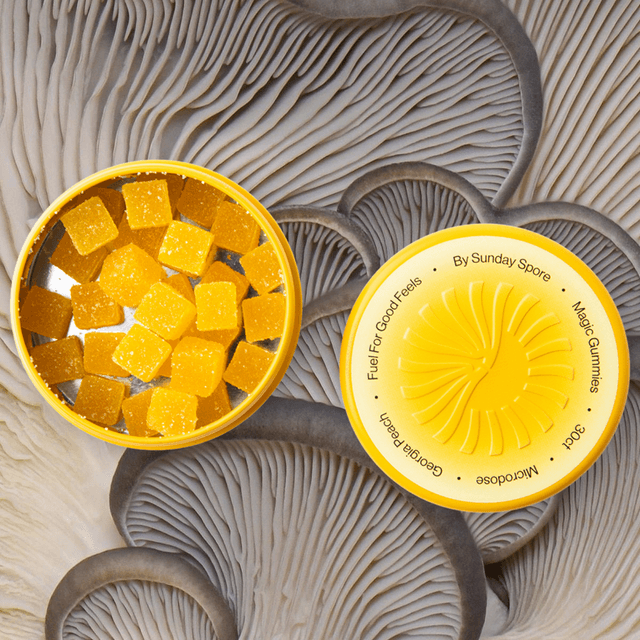
Precision Dosed
Every Sunday Spore gummy is lab-verified for precise, consistent dosing — no guessing, no scales, no batch variation. Just take one and go about your day.
If you're ready to start microdosing...
Sunday Spore Microdose — precision-dosed mushroom gummies. Lab-tested, exact dosing, ships discreetly.
The Dose-Species Tradeoff
If your budget or tolerance only allows 3000mg total daily intake of mushroom supplements, you're better off with two species at 1500mg each than five species at 600mg each. Two properly-dosed species will deliver research-validated results. Five underdosed species will deliver nothing measurable.
This is the fundamental mistake people make with multi-mushroom products. A capsule containing "10 mushroom species at 2000mg total" gives each species approximately 200mg - well below the threshold for any one of them to produce documented effects.
How to Build Your Stack: The Stepwise Protocol
Don't start with five species on day one. Building a stack gradually serves two important purposes: it lets you identify what each species contributes to your subjective experience, and it identifies the rare individual who has sensitivity to a specific species before multiple variables are at play.
Week 1-2: Your Anchor Species
Choose the species most aligned with your primary goal:
- Focus/cognition → Start with lion's mane
- Energy/performance → Start with cordyceps
- Stress/sleep → Start with reishi
- Immunity → Start with turkey tail
Take it at the full recommended dose for two weeks. Note your baseline before starting and track any changes in a simple journal.
Week 3-4: Add Your Second Species
Add the species that complements your anchor. For example, if you started with lion's mane for focus, add cordyceps for the energy component. Again, full dose. Give it two weeks.
Week 5-6: Add Your Third Species (Optional)
If two species is meeting your goals, stop here. There's no requirement to keep adding. If you want broader coverage, add a third species and observe for two more weeks.
Week 7+: Expand to Full Stack (If Desired)
By this point you know what each species contributes individually and in combination. Add remaining species one at a time if you want comprehensive coverage. The gradual approach means you'll never wonder "which one is causing this effect?" - whether the effect is positive or negative.
Common Stacking Mistakes
Mistake 1: Proprietary Blends with Hidden Doses
Products labeled "proprietary mushroom blend - 1500mg" with 8 listed species are mathematically guaranteed to underdose most of them. If the blend is 1500mg total and contains 8 species, the average is 187mg each - below the effective threshold for every single one. These products rely on the perception that "more species = better" to mask inadequate dosing.
Mistake 2: Stacking Mycelium-on-Grain Products
Mycelium-on-grain products contain a significant percentage of starch filler from the rice or oat substrate the mycelium grew on. When you stack three mycelium products at "1000mg" each, you might be getting 300-400mg of actual mushroom compounds and 2600mg of grain starch. Stacking amplifies this problem because the starch adds up across multiple products.
Always verify that products use fruiting body extract or clearly state their beta-glucan content (should be 20%+ for most species).
Mistake 3: All Species, Same Time, Day One
Adding five species simultaneously means you can't identify which one is responsible for any positive or negative effects. If you experience improved focus AND mild digestive discomfort, which species is doing what? The stepwise protocol exists to give you this information.
Mistake 4: Inconsistent Timing
Functional mushrooms work through gradual biological changes - upregulating NGF production, shifting cortisol patterns, building immune cell populations. Taking your stack sporadically (a few days on, a few days off) prevents any of these mechanisms from reaching full effect. Daily consistency for at least 4-6 weeks is the minimum timeframe for evaluating a stack.
Mistake 5: Ignoring Quality Across the Stack
If you're taking three species but only one of them is a quality extract, you're really running a single-species protocol with expensive placebo on the side. Apply the same quality criteria to every product in your stack: fruiting body source, third-party COA, clearly stated beta-glucan content, no unnecessary fillers.
For guidance on identifying quality products, our best mushroom gummies review evaluates options across all major species.
Multi-Mushroom Products vs. Individual Species
The market offers two approaches: buy individual single-species products and build your own stack, or buy a pre-made multi-mushroom blend. Each has tradeoffs.
Pre-Made Multi-Mushroom Blends
Advantages:
- Simpler routine (one product instead of 3-5)
- Often cheaper per-dose than buying species individually
- Less decision fatigue
Disadvantages:
- You can't adjust individual species doses
- Many use proprietary blends that hide per-species amounts
- Typically underdose most species to fit everything in one serving
- Can't split timing (morning energizers vs. evening calming)
Building Your Own Stack
Advantages:
- Full control over each species dose
- Can time each species optimally
- Easy to add, remove, or adjust individual components
- Know exactly how much of each species you're taking
Disadvantages:
- More products to buy and manage
- Higher total cost in most cases
- More complex daily routine
The Practical Middle Ground
The best approach for most people: start by building your own stack with individual species (following the stepwise protocol above) so you understand what each one does for you. Once you've established your ideal combination and doses, you can look for a multi-mushroom product that matches your stack - but only if it clearly lists per-species doses and each one meets the minimum effective threshold.
A multi-mushroom product that transparently doses lion's mane at 1000mg, cordyceps at 500mg, and reishi at 1000mg is a great daily convenience product. A product that says "mushroom blend 2000mg" and lists 10 species is marketing dressed up as supplementation.
Stacking with Non-Mushroom Compounds
Functional mushrooms also stack well with common non-mushroom supplements. A few well-documented combinations:
Lion's Mane + Omega-3 Fatty Acids
Omega-3s (particularly DHA) provide the structural lipids that neurons need to build new membranes during NGF-stimulated growth. Lion's mane tells neurons to grow; omega-3s give them the building materials.
Cordyceps + Creatine
Both enhance ATP availability through different mechanisms. Cordyceps improves mitochondrial efficiency (producing more ATP per oxygen molecule). Creatine provides a phosphate buffer that regenerates ATP during high-intensity effort. Together, they extend both aerobic endurance and anaerobic power output.
Reishi + Magnesium Glycinate
Both promote relaxation through different pathways. Reishi modulates the cortisol response while magnesium glycinate supports GABA activity and muscle relaxation. This combination is particularly effective for people whose sleep issues stem from both mental stress and physical tension.
Turkey Tail + Probiotics
Turkey tail's polysaccharides act as prebiotics, feeding beneficial gut bacteria. Taking probiotics alongside turkey tail gives the introduced bacterial strains an optimal environment - the polysaccharides provide their preferred fuel source, supporting colonization.
Frequently Asked Questions About Stacking Safety
Are there any species you should NOT combine?
Among the five core functional mushroom species (lion's mane, cordyceps, reishi, chaga, turkey tail), no negative interactions have been documented at supplemental doses. However, if you take prescription medications - particularly blood thinners, immunosuppressants, or diabetes medications - consult your doctor before stacking, as individual species may interact with these drugs.
Can you stack mushrooms with microdosing protocols?
Many people do combine functional mushroom stacks with microdosing protocols. Lion's mane in particular is a common addition to microdosing stacks because of its neurotrophin support. The mechanisms are complementary rather than competing. Start each component separately to understand individual effects before combining.
What about tolerance - do stacks lose effectiveness?
Functional mushrooms do not build tolerance in the way stimulants do. You don't need progressively higher doses to achieve the same effect. Most people take the same stack at the same dose for months or years with sustained benefit. If anything, effects often improve over time as cumulative biological changes (neural growth, immune cell population increases, antioxidant reserve building) compound.
How long until a stack "works"?
Different species have different onset timelines. Reishi's calming effects can be noticeable within days. Cordyceps energy improvements typically emerge within 1-2 weeks. Lion's mane cognitive benefits require 3-6 weeks for meaningful results. A full stack is best evaluated at the 6-week mark, by which time all components have had time to reach steady state.
Building Your First Stack: Summary Protocol
- Identify your primary goal - focus, energy, calm, immunity, or comprehensive support
- Select your anchor species - the one most aligned with that goal
- Start at full dose for 2 weeks - track baseline vs. changes
- Add a second species at full dose - observe for 2 more weeks
- Evaluate and decide - is two species enough, or do you want to expand?
- Split timing - morning energizers, evening calming species
- Maintain daily consistency - minimum 6 weeks before concluding a stack doesn't work
- Prioritize dose adequacy over species count - always
Mushroom stacking is not complicated once you understand the underlying principle: each species covers a different system, none of them interfere with each other, and the only way to get it wrong is to underdose. Start with one, build deliberately, and let the results guide your decisions.
Disclaimer
This content is for educational and informational purposes only. It is not medical advice and should not substitute professional medical guidance. Always consult a qualified healthcare provider before starting any supplement. These statements have not been evaluated by the FDA. Individual results vary.
“Three weeks into a Monday/Wednesday/Friday protocol and the difference in my foc...” — Sarah
“Bought the Big Guys for a camping trip with friends. The dosing is spot-on — eve...” — Marcus
Ready to start microdosing?
Try the Sunday Spore Microdose
Precision-dosed mushroom gummies designed for your microdosing protocol. Lab-tested. Exact dosing. Everything you need to start.

FAQ
Frequently Asked Questions
Can you take multiple mushroom supplements together?
What's the best mushroom stack for focus?
Should you cycle mushroom stacks?
How many mushroom species can you stack?
Written by
Sunday Spore Editorial Team
Rigorously researched content from the Sunday Spore editorial team — covering mushroom science, functional wellness, and evidence-based supplementation.