Key Takeaways
- 1Psilocybin mushrooms offer the best combination of safety, controllability, duration, and accessibility for beginners
- 2Starting with microdosing lets you assess sensitivity before any full-dose experience
- 3Duration matters: mushrooms (4-6h), LSD (8-12h), ayahuasca (4-8h), DMT (15-30min but intense)
- 4Every psychedelic has a different risk profile — 'natural' doesn't always mean 'safer'
Quick Answer
Psilocybin mushrooms are the best psychedelic for beginners. Key reasons: shortest duration of major psychedelics (4-6 hours vs 8-12 for LSD, 4-8 hours for ayahuasca), dose-response is predictable and scalable (start with microdose, work up), impossible to fatally overdose, growing legal access (Oregon, Colorado), available in precise gummy formats that eliminate dosing guesswork, and extensive safety research from Johns Hopkins and Imperial College. For absolute beginners, starting with microdosing (sub-perceptual doses) allows you to assess sensitivity before committing to a full experience.
Before We Start: The Most Important Thing
The best psychedelic for a beginner is the one you take in the right conditions. Substance matters, but set and setting matter more. A low dose of psilocybin in a safe, comfortable environment with a trusted person nearby will almost always produce a better experience than the "perfect" substance taken recklessly.
If you remember nothing else from this article, remember this: your mindset going in (set) and the environment around you (setting) are more important than which substance you choose. Now, with that foundation in place, let's talk about the substances themselves.
This article is for educational purposes only. It does not constitute medical advice. Most psychedelic substances are controlled or illegal in many jurisdictions. Research all applicable laws in your area. If you have a personal or family history of psychosis, schizophrenia, or bipolar disorder, psychedelics carry serious risks and should be avoided outside of medical supervision.
The Contenders: An Honest Assessment of Each
Psilocybin Mushrooms
What they are: The active compounds (psilocybin, converted to psilocin in the body) found in over 200 species of mushrooms, most commonly Psilocybe cubensis.
Duration: 4-6 hours
Dose range: Microdose (50-200mg dried), low dose (0.5-1g), moderate dose (1.5-2.5g), strong dose (3-5g)
The experience: Psilocybin produces a grounding, organic-feeling psychedelic experience. Visual enhancement (colors more vivid, patterns more noticeable) starts at low doses. Moderate doses bring emotional opening, introspective insights, and altered sense of time. Higher doses can produce ego dissolution and profound mystical experiences.
Why it's good for beginners:
- Scalable dosing. You can start with a microdose that produces no perceptual effects, then gradually increase over separate sessions to find your comfort level. No other psychedelic offers this gentle on-ramp as practically.
- Shortest duration of the major psychedelics. If something feels uncomfortable, you're through the hardest part within 2-3 hours and completely back to baseline within 6. Compare this to 8-12 hours for LSD.
- Forgiving dose-response curve. The difference between "mild" and "moderate" is gradual, not a cliff. You won't accidentally jump from "subtle" to "overwhelming" with a small dose increase.
- Impossible to fatally overdose. Psilocybin's LD50 (lethal dose for 50% of subjects in animal studies) is extraordinarily high — roughly 280mg/kg. A 70kg human would need to consume approximately 1.7 kilograms of pure psilocybin, equivalent to roughly 20-50kg of dried mushrooms. This is a physical impossibility.
- Extensive safety research. Johns Hopkins and Imperial College have conducted multiple clinical trials establishing psilocybin's physiological safety profile. Heart rate and blood pressure increase mildly. No organ toxicity.
- Growing legal access. Oregon's regulated psilocybin therapy framework is operational. Colorado's regulatory system is developing. Multiple jurisdictions have decriminalized possession.
- No contamination concerns. Unlike LSD or MDMA, mushrooms are identifiable natural products. Pre-dosed gummies from reputable producers offer lab-tested purity.
Honest limitations:
- Nausea is common, especially on an empty stomach (gummies significantly reduce this)
- The body load can feel heavy at moderate-to-high doses
- Emotional experiences can be intense — not always comfortable
- Some people find the experience less "clear-headed" than LSD
Beginner rating: Best choice for most people.
LSD (Lysergic Acid Diethylamide)
What it is: A synthetic compound first synthesized by Albert Hofmann in 1938. Typically found on blotter paper, in liquid form, or as gel tabs.
Duration: 8-12 hours
Dose range: Microdose (5-20mcg), low dose (25-75mcg), moderate dose (75-150mcg), strong dose (150-300mcg)
The experience: LSD produces a characteristically "clear-headed" psychedelic experience with strong visual geometry, enhanced pattern recognition, and stimulating energy. Users often describe feeling mentally sharp while their perception is dramatically altered. At moderate doses, synesthesia (seeing sounds, hearing colors), time distortion, and profound insights are common.
Why some people choose LSD:
- The mental clarity and stimulation suit analytical and creative thinkers
- Duration can be a feature for day-long exploration in nature
- When accurately dosed, the experience is very predictable and controllable
- Research history spanning decades
Why it's not ideal for beginners:
- 8-12 hour commitment. If the experience becomes uncomfortable at hour three, you still have 5-9 hours ahead. For a first experience, this is daunting.
- Source verification is impossible. You cannot visually confirm what's on a blotter tab. NBOMe compounds — synthetic substitutes that are genuinely dangerous (multiple deaths reported) — are sometimes sold as LSD. Reagent testing (Ehrlich, Hofmann, Marquis) is strongly recommended but not 100% definitive.
- Stimulant quality can trigger anxiety. LSD's dopaminergic activity makes it feel stimulating. For anxious individuals, this can tip into a panicked, racing feeling, especially at higher doses.
- Sleep disruption. Even with morning dosing, residual stimulation can interfere with sleep that night.
- Illegal everywhere. No state or country has legalized or decriminalized LSD specifically. No therapeutic framework exists.
Beginner rating: Good second choice for experienced microdosers who want to explore further. See our detailed LSD vs mushrooms comparison for more.
MDMA (3,4-Methylenedioxymethamphetamine)
What it is: A synthetic empathogen-entactogen that floods the brain with serotonin, dopamine, and norepinephrine. Known colloquially as ecstasy or molly.
Duration: 3-5 hours (main effects), with 2-3 days of comedown
Dose range: 75-125mg is a standard therapeutic dose
The experience: MDMA is unique among psychedelics (technically it's an empathogen, not a classic psychedelic) in that the experience is almost universally positive during the session itself. Users report overwhelming feelings of love, empathy, trust, and emotional openness. Physical touch feels enhanced. Communication flows freely. Fear and defensiveness dissolve.
Why people consider MDMA:
- The most predictable and consistently positive acute experience of any psychoactive substance
- FDA-approved MDMA-assisted psychotherapy for PTSD was advancing through trials (Lykos Therapeutics/MAPS) though faced regulatory setbacks
- Incredibly effective for processing trauma in therapeutic settings
- Less disorienting than classic psychedelics — you maintain normal cognitive function
Why it's not good for beginners (despite the pleasant experience):
- Neurotoxicity. This is the critical issue. MDMA is neurotoxic to serotonin neurons with repeated use. Research by Ricaurte et al. and others has documented serotonin system damage with heavy or frequent use. The safe usage guideline in the harm reduction community is no more than once every 2-3 months.
- The comedown is real. Post-MDMA serotonin depletion produces a "Tuesday blues" effect — 2-3 days of low mood, fatigue, and irritability. For someone already struggling with depression, this can be destabilizing.
- Dangerous interactions. SSRIs blunt MDMA's effects (and people sometimes dangerously compensate by taking more). MAOIs combined with MDMA can cause fatal serotonin syndrome. Stimulants combined with MDMA increase cardiac risk.
- Hyperthermia and hyponatremia risk. MDMA raises body temperature and impairs temperature regulation. Combined with physical activity (dancing) and either dehydration or overhydration, this has caused deaths.
- Widely adulterated. Street MDMA is frequently cut with methamphetamine, cathinones ("bath salts"), or other substances. Testing with reagent kits is essential.
- Not microdosable. MDMA has a threshold effect — below a certain dose, nothing happens; above it, the full empathogenic experience activates. There is no sub-perceptual microdose equivalent.
Beginner rating: Not recommended as a first psychedelic despite the pleasant experience. The safety profile is significantly worse than psilocybin or LSD. If you pursue MDMA, do so with proper harm reduction, reagent testing, and strict frequency limits.
DMT (N,N-Dimethyltryptamine)
What it is: A naturally occurring tryptamine found in many plants and produced endogenously in the human brain. When smoked or vaporized, it produces an extremely intense but short psychedelic experience.
Duration: 15-30 minutes (smoked/vaporized), 4-8 hours (in ayahuasca preparation)
Dose range: 10-50mg (smoked/vaporized)
The experience: Smoked DMT is the most intense psychedelic experience available. Within seconds, users report complete dissolution of normal reality, vivid geometric visions, encounters with seemingly autonomous entities, and experiences described as "more real than real." It is profoundly disorienting and overwhelming for virtually everyone who tries it.
Why it's absolutely not for beginners:
- Intensity. There is no "low dose" DMT experience that's gentle or manageable. The threshold between "nothing" and "complete reality dissolution" is razor-thin.
- No on-ramp. Unlike psilocybin, you can't start with a microdose and gradually explore. DMT is either off or very, very on.
- Requires specialized equipment. Vaporizing DMT requires specific technique (wrong temperature destroys the molecule or produces harsh smoke).
- Psychologically destabilizing for unprepared individuals. The experience is so far outside normal consciousness that it can be genuinely traumatic without proper context and integration.
The short duration is sometimes cited as an advantage ("if it goes wrong, it's over quickly"), but 15 minutes of the most intense psychological experience of your life can produce lasting psychological impact regardless of clock time.
Beginner rating: Not recommended. This is the deep end of the pool.
Ketamine
What it is: A dissociative anesthetic used medically since the 1960s, now gaining recognition for rapid-acting antidepressant effects. Available legally through ketamine clinics (as infusions or nasal spray) and illicitly as a powder or liquid.
Duration: 45 minutes to 2 hours (depending on route of administration)
Dose range: Varies by administration method — clinical infusions are precisely dosed (0.5mg/kg over 40 minutes is standard for depression)
The experience: Ketamine is a dissociative, not a classic psychedelic. It produces a dreamlike, detached state rather than the sensory enhancement and emotional opening of psilocybin or LSD. At low doses, it feels like mild sedation and pleasant dissociation. At higher doses, the "k-hole" experience involves complete ego dissolution and out-of-body sensations.
Why some beginners consider ketamine:
- Legal access. Ketamine clinics operate legally throughout the U.S. for depression and pain management. Spravato (esketamine nasal spray) is FDA-approved for treatment-resistant depression.
- Medical supervision available. You can have a ketamine experience with a doctor present, vital signs monitored, and professional support.
- Short duration. Effects resolve within 1-2 hours.
- Strong evidence for depression. Multiple clinical trials demonstrate rapid antidepressant effects.
Why it's not ideal as a "first psychedelic":
- It's not really a psychedelic. The experience is fundamentally different from psilocybin or LSD. It won't prepare you for or represent the classic psychedelic experience.
- Addiction potential. Unlike classical psychedelics, ketamine has addiction liability. Regular use can develop into dependence.
- Bladder toxicity. Chronic ketamine use causes serious urological damage (interstitial cystitis). Even therapeutic-frequency use requires monitoring.
- Not microdosable in a practical sense. While sub-anesthetic doses are used clinically, at-home ketamine microdosing is a different (and more risky) proposition.
Beginner rating: Excellent option if accessing through a legal clinical setting for depression. Not recommended as recreational psychedelic exploration.
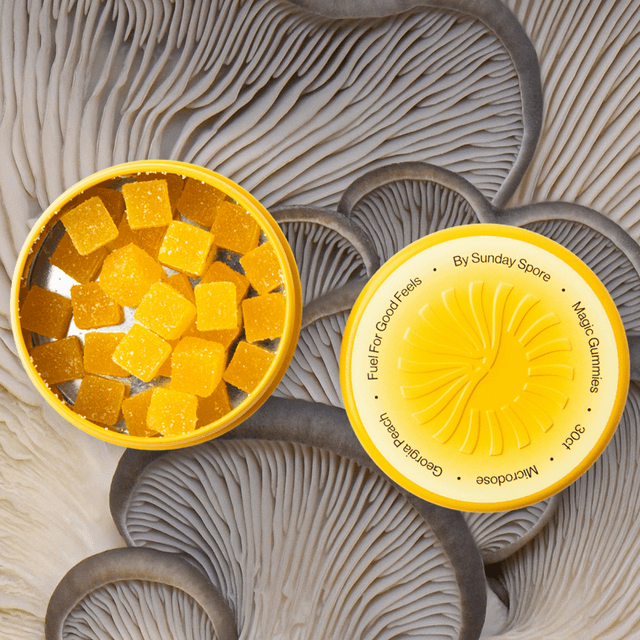
Precision Dosed
Every Sunday Spore gummy is lab-verified for precise, consistent dosing — no guessing, no scales, no batch variation. Just take one and go about your day.
If you're ready to start microdosing...
Sunday Spore Microdose — precision-dosed mushroom gummies. Lab-tested, exact dosing, ships discreetly.
Ayahuasca
What it is: A traditional Amazonian brew combining a DMT-containing plant with an MAO inhibitor (typically Banisteriopsis caapi). The MAO inhibitor makes DMT orally active and extends its duration.
Duration: 4-8 hours
The experience: Ayahuasca produces a deep, visionary, often emotionally intense experience. It's frequently described as "meeting with a teacher" rather than a recreational trip. Nausea and vomiting ("la purga") is considered part of the process in traditional contexts. The experience tends to be heavily emotional and introspective.
Why it's not for beginners:
- Physical intensity. Vomiting is common and expected. Some people also experience diarrhea. This is not a comfortable introduction to psychedelics.
- MAO inhibitor interactions. The Banisteriopsis caapi in ayahuasca is a potent MAO inhibitor. Combined with SSRIs, MDMA, or tyramine-rich foods, this can cause dangerous or fatal serotonin syndrome. Dietary restrictions (no aged cheese, fermented foods, cured meats, etc.) must be observed for 24-48 hours before and after.
- Set and setting dependence. Ayahuasca is traditionally used in ceremonial contexts with experienced facilitators. Taking it outside this context significantly increases psychological risk.
- Not self-administrable safely. The brew preparation, dietary requirements, and intensity of the experience make this impractical and risky for solo exploration.
- 4-8 hour commitment with physical discomfort is a challenging introduction.
Beginner rating: Not recommended as a first psychedelic. If you're drawn to ayahuasca, develop a psychedelic foundation with psilocybin first and then seek a reputable ceremony with experienced facilitators.
Why Mushrooms Win for Most Beginners
Looking across all options, psilocybin mushrooms consistently offer the best combination of factors that matter for a first experience:
| Factor | Psilocybin | LSD | MDMA | DMT | Ketamine | Ayahuasca |
|---|---|---|---|---|---|---|
| Duration | 4-6h | 8-12h | 3-5h + comedown | 15-30min | 1-2h | 4-8h |
| Scalable dosing | Yes | Yes | No | No | Limited | No |
| Physical safety | Excellent | Excellent | Moderate | Good | Moderate | Moderate |
| Psychological safety | Good | Good | Good acutely | Poor for beginners | Good in clinical setting | Moderate |
| Legal access | Growing | None | Limited (therapy) | None | Yes (clinical) | Gray area |
| Addiction potential | None | None | Low | None | Moderate | None |
| Microdosable | Yes | Yes | No | No | Debated | No |
| Source verification | Easy | Difficult | Difficult | Moderate | Easy (clinical) | Moderate |
The ability to start with a microdose is psilocybin's unique advantage for cautious beginners. No other substance lets you dip a toe in the water before diving in.
The Microdosing Entry Point
If the idea of a full psychedelic experience feels like too much right now — that's completely reasonable. You don't have to jump to a moderate or strong dose to begin exploring mushrooms.
Microdosing (50-200mg of dried mushroom equivalent, taken every three days on the Fadiman protocol) produces no perceptual changes. You won't see visuals. You won't feel "high." What people report is subtle: a slight lift in mood, marginally better focus, increased openness to ideas and people.
Starting with microdosing accomplishes several things:
- Sensitivity assessment. Some people are significantly more sensitive than others. Microdosing reveals this before you commit to a full dose.
- Familiarity. You learn how your body and mind respond without the intensity of a full experience.
- Comfort building. The substance stops being an abstract, intimidating concept and becomes something you have actual experience with.
- Standalone value. Many people who start with microdosing discover that the sub-perceptual benefits are exactly what they wanted, and they never feel the need to explore higher doses at all.
If you do decide to microdose as your entry point, dosing consistency matters from day one. The difference between a proper microdose and "slightly too much" is measured in milligrams. Pre-dosed gummies eliminate the guesswork — each one is lab-verified for precise, consistent dosing, so your first protocol is a controlled experiment rather than a series of estimates.
Sunday Spore gummies are designed for exactly this use case: a consistent, reliable microdose that lets beginners explore with confidence in what they're taking and how much. Because your first experience should be defined by your intention and mindset — not by uncertainty about your dose.
Before You Begin: The Readiness Checklist
Regardless of which substance or dose you choose, honestly assess these factors:
Mental health stability. Are you in a reasonably stable place right now? Psychedelics amplify your current state. They're not an escape hatch from crisis — they're an exploratory tool best used from a position of basic stability.
Family history. Personal or family history of psychosis, schizophrenia, or bipolar I disorder is a serious contraindication. Psychedelics can trigger or worsen psychotic episodes in predisposed individuals. This is not a theoretical risk.
Medications. SSRIs, MAOIs, lithium, and tramadol all interact with psychedelics in ways ranging from ineffective to dangerous. Consult a healthcare provider before combining any substances.
Intention. Why do you want to explore psychedelics? Curiosity is valid. Self-improvement is valid. Peer pressure is not. Running from problems is not. Clear intention shapes the experience.
Setting. Do you have a safe, comfortable environment? A trusted person who knows what you're doing? No obligations or responsibilities during and after? If the setting isn't right, wait until it is.
Time. Not just hours in the day, but days without pressure. Your first experience shouldn't be squeezed between obligations. Give yourself space before, during, and after.
If all of those check out, you're in a good position to begin — and psilocybin mushrooms, whether through microdosing or a gentle first dose, are the most forgiving, well-researched, and increasingly accessible way to do it.
Sources & References
- Johns Hopkins Center for Psychedelic & Consciousness Research — clinical trials establishing psilocybin's physiological safety profile and efficacy for depression and anxiety.
- Imperial College London Centre for Psychedelic Research — neuroimaging studies on psilocybin's mechanism of action.
- Ricaurte, G.A. et al. (2002). Severe dopaminergic neurotoxicity in primates after a common recreational dose regimen of MDMA. Science, 297(5590), 2260-2263.
- Lykos Therapeutics (formerly MAPS) — Phase 3 clinical trials on MDMA-assisted psychotherapy for PTSD.
- Nichols, D.E. (2016). Psychedelics. Pharmacological Reviews, 68(2), 264-355.
- Johnson, M.W. et al. (2018). Classic psychedelics: An integrative review of epidemiology, therapeutics, mystical experience, and brain network function. Pharmacology & Therapeutics, 197, 83-102.
Note: This article cites published research for educational context. Inclusion of a study does not imply endorsement of its conclusions or guarantee of similar outcomes.
Disclaimer
This content is for educational and informational purposes only. It is not medical advice and should not substitute professional medical guidance. Always consult a qualified healthcare provider. Psilocybin is a controlled substance in most jurisdictions — know your local laws. Individual results vary.
“Three weeks into a Monday/Wednesday/Friday protocol and the difference in my foc...” — Sarah
“Bought the Big Guys for a camping trip with friends. The dosing is spot-on — eve...” — Marcus
Ready to start microdosing?
Try the Sunday Spore Microdose
Precision-dosed magic mushroom gummies designed for your microdosing protocol. Lab-tested. Exact dosing. Everything you need to start.
FAQ
Frequently Asked Questions
Is microdosing a good way to start with psychedelics?
What about MDMA for beginners?
How do I know if I'm ready for psychedelics?
Written by
Alex Nakamura
Biochemistry degree. Translates complex mycology and pharmacology into accessible guides.