Key Takeaways
- 1Ketamine: FDA-approved, fast-acting (hours), but expensive ($400-800/session), effects fade in weeks, addiction potential
- 2Psilocybin: not FDA-approved yet, but longer-lasting benefits, no addiction potential, far more affordable
- 3Ketamine requires ongoing clinical sessions; psilocybin research shows lasting benefit from 1-2 sessions
- 4For daily wellness support, microdosing psilocybin offers what ketamine cannot: sustainable, self-directed practice
Quick Answer
Ketamine and psilocybin work through entirely different mechanisms — ketamine modulates glutamate/NMDA receptors while psilocybin activates serotonin 5-HT2A receptors. Ketamine has FDA approval (as esketamine/Spravato) and strong clinical evidence for treatment-resistant depression, but requires expensive clinical sessions ($400-800 each), has addiction potential, and effects often fade within weeks. Psilocybin shows comparable efficacy in clinical trials, appears to produce longer-lasting benefits from fewer sessions, has no addiction potential, and is dramatically more affordable — but lacks FDA approval and has limited legal access. For ongoing wellness and self-directed protocols, microdosing psilocybin offers a sustainable approach that doesn't require clinical visits.
Two Psychedelics, Two Completely Different Models
If you've been exploring alternatives for depression, anxiety, or PTSD, you've probably encountered two names more than any others: ketamine and psilocybin mushrooms.
Both are having their moment. Ketamine clinics have proliferated across the country — there are now over 750 in the US alone. Meanwhile, psilocybin has generated landmark clinical trial results and secured legal therapeutic access in Oregon and Colorado.
But comparing them isn't straightforward. They work through different brain mechanisms, they're accessed in completely different ways, and they carry very different cost structures. This guide breaks down what the science actually says about each, so you can make an informed decision about which approach — if either — might fit your situation.
This article is for educational purposes only. It does not constitute medical advice. Psychedelics carry risks, and ketamine is a controlled substance requiring medical supervision. Always consult a healthcare provider before making decisions about your mental health treatment.
How They Work: Completely Different Mechanisms
Ketamine: The Glutamate Path
Ketamine is a dissociative anesthetic that primarily works by blocking NMDA (N-methyl-D-aspartate) receptors in the brain. This modulates glutamate, the brain's most abundant excitatory neurotransmitter, and triggers a cascade of effects including rapid synaptogenesis — the creation of new synaptic connections.
The experience is dissociative: a dreamlike, floating state where you feel detached from your body and surroundings. Sessions typically last 40-60 minutes for IV infusion, or 2 hours for the nasal spray version (Spravato/esketamine).
What makes ketamine unique is speed. By blocking NMDA receptors, it triggers a burst of brain-derived neurotrophic factor (BDNF) that can produce noticeable mood improvement within hours. For someone in a depressive crisis, this speed is genuinely lifesaving.
Psilocybin: The Serotonin Path
Psilocybin mushrooms work through an entirely different system. Once ingested, psilocybin converts to psilocin, which binds to serotonin 5-HT2A receptors throughout the cortex. This produces increased connectivity between brain regions that don't normally communicate — what researchers at Imperial College London have termed a state of "elevated neural entropy."
The signature effect on brain imaging is a quieting of the Default Mode Network (DMN), the brain network responsible for self-referential thinking, rumination, and the rigid thought patterns characteristic of depression. When the DMN quiets, the brain enters a more flexible, interconnected state where entrenched patterns of negative thinking can be disrupted.
The experience with a full therapeutic dose (25mg psilocybin in clinical trials) lasts 4-6 hours and involves profound shifts in perception, emotion, and sometimes mystical-type experiences that patients consistently rate among the most meaningful of their lives.
Why the Mechanism Matters
These aren't just academic differences. The mechanism determines everything downstream:
- Ketamine's glutamate surge produces rapid but often temporary relief. The new synaptic connections it triggers can fade without repeated sessions.
- Psilocybin's serotonergic disruption appears to produce more fundamental rewiring. By disrupting the DMN and increasing neural flexibility, it may address the underlying rigidity of depressive thinking rather than temporarily overriding it.
The Clinical Evidence
Ketamine: FDA-Approved, Strong Data
Ketamine has the stronger regulatory position. Esketamine (Spravato), a nasal spray form developed by Johnson & Johnson, received FDA approval in 2019 for treatment-resistant depression. This means it has been through rigorous Phase 3 trials and has a clear legal pathway for clinical use.
The evidence is solid: multiple randomized controlled trials show that ketamine infusions produce rapid antidepressant effects in 50-70% of patients with treatment-resistant depression. A 2023 meta-analysis in the American Journal of Psychiatry confirmed consistent superiority over placebo.
However, the data also reveals a limitation. Effects typically peak within 24-72 hours of infusion and begin fading within 1-3 weeks. Most protocols require initial loading phases (6 infusions over 2-3 weeks) followed by maintenance infusions every 2-6 weeks indefinitely. Stopping treatment usually means symptoms return.
Psilocybin: Remarkable Trial Results, No FDA Approval Yet
Psilocybin's clinical data is smaller in volume but striking in what it shows. Key studies include:
- Johns Hopkins (2016): A single high-dose psilocybin session produced substantial decreases in depression and anxiety in cancer patients. At 6-month follow-up, approximately 80% still showed clinically significant reductions. At 4.5-year follow-up, benefits persisted.
- Imperial College London (2021): The landmark trial compared psilocybin to escitalopram (Lexapro) for major depressive disorder. Psilocybin performed comparably on the primary outcome and showed superiority on several secondary measures — from just two sessions vs. daily medication.
- NYU Langone (2016): Similar cancer-anxiety study to Hopkins showing approximately 60-80% of participants had clinically significant reductions in distress after a single session, with effects lasting at least 6 months.
- COMPASS Pathways Phase 2b (2022): The largest psilocybin trial to date (233 patients) showed the 25mg dose produced significant improvement in treatment-resistant depression at 3 weeks, though effect sizes diminished by 12 weeks in some patients.
The FDA granted Breakthrough Therapy designation to psilocybin for treatment-resistant depression in 2018 and for major depressive disorder in 2019, signaling that it's on a path toward potential approval — but Phase 3 trials are still underway.
Head-to-Head: The Duration Question
The most significant difference in the evidence is duration of benefit:
| Factor | Ketamine | Psilocybin |
|---|---|---|
| Onset of relief | Hours | Days to weeks |
| Duration per session | 1-3 weeks | Months to years |
| Sessions needed | Ongoing (every 2-6 weeks) | 1-3 sessions in trials |
| Long-term data | Effects fade without maintenance | Hopkins showed benefits at 4.5 years |
This suggests fundamentally different therapeutic models: ketamine as an ongoing treatment (more like medication) vs. psilocybin as a catalytic intervention (more like a transformative experience that shifts your trajectory).
Cost: The Elephant in the Room
Here's where the comparison becomes stark.
Ketamine Therapy Costs
- IV infusion: $400-800 per session
- Initial loading phase: 6 sessions = $2,400-4,800
- Monthly maintenance: $400-800 per month, indefinitely
- Annual cost: $7,200-14,400+ (first year), $4,800-9,600+ (subsequent years)
- Insurance: Spravato (nasal spray) may be partially covered; IV ketamine is almost never covered
- At-home ketamine services: $200-350/month (lower cost but less supervised)
Psilocybin Therapy Costs (Legal Settings)
- Oregon licensed sessions: $1,500-3,500 per session (includes preparation and integration)
- Typical protocol: 1-3 sessions
- Total cost: $1,500-10,500 (non-recurring)
- Insurance: Not covered
Psilocybin Microdosing Costs
- Monthly supply: $40-80 for pre-dosed products
- Annual cost: $480-960
- No clinical visits required
- Self-directed protocol
The cost difference compounds dramatically over time. After two years, ketamine therapy could run $15,000-25,000. A microdosing practice costs under $2,000 for the same period — roughly 10x less.
Addiction Potential: A Critical Difference
This is a factor that doesn't get enough attention.
Ketamine has recognized abuse potential. It's a Schedule III controlled substance, produces dissociative euphoria, and regular users can develop tolerance and psychological dependence. The World Health Organization has noted increasing recreational abuse globally. While clinical ketamine therapy mitigates these risks through controlled dosing and medical supervision, the risk is not zero — particularly with the rise of at-home ketamine prescription services that have faced scrutiny for inadequate oversight.
Psilocybin has no recognized addiction potential. It's actually anti-addictive — tolerance builds rapidly (within days), making compulsive use self-limiting. Moreover, Johns Hopkins research has shown psilocybin to be effective in treating nicotine addiction (80% abstinence rate at 6 months in a pilot study) and is being studied for alcohol use disorder. You'd be hard-pressed to find another therapeutic substance that is simultaneously being researched as a treatment for addiction while having no addiction potential itself.
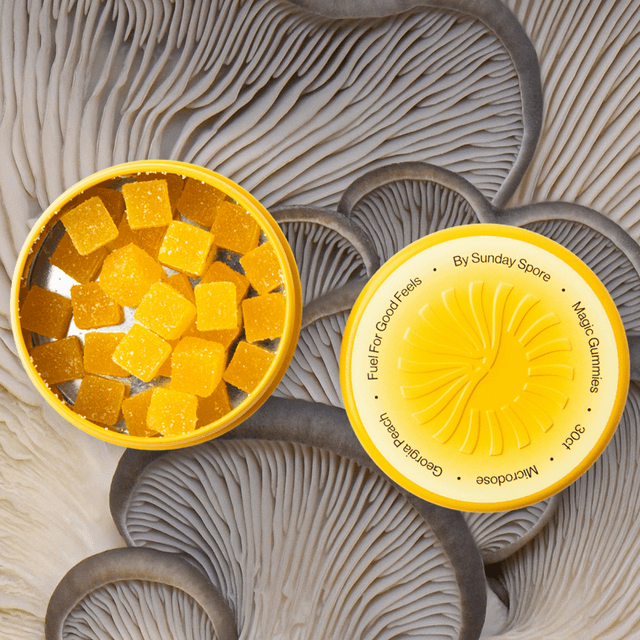
Precision Dosed
Every Sunday Spore gummy is lab-verified for precise, consistent dosing — no guessing, no scales, no batch variation. Just take one and go about your day.
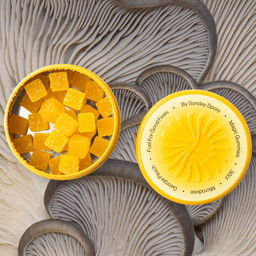
If you're ready to start microdosing...
Sunday Spore Microdose — precision-dosed mushroom gummies. Lab-tested, exact dosing, ships discreetly.
Accessibility and Practical Considerations
Ketamine
- Legal status: Schedule III, available by prescription
- Access model: Requires clinical visits (in-person or telehealth)
- Time commitment: 1-2 hours per session plus travel
- Supervision: Medical monitoring required during sessions
- Ongoing requirement: Regular maintenance sessions indefinitely
Psilocybin
- Legal status: Schedule I federally, but legal therapeutically in Oregon and Colorado; decriminalized in several cities
- Access model (therapeutic): Licensed service centers in OR/CO
- Access model (microdosing): Self-directed; various legal-gray-area products available
- Time commitment: Minutes per day for microdosing
- Ongoing requirement: Self-directed cycles (typically 6-8 weeks on, 2-4 weeks off)
For someone with a demanding schedule — caregiving responsibilities, a full-time job, limited ability to take time off — the accessibility difference is significant. Ketamine requires you to build your life around clinic visits. Microdosing fits into the life you already have.
The Microdosing Angle: What Ketamine Can't Offer
One of the most meaningful distinctions is that psilocybin is uniquely suited to microdosing — a practice that has no parallel in the ketamine world.
Ketamine cannot be practically microdosed. Its dose-response curve, mechanism of action, and dissociative effects don't lend themselves to sub-perceptual daily use. You either do a clinical session or you don't.
Psilocybin, by contrast, scales beautifully from sub-perceptual microdoses (50-200mg of dried mushroom equivalent) through moderate doses to full therapeutic experiences. This scalability means you can maintain a daily wellness practice between larger therapeutic sessions, gradually building neuroplastic changes over time without ever needing to clear your schedule or visit a clinic.
For people who've experienced the rapid relief of ketamine but struggle with the cost and logistics of maintenance sessions, a transition to psilocybin microdosing represents a sustainable alternative — ongoing neuroplastic support at a fraction of the cost, integrated into daily life rather than requiring clinical visits.
Who Should Consider Which?
Ketamine may be better if you:
- Are in acute depressive crisis and need rapid relief
- Have treatment-resistant depression and have tried multiple medications
- Prefer a fully legal, medically supervised approach
- Have insurance that covers Spravato
- Can afford ongoing clinical sessions
Psilocybin may be better if you:
- Want longer-lasting benefits from fewer interventions
- Prefer a self-directed wellness practice
- Are cost-conscious about long-term mental health spending
- Have concerns about addiction potential
- Want to address root patterns rather than manage symptoms
- Are interested in the creativity, focus, and cognitive benefits alongside mood improvement
Many people find value in both: ketamine for acute stabilization, then transitioning to psilocybin microdosing for ongoing maintenance and growth. The two approaches are complementary rather than mutually exclusive.
Making the Practical Choice
If you've weighed the evidence and decided that psilocybin microdosing fits your situation — whether as a primary approach or as a maintenance practice after other interventions — the biggest practical challenge is consistency and dosing accuracy.
Unlike ketamine, which is precisely dosed in a clinical setting, psilocybin microdosing has historically meant grinding dried mushrooms and hoping for consistency. The active compound varies enormously between individual mushrooms, making reliable sub-perceptual dosing difficult.
This is exactly the problem that Sunday Spore Microdose was designed to solve — precisely dosed psilocybin gummies that remove the guesswork from microdosing, so you can focus on the practice itself rather than the preparation. When the dosing is accurate and consistent, you can actually learn what works for your brain.
Whatever path you choose — ketamine, psilocybin, or some combination — the most important thing is that you're taking your mental health seriously and exploring options beyond the status quo. The science supports having options, and you deserve access to all of them.
Sources & References
- Griffiths, R.R. et al. (2016). Psilocybin produces substantial and sustained decreases in depression and anxiety in patients with life-threatening cancer. Journal of Psychopharmacology, 30(12), 1181-1197.
- Agin-Liebes, G.I. et al. (2020). Long-term follow-up of psilocybin-assisted psychotherapy for psychiatric and existential distress in patients with life-threatening cancer. Journal of Psychopharmacology, 34(2), 155-166.
- Carhart-Harris, R.L. et al. (2021). Trial of Psilocybin versus Escitalopram for Depression. New England Journal of Medicine, 384(15), 1402-1411.
- Ross, S. et al. (2016). Rapid and sustained symptom reduction following psilocybin treatment for anxiety and depression in patients with life-threatening cancer. Journal of Psychopharmacology, 30(12), 1165-1180.
- COMPASS Pathways (2022). Phase IIb trial of COMP360 psilocybin therapy for treatment-resistant depression. New England Journal of Medicine, 387(18), 1637-1648.
- American Journal of Psychiatry (2023). Meta-analysis of ketamine for treatment-resistant depression.
- Johns Hopkins Center for Psychedelic & Consciousness Research — clinical trials on psilocybin for depression and addiction.
- Johnson, M.W. et al. (2014). Pilot study of psilocybin for tobacco addiction. Journal of Psychopharmacology, 28(11), 983-992.
- Imperial College London Centre for Psychedelic Research — neuroimaging studies on default mode network disruption.
Note: This article cites published research for educational context. Inclusion of a study does not imply endorsement of its conclusions or guarantee of similar outcomes.
Disclaimer
This content is for educational and informational purposes only. It is not medical advice and should not substitute professional medical guidance. Always consult a qualified healthcare provider. Psilocybin is a controlled substance in most jurisdictions — know your local laws. Individual results vary.
“Three weeks into a Monday/Wednesday/Friday protocol and the difference in my foc...” — Sarah
“Bought the Big Guys for a camping trip with friends. The dosing is spot-on — eve...” — Marcus
Ready to start microdosing?
Try the Sunday Spore Microdose
Precision-dosed magic mushroom gummies designed for your microdosing protocol. Lab-tested. Exact dosing. Everything you need to start.
FAQ
Frequently Asked Questions
Is ketamine addictive?
Which works faster for depression?
Can I try both?
Written by
Alex Nakamura
Biochemistry degree. Translates complex mycology and pharmacology into accessible guides.