Key Takeaways
- 1Psilocybin lasts 4-6 hours; LSD lasts 8-12 hours — mushrooms interfere less with sleep if dosed in the morning
- 2LSD microdoses feel more 'stimulating' and cognitive; psilocybin feels more 'grounding' and emotional
- 3Mushrooms have legal momentum (Oregon, Colorado therapeutic frameworks) while LSD remains Schedule I everywhere
- 4Dosing accuracy is easier with psilocybin gummies than with LSD volumetric dosing
Quick Answer
For most people starting microdosing, psilocybin mushrooms are the better choice. Key advantages: shorter duration (4-6 hours vs 8-12 hours for LSD, less interference with sleep), more natural and forgiving effect profile, easier to dose accurately with modern gummy formats, growing legal momentum (Oregon, Colorado), and no stimulant-like anxiety that some experience with LSD. LSD microdosing may be preferred by those wanting longer-lasting cognitive enhancement during work, but mushrooms are safer for beginners and protocol adherence.
Two Substances, Very Different Experiences
If you've decided to explore microdosing, you've probably encountered two main options: psilocybin mushrooms and LSD. Both are widely used, both have dedicated communities, and both act on the same primary receptor in your brain. But the experience of microdosing each one is surprisingly different.
This isn't about which substance is "more powerful" or "more spiritual" — those comparisons belong to the full-dose conversation. At sub-perceptual microdoses, the differences that matter are practical: How long does it last? How does it affect your day? How precisely can you dose it? What are the risks?
Let's break it down honestly.
This article is for educational purposes only. It does not constitute medical advice. Both psilocybin and LSD are controlled substances in most jurisdictions. Research all applicable laws in your area before making any decisions.
The Pharmacology: Same Receptor, Different Molecules
Both psilocybin (converted to psilocin in the body) and LSD bind primarily to 5-HT2A serotonin receptors. This shared mechanism is why they produce broadly similar psychedelic effects at full doses and why there's cross-tolerance between them.
But the similarities in mechanism mask important differences:
Psilocin (the active metabolite of psilocybin) is structurally similar to serotonin itself. It binds relatively cleanly to 5-HT2A receptors and is metabolized relatively quickly by the body. Half-life: approximately 3 hours. Total duration of effect: 4-6 hours.
LSD is a more complex molecule that binds to 5-HT2A receptors in an unusual way — the receptor essentially closes around the LSD molecule, trapping it. This "lid" effect (described in Wacker et al., 2017, published in Cell) explains why LSD's effects last so much longer despite similar receptor affinity. Additionally, LSD has significant activity at dopamine D2 receptors, which psilocybin does not. Half-life: approximately 3.5 hours, but subjective effects persist much longer due to receptor binding dynamics. Total duration: 8-12 hours.
That dopamine activity matters for microdosing. It's likely why LSD microdoses feel more "stimulating" and why some people report amphetamine-like anxiety at higher microdose ranges — an effect that's uncommon with psilocybin.
Duration: The Most Practical Difference
At microdose levels, you shouldn't feel overtly "high" from either substance. But subtle pharmacological activity is still happening in your brain, and the duration of that activity shapes your entire day.
Psilocybin: 4-6 Hours
If you microdose psilocybin mushrooms with breakfast at 8 AM, the subtle effects are largely concluded by early afternoon. Your evening is completely unaffected. Sleep is not disrupted (assuming you don't dose late in the day). This short window means:
- Morning dosing integrates cleanly into a normal schedule
- No residual activity by evening social events or bedtime
- If you slightly overdose, the uncomfortable period is shorter
- Easier to evaluate effects in a contained window
LSD: 8-12 Hours
An LSD microdose taken at 8 AM may still be subtly active at 6 or 8 PM. For some people, this is a feature — they want all-day cognitive support. For others, it becomes a problem:
- Late-day residual stimulation can interfere with sleep
- You need to plan your dose time carefully around your full schedule
- Slight overdoses mean an entire day of heightened awareness
- Evening commitments happen while the substance is still active
For beginners, the shorter duration of psilocybin provides a significant safety margin. If something feels off, it will resolve sooner. If you misjudged the dose, the consequences are time-limited.
The Subjective Experience: Stimulating vs Grounding
Community reports consistently describe different qualitative characters for each substance at microdose levels:
LSD Microdoses
- More stimulating and energizing — some describe it as "clean caffeine"
- Enhanced analytical thinking — pattern recognition, logical flow, systematic work
- Increased verbal fluency — conversations feel faster and more articulate
- Physical energy — desire to move, walk, exercise
- Potential for anxiety — the stimulant quality can tip into restlessness, particularly at higher microdose ranges or in anxious individuals
- More "heady" — the effects are primarily cognitive rather than emotional
Psilocybin Microdoses
- More grounding and centering — a sense of calm presence rather than stimulation
- Enhanced emotional openness — feelings come more easily, empathy is heightened
- Creative/divergent thinking — making novel connections, seeing problems from new angles
- Body awareness — subtle increased connection to physical sensations
- Gentler come-up — less likely to produce anxiety at appropriate doses
- More "heart-centered" — emotional tone shifts more than cognitive speed
These are generalizations drawn from thousands of community reports. Individual responses vary significantly based on neurochemistry, dose, set, and setting. But the broad pattern is remarkably consistent across reports: LSD is more of a cognitive stimulant, psilocybin is more of an emotional and creative enhancer.
Which Profile Fits Your Goals?
If you're microdosing for productivity, analytical work, or sustained focus: LSD's longer duration and stimulant qualities may be a better fit. Software developers, programmers, and analysts in the microdosing community tend to prefer LSD for workdays.
If you're microdosing for creativity, emotional well-being, or therapeutic purposes: Psilocybin's grounding quality and emotional openness tend to serve these goals better. Artists, writers, therapists, and people microdosing for mood support or ADHD management lean toward mushrooms.
If you're microdosing for general well-being and don't have a specific target: Psilocybin is the safer starting point. It's more forgiving, shorter-acting, and less likely to produce anxiety.
Dosing Practicalities: A Significant Difference
Dosing LSD: The Volumetric Challenge
A standard LSD blotter tab contains approximately 100 micrograms (this varies significantly — street tabs range from 50-250mcg with no reliable way to verify). A microdose of LSD is typically 5-20 micrograms.
You can't cut a blotter tab into reliable microdoses. Cutting a tab into tenths is imprecise, and LSD isn't distributed evenly on blotter paper. The standard approach is volumetric dosing: dissolving a tab in a measured amount of distilled water or high-proof alcohol (typically 10ml), then measuring out 0.5-2ml per dose with a precision syringe.
This works, but it introduces several variables:
- You need to know (or guess) the microgram content of your tab
- The solution must be stored properly (dark, cool, in glass — LSD degrades in plastic and light)
- Measuring with a syringe each morning adds friction to the routine
- The solution itself degrades over time, particularly if stored in plastic or exposed to heat
Dosing Psilocybin: Multiple Options
Psilocybin mushrooms can be dosed several ways:
- Whole dried mushrooms on a milligram scale: Simple but variable between specimens (see our gummies vs dried comparison)
- Ground powder in capsules: More consistent within a batch but still unknown absolute dose
- Pre-dosed gummies: Most precise option — homogenized during production, lab-tested, same dose every time
The gummy format gives psilocybin a major practical advantage over LSD for dosing accuracy. No volumetric calculation, no syringe, no degrading solution. Just a consistent, pre-measured dose in a stable format.
Tolerance and Protocol Considerations
Both substances build tolerance rapidly through 5-HT2A receptor downregulation, and they produce cross-tolerance with each other. This means:
- You can't microdose daily with either substance — effects diminish within 3-4 consecutive days
- If you microdose LSD, psilocybin will be less effective for several days (and vice versa)
- Protocol off-days are essential, not optional
The standard Fadiman protocol (one day on, two days off) works for both substances. Some people alternate — microdosing psilocybin on some days and LSD on others — but the cross-tolerance makes this less effective than it sounds. Most experienced microdosers choose one substance and stick with it for the duration of their protocol.
One protocol note specific to LSD: Because of its longer duration, some microdosers on the Fadiman protocol find that LSD's subtle effects bleed into day two (the first off-day), making the off-day experience different from a truly substance-free day. Psilocybin's shorter duration provides a cleaner distinction between on-days and off-days.
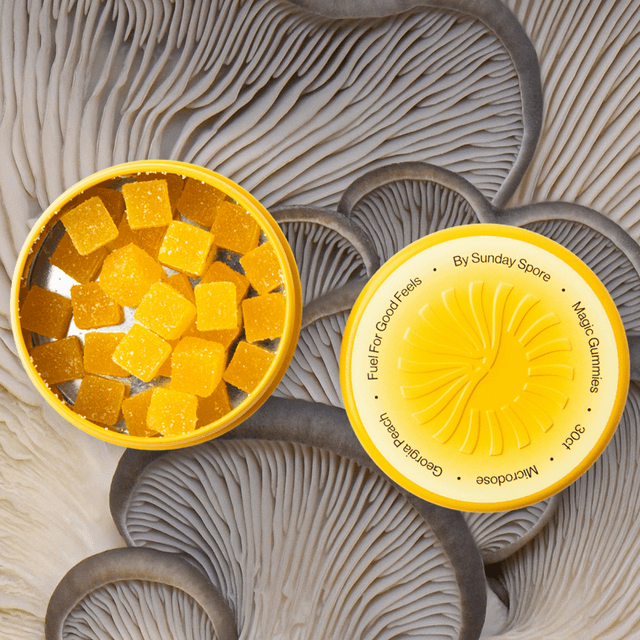
Precision Dosed
Every Sunday Spore gummy is lab-verified for precise, consistent dosing — no guessing, no scales, no batch variation. Just take one and go about your day.
If you're ready to start microdosing...
Sunday Spore Microdose — precision-dosed mushroom gummies. Lab-tested, exact dosing, ships discreetly.
Legal Status: A Widening Gap
This is where the practical comparison diverges sharply.
Psilocybin: Gaining Legal Ground
- Oregon: Legalized regulated psilocybin therapy (Measure 109, effective 2023). Licensed service centers operate statewide
- Colorado: Natural Medicine Health Act (2022) decriminalized psilocybin and created a regulatory framework for therapeutic use
- Multiple U.S. cities have deprioritized enforcement of psilocybin possession
- Canada: Section 56 exemptions allow therapeutic psilocybin use; some licensed clinics operate
- Australia: Approved psilocybin for treatment-resistant depression (2023), available through authorized psychiatrists
- Research momentum: Dozens of active clinical trials, FDA breakthrough therapy designation for psilocybin-assisted therapy
LSD: No Legal Movement
- Remains Schedule I federally in the U.S. with no state-level legalization efforts
- No therapeutic frameworks or service centers
- Research continues (MAPS has conducted LSD therapy studies) but no regulatory pathway is advancing
- No decriminalization movements specific to LSD
If legal access matters to you — for supply reliability, quality assurance, or personal risk tolerance — psilocybin has a clear and widening advantage.
Safety Profiles
Both substances are physiologically safe at microdose and even full-dose levels. Neither can cause fatal overdose through direct toxicity. But there are differences:
Psilocybin Safety
- Duration of risk: Any adverse reaction resolves in 4-6 hours
- Source verification: Mushrooms are identifiable; gummies from reputable sources are lab-tested
- Contamination risk: Low with properly identified species or commercial products
- Psychological risk at microdose: Minimal — occasional mild anxiety, usually from dosing too high
LSD Safety
- Duration of risk: Adverse reactions persist for 8-12 hours — a long time to be uncomfortable
- Source verification: Impossible without laboratory analysis. Blotter and liquid can contain NBOMe compounds (synthetic analogues that are genuinely dangerous) or other substitutes
- Contamination risk: Meaningful. NBOMe compounds have caused deaths at doses that would be safe for actual LSD. Reagent testing (Ehrlich, Hofmann tests) is strongly recommended
- Psychological risk at microdose: Slightly higher than psilocybin due to stimulant quality and longer duration
The contamination and verification issue is arguably the most important safety difference. You can identify a psilocybin mushroom or verify a gummy's contents with lab testing. You cannot visually verify what's on a blotter tab.
Cost Comparison
LSD microdosing: A single blotter tab ($5-15, varies widely) provides approximately 5-20 microdoses depending on your dose. Cost per dose: roughly $0.50-$3.00. However, you need distilled water or alcohol, a glass container, and a precision syringe.
Psilocybin microdosing (dried mushrooms): Raw material cost for a microdose is very low — fractions of a cent if home-grown, $0.50-$2.00 from a supplier. Requires a milligram scale ($20-40) and optionally a capsule-filling setup.
Psilocybin microdosing (gummies): $3-$8 per dose depending on the producer. Premium over dried mushrooms, but includes precision dosing, convenience, and quality testing.
Dollar for dollar, LSD is typically cheaper per dose. But price per dose doesn't account for the time cost of volumetric preparation, the risk cost of unverified substances, or the compliance cost of a more complex routine.
Our Recommendation
If you're new to microdosing, start with psilocybin mushrooms. The reasoning:
- Shorter duration provides a safety margin and doesn't dominate your entire day
- Gentler effect profile is less likely to produce anxiety
- Easier accurate dosing with modern gummy formats — no volumetric calculations needed
- Legal momentum means growing access to tested, regulated products
- No contamination risk compared to unverified blotter
- Clean off-days help you evaluate what the substance is actually doing
LSD microdosing has legitimate advantages for specific use cases — particularly all-day cognitive enhancement for knowledge workers. If you've tried psilocybin, understood your response, and want to explore LSD for its distinct profile, you'll be doing so from an informed baseline.
But for the first protocol? Mushrooms. And for consistent mushroom microdosing, pre-dosed gummies remove the biggest practical barrier: knowing exactly what you're taking, every single time. That consistency is what turns an experiment into reliable data about what microdosing can do for you.
Sources & References
- Wacker, D. et al. (2017). Crystal Structure of an LSD-Bound Human Serotonin Receptor. Cell, 168(3), 377-389.
- Fadiman, J. (2011). The Psychedelic Explorer's Guide: Safe, Therapeutic, and Sacred Journeys. Park Street Press.
- Passie, T. et al. (2008). The pharmacology of lysergic acid diethylamide: a review. CNS Neuroscience & Therapeutics, 14(4), 295-314.
- Nichols, D.E. (2016). Psychedelics. Pharmacological Reviews, 68(2), 264-355.
Note: This article cites published research for educational context. Inclusion of a study does not imply endorsement of its conclusions or guarantee of similar outcomes.
Disclaimer
This content is for educational and informational purposes only. It is not medical advice and should not substitute professional medical guidance. Always consult a qualified healthcare provider. Psilocybin is a controlled substance in most jurisdictions — know your local laws. Individual results vary.
“Three weeks into a Monday/Wednesday/Friday protocol and the difference in my foc...” — Sarah
“Bought the Big Guys for a camping trip with friends. The dosing is spot-on — eve...” — Marcus
Ready to start microdosing?
Try the Sunday Spore Microdose
Precision-dosed magic mushroom gummies designed for your microdosing protocol. Lab-tested. Exact dosing. Everything you need to start.

FAQ
Frequently Asked Questions
Can you build tolerance to both?
Which is safer for beginners?
What about microdosing for work?
Written by
Alex Nakamura
Biochemistry degree. Translates complex mycology and pharmacology into accessible guides.